According to an article in the Daily Telegraph, 2 February 2023, by Craig Simpson, Ulysses is being banned again.
“Academics say the Dublin-born author’s early novel contains ‘explicit references’ to ‘sexual matters’ that some may find ‘difficult’
Outraged censors banned Ulysses in 1922, and a century later academics fear the novel may be too shocking for modern students, as James Joyce’s work has been issued with a trigger warning for being potentially “offensive”.
James Joyce
The 800-page story of an ordinary man’s day in Dublin is taught on a dedicated module at the University of Glasgow, where staff now alert students to possibly upsetting “language and attitudes” in the writer’s work
Joyce’s writing contains “explicit” references “to sexual matters”, according to a trigger warning seen by the Telegraph states, highlighting the same issue which led Britain to ban his work 100 years ago.
Modern students are also warned they may be offended by references to “race, gender and national identity” in the work of the Irish author, who famously lampooned the nationalism of his homeland.
The blanket warning for the dedicated James Joyce English literature module at Glasgow states: “As part of this course we will examine texts that include explicit or graphic references to sexual matters.sec
“We recognise that some students may find this difficult and may find some of the language and attitudes towards race, gender and national identity that we discuss in relation to Joyce’s work offensive.”
The warning adds that a safe space will be provided to discuss Joyce’s literary output, stating staff will “endeavour to make seminars a space where everyone can discuss these ideas and engage with this content sensitively, empathetically and respectfully”.
The Dublin-born author, who died in 1941 at the age of 58, is regarded as among the greatest modern writers, particularly for his masterpiece Ulysses, which was initially banned in the UK and the US for the “obscenity” of passages describing sex and masturbation. The British ban was eventually lifted in 1936.
Censors principally objected to a passage from the point of view of Joyce’s heroine Molly Bloom. The main discussion of race in the work centres on the Jewish identity of the book’s hero, Leopold Bloom.
This identity clashes with the Irish nationalist sentiment of other characters in the book, which Joyce lampoons in Ulysses and his other writings, including A Portrait of the Artist as Young Man, which contains complaints that Ireland is an “old sow” with “too much god”.
This early novel is taught along with his final work Finnegan’s Wake on the Glasgow module, which has been given the trigger warning, a move which has been criticised.
Prof Frank Furedi, an education expert at the University of Kent, said: “The trigger warning brigade demonstrates that the impulse to censor is alive and well. The spirit of the old-school censors who banned Ulysses in 1922 lives on.
“It was only a matter of time before the grievance archeologists dug up something to feel traumatised about in Joyce’s great work.
“The trigger hunters could not possibly give the author of Ulysses a free pass. For the record, if you find Joyce triggering you better confine your reading to the London phone directory.”
A spokesman for the University of Glasgow said: “We give warnings to students who may find some contexts disturbing or for whom a particular class session may cause upset.
“We are, however, keen for everyone to engage, and endeavour to make seminars and lectures a space where everyone can discuss these ideas and engage with this content sensitively, empathetically and respectfully.””
I find this controversy somewhat amusing. Does it not occur to these nervous academics that the internet is awash with pornography, and that only an extreme ‘snowflake’ could be upset by it. One is tempted to advise these snowflakes, ‘Grow up, or don’t study literature.’
I bought a copy of Volodymyr Zelensky’s collected speeches at an airport bookshop in December. It’s a small book, just the size to wedge into a suitcase, 118 pages at £9.99, of which President Zelensky’s personal income from the book (at least £0.60 per copy) will go to his charity, United24, in support of Ukraine.
I’ve been impressed by Zelensky: his absolute commitment to his country, his ability to lead his people in their struggle against a much larger, heartless, autocratic and immoral aggressor, his skill at coaching Western democracies to come to his aid, but perhaps most of all for his restraint in not criticising donors who pinch pennies. It would be so tempting to call Macron out as a egotistical, French, Putin-loving, tightwad. But whatever he may have thought of Macron, he kept it pretty much to himself. And now, low and behold, there is a transformation: France is backing a military victory for Ukraine and is going to send Ukraine light tanks, prompting Germany to do the same and adding Patriot missile batteries.
Zelensky’s Wikipedia page reads: “Born to a Ukrainian Jewish family, Zelenskyy (in Ukrainian, his surname is spelt with two y’s) grew up as a native Russian speaker in Kryvyi Rih, a major city in central Ukraine. Prior to his acting career, he obtained a degree in law. He then pursued a career in comedy and created the production company Kvartal 95, which produced films, cartoons, and TV shows including the TV series Servant of the People, in which Zelenskyy played the role of the Ukrainian president. The series aired from 2015 to 2019 and was immensely popular. A political party bearing the same name as the television show was created in March 2018 by employees of Kvartal 95.
Zelenskyy announced his candidacy in the 2019 presidential election on the evening of 31 December 2018, alongside the New Year’s Eve address of then-president Petro Poroshenko on TV. A political outsider, he had already become one of the frontrunners in opinion polls for the election. He won the election with 73.23 percent of the vote in the second round, defeating Poroshenko. He has positioned himself as an anti-establishment and anti-corruption figure. As president, Zelenskyy has been a proponent of e-government and of unity between the Ukrainian and Russian speaking parts of the country’s population. His communication style makes extensive use of social media. His party won a landslide victory in the snap legislative election held shortly after his inauguration as president. During the first two years of his administration, Zelenskyy oversaw the lifting of legal immunity for members of parliament, the country’s response to the COVID-19 pandemic and subsequent economic recession, and some limited progress in tackling corruption in Ukraine.
During his presidential campaign, Zelenskyy promised to end Ukraine’s protracted conflict with Russia, and he has attempted to engage in dialogue with Russian president Putin. Zelenskyy’s strategy during the Russian military buildup was to calm the Ukrainian populace and assure the international community that Ukraine was not seeking to retaliate. He initially distanced himself from warnings of an imminent war, while also calling for security guarantees and military support from NATO to “withstand” the threat. After the start of the invasion, Zelenskyy declared martial law across Ukraine and a general mobilisation of the armed forces. His leadership during the crisis has won him widespread international praise, and he has been described as a symbol of the Ukrainian resistance. Zelenskyy was named the Time person of the Year for 2022 and opinion polls in Ukraine have ranked him as Ukraine’s greatest president.”
The speeches – there are 16 of them – were selected by Zelensky for the book, and range from his inaugural address to the Ukrainian parliament to Ukrainian Independence Day on 24 August 2022. There is a useful preface by Arkady Ostrovsky, the Russian and Eastern Europe editor of the Economist. This is followed by an introduction by Zelensky in which he reflects on changing the past.
His speeches are focused on several themes. Ukraine is a free, sovereign, independent country. Russia is engaged in an illegal and immoral invasion. Russia must be stopped because ultimately, it is at war with Western democracy, its values and principles. If Ukraine loses the war, Europe itself will be next. Ukraine can and must win this war. It will end when all the Russian occupiers are gone.
The language and the images are highly motivational. This is an excellent, two-hour read.
I missed reading this novel when it came out in 2000, won the Booker Prize and was made into a movie in 2019. It was written by Peter Carey, an Australian author, who had previously won another Booker. He was born in 1943. He dropped out of the pursuit of a science degree at university and started work in advertising. He began to read important novelists and wrote five unpublished novels. Having spent two years in London, working in advertising, he returned to Australia in 1970. In 1980 he opened his own advertising agency and the following year published his first novel, Bliss. Toward the end of the Australian phase of his career, Oscar and Lucinda was published in 1988 and won the Booker McConnell Prize as it was then known. Carey, who moved to New York in 1990 continues to live there, has received fourteen literary awards, several more than once, nominated twice for musical awards as lyricist, written fourteen novels, two short story collections, a stage play and has been married three times.
Peter Carey
There was a Kelly Gang in Australia in the 1880’s which was famous for its exploits, and for its identity with the marginalised immigrant population. The ‘True History’, however, departs from the historic facts on several points. The character, Mary Hearn, who became Ned Kelly’ lover and the mother of his daughter, never existed. There is no evidence that Kelly sired any children. The relationship between Kelly’s mother, Ellen, and Harry Power, the famous bushranger is a literary fabrication.
The story is told by Ned Kelly himself, in semi-literate writing, without punctuation, to tell his life history to his daughter from his point of view. He began life as the oldest boy of destitute family of Irish extraction trying to survive on a remote farm. His father had numerous brushes with the self-serving rural police which resulted in his death when Ned was 12. His mother then apprenticed Ned to Harry Power so that he could survive as a bushranger. He leaves Power and tries to live within the law, but he is imprisoned for three years for receiving a stolen horse, which he claims was given to him. Released from jail, he worked for two years in a sawmill, but he is drawn back into bushranging when a herd of his horses is stolen by a rival settler. Serious trouble with the police begins when he shoots the gun out of the hand of a corrupt police constable who makes advances on Ned’s younger sister. Four police are sent to kill Kelly, but Ned kills three of them in an ambush. The Kelly gang of four (Ned, his brother, Dan, and two friends are eventually surrounded by a crowd of police who kill the other three gang members and wound Ned. The shootout and Kelly’s death by hanging are told by ‘C. S.’, presumably the relative of the local teacher, Thomas Curnow, who ended up with all the Kelly manuscripts and who warned the police that the train tracks via which they were approaching the gang for the final shootout had been sabotaged. Kelly died a hero to most of the people of northeast Victoria, who amplified his life story over time.
The novel draws an accurate picture of the hard life lived by the large majority of the settlers and of the culture of the police, the judiciary and the ruling class in southeast Australia in the nineteenth century. Life was very hard and it created hard men. The story is told in the uneducated language of an impoverished Irish farmer, who clings to his family and its traditions. Ned never ceases to do what he believes is the just thing, and, in the process, there is an inevitable censure of the values and actions of the authorities. The characters are credible – if unsavory. The action is non-stop. This is a big jump above a good American western in its authenticity, its interest and its contribution to history.
The Guardian has an article today by Rafqa Touma ‘Don’t Give Up Your Day Job: How Australia’s Favourite Authors Are Making Ends Meet’.
Ms Touma writes:”According to new research by Macquarie University, the Australia Council and the Copyright Agency, the average annual incomefrom practising as an author is only $18,200 (Australian = £10,000). This has left two-fifths of authors relying on their partner’s income, and two-fifths relying on a day job unrelated to their writing. We spoke to some of Australia’s most celebrated authors who are supplementing their income with day jobs. Here is what they have to say:
Jennifer Down: the Miles Franklin-winning copywriter
Down won the 2022 Miles Franklin for her novel Bodies of Light, which was also shortlisted for the Victorian Premier’s prize, the Stella prize and the Voss prize. She is also the author of Our Magic Hour and Pulse Points.
At a weekend writers’ festival in October, Jennifer Down had work to finish for her day job: a brand launch campaign was coming up. So she sat down at a pub and pulled out her laptop.
“I thought if I have to work on a Sunday afternoon, I’ll do it with a pint,” she says. She looked so focused that a group at the table across from her made a passing joke: “Have you finished your novel yet?”
Little did they know Down had in fact finished her novel, which had just won the country’s most important literary prize. “The irony is that it is a Sunday afternoon, and I’m doing my money job while at a festival for my non-money job.”
Down was named the Sydney Morning Herald’s young novelist of the year consecutively in 2017 and 2018. At the time, she was working as an in-house copywriter for an Australian skincare company, being paid less than $50,000. “I was living in a five-person share house, and I could barely pay my bills.”
“It is surreal,” she says. “Outside of work, my writing is really respected. I had this modest critical acclaim coming in. Then at work, I’m having social media copy corrected by a person who doesn’t understand what subordinate clauses are and hasn’t read a book in 10 years.”
Down currently works as a copywriter full-time. She sets her alarm for 4am to write for herself; the alternative is foregoing social engagement.
“I don’t know if it has paid off. It is gratifying to have won prizes, but I feel like it can be incredibly isolating at times.”
It also means she’s effectively working seven days a week. “I don’t really remember the last time I have had two consecutive days off,” she says. “It is paid for in the sense I have been able to produce work, but it is not without a cost.”
Holden Sheppard: the manual labourer with a TV deal
Holden Sheppard’s debut novel Invisible Boys won the 2019 WA Premier’s prize for an emerging writer, the 2019 Kathleen Mitchell award, the 2018 City of Fremantle Hungerford award and the 2017 Ray Koppe residency award. He is also the author of The Brink.
Holden Sheppard is well loved among high school readers, with a TV adaptation of his multi-award-winning novel Invisible Boys currently in production. He is now writing his third book under contract; to fund it, he is working as a manual labourer in a timber yard.
“Authors are sole traders,” he says. “The part that doesn’t get seen is that there is a huge amount of admin.”
The Australia Council report found writers spend only half their writing time actually producing original writing. With invoicing, emailing, social media managing, talks at schools, event appearances and podcasting to fit between his work at the timber yard, Sheppard says he is left to write whenever it fits.
The annual income of children’s book authors sits at $26,800 – higher than the $18,200 average. Sheppard acknowledges his books have sold well, “but as much as it might appear successful, it is still not enough to live off”.
He deliberately looks for casual jobs instead of permanent part-time ones, for the sake of flexibility. “If there is a media interview opportunity, or an event I really want to do on a day of work, it is hard to get it off,” he says. “You jeopardise your day job and your income.” This precarious work he chooses rarely comes with entitlements such as annual leave and sick leave.
In 2015, Sheppard received an Australian Council Art Start grant for $10,000, but the program was scrapped after his round. “I feel that is needed again.” He also advocates for digital lending rights, which don’t exist in Australia.
“Each revenue stream helps us. When people take a book out of an e-library, we don’t see that revenue.”
Michael Mohammed Ahmad: the award-winning novelist who wrote behind the counter
Michael Mohammed Ahmed won the 2015 Sydney Morning Herald Best Young Novelists award for his debut novel The Tribe. His second novel The Lebs won the 2019 NSW Premier’s Multicultural Literary award and was shortlisted for the 2019 Miles Franklin. He also founded the Sweatshop literacy movement.
“I am a multi-award winning author, and I have a doctorate in literature. I am about as educated as you can get. I have sold tens of thousands of books. Still, I don’t have the job security of a manager at McDonald’s.”
While writing three acclaimed novels – The Tribe (2014), The Lebs (2018) and The Other Half of You (2021) – and setting up the western Sydney-based literacy agency Sweatshop, Michael Mohammad Ahmad worked at his father’s army disposal shop.
“When customers weren’t there, I’d be writing my novels behind the counter,” he says. “I only stopped working there about two or three years ago.”
He’s proud he was able to support his family this way, he says. “But it is insane that I had to do that. The industry isn’t set up to support people.”
Mohammad Ahmad still works seven days a week, with weekends spent writing. “I feel fortunate that in my case it is a job I am passionate about,” he says. “Writers didn’t enter the industry for money.
“It is an activity we’ve been participating in since humans could begin to think. It is fostering the next generation of thinking. It is something we find valuable outside of the capitalist construct of wealth. Even though writers aren’t making ends meet, they are still going to do it.
Anna Spargo-Ryan: the acclaimed author doing everything all at once
Anna Spargo-Ryan won the inaugural Horne prize in 2016 for her essay The Suicide Gene. She was longlisted for ABIA’s Matt Richell award in 2017 for her novel The Gulf. She is also the author of novel The Paper House and 2022 memoir A Kind of Magic.
According to the research, more than one-fifth of authors have a day job that’s related to being a writer – but that doesn’t make it easier for them to write a book.
Since 2013, Anna Spargo-Ryan has been balancing a full-time freelance mix of jobs, from ghostwriting and advertising copywriting to writing podcasts, websites, brand guidelines and feature articles.
“I do a lot of writing,” she says. “But all of it is for other people. A very small proportion of it is for my own writing work.”
Spargo-Ryan once held a romanticised idea of working as a writer. “But over the past 10 years … I have realised that the only way to get writing done is to fit it in.”
This year she published her first nonfiction book, A Kind of Magic. Although she spent the last three years writing it, she “barely remembers” the process. “I had a deadline, I had a contract, so I had to write it, but I didn’t have the leisure of having lots of time to get that done,” she says.
“So I wrote it in all kinds of small gaps. Waiting for the kids at school, before meetings, during meetings, editing on the treadmill. Whenever I could get bits of time … which I don’t really recommend as a writing process.”
Spargo-Ryan recommends writers learn to diversify their craft. “You might get an advance that is like a tenth of your annual salary, and that would be quite a good advance,” she says. “Then you are going to earn like three cents a word, for 100,000 words. In itself it isn’t sustainable.
“No one has a patron who pays for you to do your creative work. Part of being a writer is the hustle, trying new things, and diversifying the work you are doing.”
Omar Sakr: the PM’s literary award-winner looking for a day job
Omar Sakr won the 2020 Prime Minister’s Literary award for poetry for his collection The Lost Arabs. It was also shortlisted for the NSW Premier’s Literary award, the John Bray Poetry award, the Judith Wright Calanthe award and the Colin Roderick award. He is also the author of These Wild Houses and Son of Sin.
“[It was] easy enough to do at first because I was couch-surfing and didn’t have much in the way of expenses,” he says. “But it has become increasingly difficult as I settled down and started a family.”
Grants and prizes gave him time to write his debut novel Son of Sin, but publishing involves a “relentless grind” of writing and touring, which has been “impossible” to sustain since his wife gave birth to their son this year.
The report finds more than half of authors find searching for income elsewhere to be a competing demand on their writing time.
“Now I find myself in a very precarious financial position, and actively trying to find a day job,” Sakr says. “Full-time freelancing relies too much on uncertain outcomes and requires too much of me, on top of being a dad. I already knew that our society doesn’t support artists enough, but it’s brutal to realise we also don’t support parents in a meaningful way either.”
Ben Lawrence has an article in today’s Daily Telegraph which makes the arguments that not only have celebrities seriously reduced the quality of kids’ books, but they have also captured the publishing space to the detriment of competent kids’ writers.
Ben Lawrence, Commissioning Editor of the Telegraph
In the article, he says: “Long ago, when I was young, I had a vivid imagination that needed feeding. While TV shows and computer games went a little way to inspiring me, nothing shaped my thoughts like a good book. This was the 1980s, so I caught the tail end of the second golden age of children’s literature. I happily lost myself in the vivid, sometimes strange worlds of Nina Bawden, Alan Garner, Leon Garfield and Susan Cooper, while supplementing my addiction with the classics: Kenneth Grahame, E Nesbit, C S Lewis and Eve Garnett. Books build a child, and my career in writing and editing would not have evolved without them.
I was lucky: I had bookish parents, both acting as in-house curators, full of ideas of what I should (and shouldn’t) read. Yet if I were small now, I am not sure that I would have the same access to great children’s fiction. You could make the usual noises about social media and attention spans, but there are other worrying factors in regard to the 21st-century child.
First, I benefitted greatly from my local library, which had a staggering selection of books both old and new – and we all know what has happened to Britain’s libraries. There were, I remember, plenty of friendly librarians, armed with incredible knowledge and an infectious love of reading, who could make recommendations to me. In an age when primary-school teachers were less constricted by a national curriculum, we also had the luxury of “reading afternoons”: we could sit and browse the books in both the school library and the shelves which lined our classroom.
There is now also the serious problem of brand recognition. Writers today (whose average salary, in Britain, is down to £7,000 per annum) are unable to gain a foothold in the children’s market because they are being muscled out by celebrity names whose publishers can afford the most prominent slots in bookshops and supermarkets.
It never felt like such a problem in the days of JK Rowling’s reign: she, at least, was a career writer whose works – though not, I’m afraid to say, that well written – displayed a vivid imagination, and who did a great deal to get children interested in reading.
For the harried parent trying to find a book for their child, a familiar name on a bookshelf is always going to be the obvious option. The Duchess of York went first in 1989, with Budgie the Little Helicopter. But in truth, blame Madonna: 14 years later, her wafty Kabbalah nonsense, The English Roses, started a ghastly trend. Fearne Cotton’s Yoga Babies, Katie Price’s Perfect Ponies, Clare Balding’s The Girl Who Thought She Was a Dog – they all feel like cynical cash-ins.
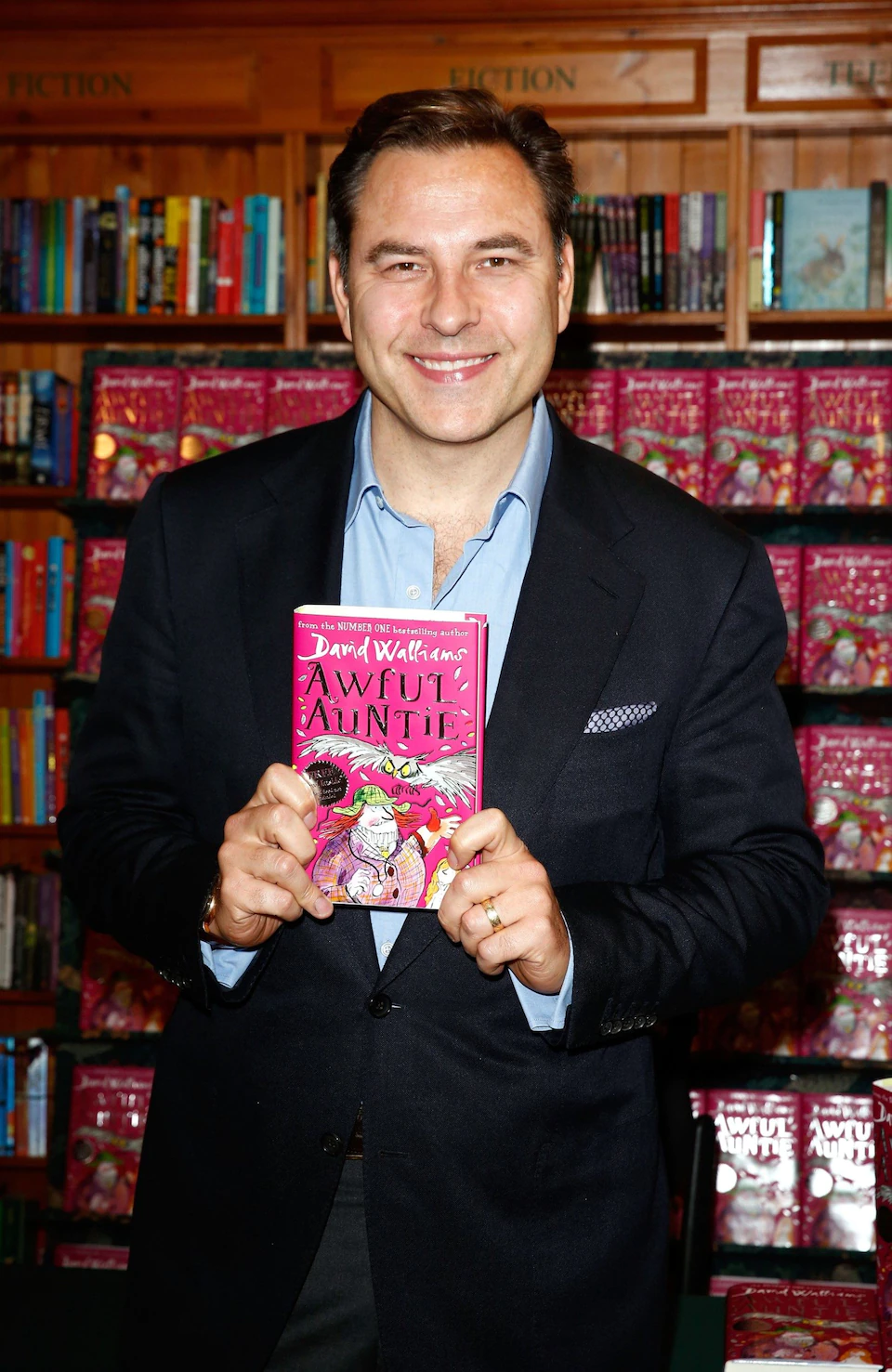
Perhaps the most egregious example, however, is the comedian David Walliams, now the most successful children’s author in Britain. Anecdotally, I’m told by parents who’ve bought his best-selling books that they’re appalling: sub-Roald Dahl (of whom Walliams is a fan), and devoid of heart or writerly flair.
David Walliams
The only thing worse than a child deprived of books is a child immersed in bad ones. Defenders might say that at least a writer such as Walliams gets more children interested in reading, but I see no evidence that he is acting as a gateway drug to better quality gear.
All of this is heartbreaking, because there’s so much to recommend. A quick ring-round to friends and colleagues resulted in my being bombarded with names. You should mention Emma Carroll, they said. Julia Copus is brilliant, said another. MG Leonard, Ross Montgomery, Nadia Shireen, SF Said, Katherine Rundell, Jenny McLachlan… Yet with the exception of Rundell, I’m ashamed to say that I hadn’t heard of any of them (even if, not having any children of my own, I have a reasonable excuse).
It was enough proof to me that children’s literature is as strong now as it was 40 years ago when I was young. So: enough is enough. It is time to attempt to end the depressing monopoly of a small selection of not-very-talented writers. A concert pianist never achieves success by being mediocre, so why should a children’s author?
There is, I admit, a slight air of nostra culpa here. Children’s fiction has always been the Cinderella of the book world, and we journalists need to work much harder in highlighting works for children. As the children’s author and scriptwriter Frank Cottrell-Boyce argued persuasively on Radio 4’s Today programme on Tuesday, newspapers run plenty of restaurant reviews, featuring swanky places that 99.9 per cent of the population are never going to actually visit. Books, on the other hand, are comparatively cheap, and even cheaper if they’re loaned or shared.
So I’m going to make a pledge. From January, we will review a new book by a children’s author once a week. It could be a picture book for younger readers, a novel for pre-teens, or perhaps some Young Adult fiction. It could be a book by an established (professional) author, or a debut by someone brilliant and unknown. What you won’t see, I promise, is anything by a non-writer who is pushing larger talents out of the way in order to extend their personal brand.”
It seems to me that publishers bear some responsibility for this situation. They certainly know what a good quality children’s book is. To favour a celebrity brand-builder, who offers a short-term sugar rush of poor quality sales, over a professional author, who offers long-term sales to happy customers, is making bad business decisions.
There is an article by Anita Singh in Yesterday’s Daily Telegraph in which Chimamanda Ngozi Adichie is quoted as saying that it is unlikely that Salman Rushdie’s novel The Satanic Verses would have been published had Rushdie written it today. Adichie goes on to say that it is unlikely that Rushdie would have decided to write it today.
Chimamanda Ngozi Adichie was born in Enugu, Nigeria in 1977. She grew up on the campus of the University of Nigeria, Nsukka, where her father was a professor and her mother was the first female Registrar. She studied medicine for a year at Nsukka and then left for the US at the age of 19 to continue her education on a different path. She graduated summa cum laude from Eastern Connecticut State University with a degree in Communication and Political Science. She has a Master’s Degree in Creative Writing from Johns Hopkins University and a Master of Arts degree in African History from Yale University. Her first novel, Purple Hibiscus (2003), won the Commonwealth Writers’ Prize, and her second novel, Half of a Yellow Sun (2006), won the Orange Prize. Her 2013 novel Americanah won the US National Book Critics Circle Award. Her most recent work, Notes On Grief, an essay about losing her father, was published in 2021. She was named one of TIME Magazine’s 100 Most Influential People in the World in 2015. In 2017, Fortune Magazine named her one of the World’s 50 Greatest Leaders. She is a member of both the American Academy of Arts and Letters and the American Academy of Arts and Sciences.
Chimamanda Ngozi Adichie
The article says, “In the first of this year’s BBC Radio 4 Reith Lectures, Ngozi Adichie spoke about freedom of speech.
She said: “Here is a question I’ve been thinking about: would Rushdie’s novel be published today? Probably not. Would it even be written? Possibly not.
“There are writers like Rushdie who want to write novels about sensitive subjects, but are held back by the spectre of social censure.
“Literature is increasingly viewed through ideological rather than artistic lenses. Nothing demonstrates this better than the recent phenomenon of ‘sensitivity readers’ in the world of publishing, people whose job it is to cleanse unpublished manuscripts of potentially offensive words.”
Ngozi Adichie said that publishers are also wary of committing “secular blasphemy”.
She claimed that the issue went far beyond the publishing world, with young people caught in an “epidemic of self-censorship” because they are too afraid of being cancelled.
The author faced her own backlash in 2017 after stating in an interview: “When people talk about, ‘Are trans women women?’ my feeling is [that] trans women are trans women.”
In her lecture, Ngozi Adichie said: “We now live in broad settled ideological tribes. Our tribes demand from us a devotion to orthodoxy and they abide not reason, but faith.
“Many young people are growing up in this cauldron afraid to ask questions for fear of asking the wrong questions. And so they practise an exquisite kind of self-censorship. Even if they believe something to be true or important, they do not say so because they should not say so.”
Ngozi Adichie said the alternative to this “epidemic” of self-censorship was people stating their beliefs and as a result facing a “terrible” online backlash of “ugly personal insults, putting addresses of homes and children’s schools online, trying to make people lose their jobs”.
She said: “To anyone who thinks, ‘Well, some people who have said terrible things deserve it,’: no. Nobody deserves it. It is unconscionable barbarism.
“It is a virtual vigilante action whose aim is not just to silence the person who has spoken but to create a vengeful atmosphere that deters others from speaking. There is something honest about an authoritarianism that recognises itself to be what it is.
“Such a system is easier to challenge because the battle lines are clear. But this new social censure demands consensus while being wilfully blind to its own tyranny. I think it portends the death of curiosity, the death of learning and the death of creativity.”
Ngozi Adichie called for a raising of standards on social media, and reforms including the removal of anonymous accounts.
She suggested that “opinion sharers, political and cultural leaders, editors [and] social media influencers” across the political spectrum should form “a coalition of the reasonable” to moderate extreme speech.
I agree with Ngozi Adichie that social media needs drastic reform to stop harmful misinformation, libel and threats. She seems to believe that the ‘tech’ owners of the social media platforms will not regulate properly because of the cost. She is right, but the cavalry is coming in two regiments. One regiment is government regulation and legislation which is starting to be announced and enacted. This will say ‘reform or pay billions’ and if social media platforms want of survive, they must change their business models. The other regiment is the digital advertisers, who, as the defunding of Twitter shows, do not want to be a part of their customers’ misery.
Publishers and authors are different kinds of problems. Publishers have historically had to navigate a fine line between capturing the public interest on the one hand and not causing public outrage on the other. Some authors face a similar set of choices. But neither publisher nor author has an incentive to lie or cover up the truth. On the contrary.
It seems to me that The Satanic Verses is a special case that has nothing to do with current truths or falsehoods. Most Muslims would regard passages in Verses as blasphemous, though is seems doubtful that Rushdie actually intended such severe criticism of Islam. To me, it seems that he intended the dream sequences featuring Mohammad (the Messenger), the polytheistic deities, the devil and the Prophet’s companion as a demonstration of how absolutist systems can go horribly wrong – one of the themes of the book. But the author framed the example with fictional characters and action which are completely contrary to Islam.
In September 2012, Rushdie expressed doubt that The Satanic Verses would be published today because of a climate of “fear and nervousness”. I agree that it wouldn’t be published even today, in 2022, but I wouldn’t attribute the decision to ‘fear and nervousness’. Today, most publishers would look at the manuscript and think, Muslims won’t like it and there will be mass protests. If he wants us to publish it, the dream sequences have to go.
You can call it the ‘sensitivity reader effect’, but really it’s a question about what’s good for the business.
This novel by Kate Atkinson won the Costa Novel Award in 2013. Her novel, A God in Ruins,which I greatly admired, also won the Costa. I wasn’t quite as taken by her third World War II novel, Transcription, but I was fascinated by the blurb on the back cover of Life after Life: “What if you had the chance to live your life again and again, until you finally got it right?”
Kate Atkinson
The novel begins in 1910 with the birth of Ursula Todd into an upper class English family in the London suburbs. There is a heavy snowstorm at the time and the doctor is unable to reach the house. The chord is wrapped around the baby’s neck, and unfortunately, she died. But there is another version where a 14 year-old maid recognises the problem, cuts the chord and the baby survives. And there is another version in which the doctor arrives in time. Similarly, when Ursula is a toddler at the beach with her older sister, they wade out into the sea and they are struck by a huge wave. Ursula drowns. No, she is saved by an elderly artist on the beach. Then, there is the time when she is taken advantage of as a teenager by the American friend of her brother and becomes pregnant. Or is she? No, she bats him away.
The story continues to the run up to the war. Ursula visits a family in Munich where she meets Eva Braun and her older lover, Adolf Hitler. Ursula’s family includes some remarkable and memorable characters, like her aunt, Izzie, who is a loose cannon socially, financially and romantically. Then there is Teddy the much-loved younger brother who becomes a bomber pilot and is killed in the war. Or no, he was shot down, parachuted, spent the remainder of the war in a prison camp, and finally made his way home.
Ms Atkinson’s descriptions of the London blitz of 1940 when Ursula worked as an area warden are astonishingly authentic, the settings devastating and the characters memorable. There are so many twists and turns in Ursula’s life, that one can’t be away from the story for very long.
There is a passage which occurs at the beginning and the end of the book in which Ursula assassinates Hitler in 1930 in a Munich cafe with a family handgun which she takes from her purse. She, in turn is killed in both versions, yet she lives to work into the 1950’s. Perhaps this is just her imagination of how the war may not have been.
For me, the idea of living one’s life again until one get’s it right is misleading and doesn’t actually happen in the book. Rather, it is a question of slightly different circumstances and reactions of the characters which make for a different result. So, the point for me is how a small bit of fortune – or misfortune – can dramatically change one’s life.
“Reading books can make modern children feel “stupid”, the author of How to Train Your Dragon has claimed.” (Article by Will Bolton from the Daily Telegraph 8 October 2022)
“Award-winning author Cressida Cowell said television and computer games have made children “more visual” than when she was young.”
Cressida Cowell
“Ms Cowell is most well known for her best-selling book series, How to Train Your Dragon, which subsequently became an award-winning franchise adapted for the screen by DreamWorks. As of 2015, the series has sold more than seven million copies around the world.
“She warned that young people who suffer from dyslexia and are used to watching TV may be put off reading books because they make them feel stupid.
“‘How on earth can you love something that makes you feel stupid?’ she added.
“The 56-year-old former children’s laureate described TV as ‘incessant’ and effortless to watch, while books can be associated with school and make youngsters feel stupid. Writing in Teach Primary magazine, the author said: ‘Making a book that a child of today will read with the same amount of pleasure that I read books with when I was a kid is rather trickier than it sounds.
“‘When I was a child, the telly was terrible. There was no internet, no PlayStation. Now the telly is glorious and incessant, and it is magically ‘beamed’ into children’s heads without them having to do anything, whereas books can become associated with school and hard work, but if a child has dyslexia, it can be worse than that. In that case, books can sometimes come to represent something that actively makes the child feel stupid, and how on earth can you love something that makes you feel stupid?”
I have several grandchildren who are avid readers in spite of the availability of television and iPads. Given a choice between watching television and reading a book, they will choose the book. For them, books are associated with school, learning and growing up. For them, school isn’t ‘hard work’. It’s about discovering ideas and maturing. They don’t feel stupid reading a book. They see the grown-ups around them reading books and they feel clever. Where did Ms Cowell get the idea that reading a book makes a child feel stupid?
For me the issue is not children, it’s the parents. Do the parents set an example by their own reading and by reading to the child art an early age. Parents can also help the child select books that will interest them, and they can set limits on video games and TV.
The article concludes, “Ofcom estimates that three-to-four-year-olds spend an average of three hours a day watching screens. Children’s screen time is thought to have increased significantly during the pandemic when home schooling and Zoom calls became common. A recent study by researchers at the University of Illinois Urbana-Champaign found that children who spend less than an hour on iPads and other gadgets each day are likely to develop better brains than their peers. Children who were on electronics for less than an hour a day were significantly better at remembering information, controlling impulses and had greater overall executive function.”
In her article of 8 July 2022 on the Writer’s Digest website, Mary Ford, debut novelist, writes about her transition from an award-winning journalist to a novelist.
Mary Ford
“MARY FORD is an award-winning journalist who spent 28 years as the editor of two small-town community newspapers in Massachusetts: the Cohasset Mariner and the Hingham Journal. She met her future husband, Conley, in 1971 in California where she was teaching English and has always been fascinated by his story. Conley and Mary were married in Los Angeles and were featured on the Newlywed Game with Bob Eubanks. After their first appearance, the popular couple was asked back for the Alumni Game. They came in last both times. Their incompatibility has lasted for nearly 50 years. Boy at the Crossroads is Mary’s first novel.”
Mary says, “Being a journalist and novelist have one big thing in common: writing. But that’s the easy part. It’s the how to write that is the challenge.
Journalists report. They provide information. They explain and sometimes, overexplain. They try not to leave it up to the reader to draw their own conclusions. Their job is to stick to the facts and deliver the story in a concise, readable way that provides the reader with what they need to know.
A novelist doesn’t have to adhere to the truth, worry about attributing quotes with the person’s title, follow AP style, or wrap the story up in 800 words. A novelist can be more creative and depart from the facts.
A journalist tells what’s happening: Saturday’s temperature broke records. Water restrictions are now in effect.
A novelist shows what’s happening: Sweat trickled down my forehead and cheeks on Saturday. When I turned on the tap to wash my face, nothing came out.
When I retired four years ago after 35 years in journalism, the best advice I received as I started drafting my novel was to “leave the newswoman behind.” After all, no one wants to read a novel that reads like a 250-page report.
As I embarked on my new career as a novelist, I took classes at Grub Street Boston, a creative writing center. I listened and welcomed criticism during the workshopping sessions. After the class finished, I paid my instructors to critique my full manuscript and give me honest feedback. I also joined writing groups.
A big advantage that journalists have is a thick skin. They are used to being edited, having their stories cut, and having parts rewritten for clarity. After a decades-long career as a newspaper editor, I welcomed the direction and criticism.
A big challenge today for the plethora of self-published authors is to find a good editor and listen to their advice.
A journalist asks the questions such as: What does this mean? Is this clear? Is there another side to the story? What’s next? In other words, the journalist is writing for the reader.
While a novelist is free from the restrictive rules of newswriting, it’s still important that their writing is clear and doesn’t get bogged down in unnecessary prose. A novelist should also write for the reader and not for themselves. That’s an important distinction.
Budding novelists, who are new to public writing (not simply journaling or writing for their own enjoyment), can be too attached to their own words. They need to put themselves in the reader’s shoes and think like them.
Perhaps the biggest benefit of having been a journalist is news judgement. A good reporter knows what the story is. Over the years, I mentored dozens of reporters and contributors. When hiring a new reporter, I always asked: “Are you a writer first or a reporter first?” They almost always answered “writer.” That was the wrong answer! It was much harder to teach them to report than to write.
Recognizing a good story is paramount for a journalist or a novelist. No amount of wonderful description or flowery language is going to make up for the lack of a good story. That’s where writing classes and groups can help. Fellow aspiring novelists can provide excellent feedback. Take comments to heart like: “That’s confusing.” “What’s your point?” “Boring!”
Over the years, I have found that good writing is more of a craft than an art. That doesn’t mean there aren’t brilliant, talented writers out there. Their books fill the classics shelf in the library. But a working writer with a good story—writes, rewrites, and revises—and then does it again until they are comfortable with their manuscript.
Discipline, not procrastination, is part of a journalist’s life. Today, in the world of competitive breaking news online, a reporter has to get down to the business of writing right away. There’s no putting it off.
I was the editor of two weekly newspapers for nearly 30 years. They were going to come out every Thursday and Friday, without any blank pages, no matter what. We had to get the job done week in and week out.
The best advice I have is to “do it!” Write as if there was an editor standing over your shoulder needing the story. If you want to be a published novelist, there is no way around the hard work of writing. Books don’t write themselves.
Outlines for novels can seem daunting. The synopsis, even more so. A synopsis is something you’re going to need because it’s vital to selling your novel if you’re going to query agents or publishers. And the outline is going to save you time while you’re writing your novel. Starting with your premise, expanding your outline, and then writing your synopsis is the perfect way to understand exactly what your story is about and how to get it done.”
On Writer’s Digest (16-04-22), bestselling author Robert Whitlow talks about how he combines writing what he knows with writing what he’s passion about—faith and law—and how his characters get to that crossroad.
Robert Whitlow
Robert Whitlow is a film-maker and a best-selling author of fifteen legal thrillers. He is also a contributor to a short story The Rescuers, a story included in the book What The Wind Picked Up by The ChiLibris Ring. In 2001, he won the Christy Award for Contemporary Fiction, for his novel The Trial.
Mr Whitlow says, ” My newest novel, Relative Justice, sits squarely in the middle of the crossroads of faith, law, and writing. Well, maybe faith and law. The characters leave the writing part to me. But the journey referred to in the title of this article is often lived out by the fictitious people who inhabit the pages of the stories I write. How do my characters get to this crossroads? What are the rewards of the journey?
Let’s start with the law, not faith. In the real world, ethical attorneys (and the vast majority of lawyers I’ve known over the past 43 years as an attorney are ethical) don’t knowingly misrepresent the facts or the law. They strongly advocate for their client’s recollection of what took place and why the law should be applied in a certain way, but they don’t make up facts or evidence to deceive a jury or mislead the court. When writing about the law, believability of character is linked to accurate portrayal of the legal process.
One of the axioms repeated countless times at writer’s conferences is “write what you know.” Knowledge empowers creativity. By writing based on knowledge, an author can craft a story with nuance, texture, and freedom from stereotypes. I’m from the South. I’ve lived my entire life in Georgia, South Carolina, or North Carolina. My professional career has been spent as an attorney. I write southern, legal dramas, and I populate my novels with people drawn from the cultural soup I’ve eaten since I was a small child.
So, when writing a novel containing legal elements, I enter the creative arena with an awareness about the world of the law—trials, investigation, depositions, motions, client relationships, law office politics, etc. That knowledge is obtained either by direct experience, observation, or research. These are all a form of “knowing.” Only then can a story achieve the acceptance awarded by a discerning reader. Courtroom time can be compressed, cross-examination shortened, and shocking surprises inserted. But no writer wants a reader to stop in the middle of a chapter and inwardly think, “There’s no way anything like that could happen in real life!” Such a tragic moment takes the reader out of the world the author created and boots them into a place from which he or she may never return.
Relative Justice is a story about a small, southern law practice consisting of family members preparing to battle a behemoth drug company. It’s a David versus Goliath scenario. Every lawyer has a few rocks in his sling, but do the attorneys in the novel have the right ammunition and skill needed to slay a giant? If not, is there another way to legally bring down an imposing enemy? That’s the law part of the journey.
A second, less common axiom for writers is “write what you’re passionate about.” That’s equally important. For me, that means incorporating faith into the lives of my characters. Not every character, but faith is strategically interwoven into the lives of some of the people who inhabit my books. And because the world of faith is someplace I “know,” based on experience, observation, and research, it’s possible to achieve the goal of credibility. The reader may not agree with a character’s expression of faith (neither do I in every instance), but what a character believes and how it impacts life can be told in a way that fits with the flow of the novel to the intersection for faith and writing.
To safely arrive at this intersection, it’s necessary to avoid writing what I call “a crusader novel,” a story in which the writer has an agenda or message that the characters can’t carry. This doesn’t just happen in the Christian fiction genre. There are crusader novels written about many topics: environmentalism, race relations, and political agendas, to name a few. A book is relegated to this category when the author’s opinion becomes intrusive (preachy) and overrides the capacity of the characters to convey the message in a legitimate way consistent with who they are.
There’s nothing wrong with characters having opinions about a topic. But the writer must provide them with the background, education, or life circumstances that can justify what they believe and express. In Relative Justice, there are characters with various levels of faith or no faith at all. I take them as I find them and discover where a faith journey might believably take them, just as it occurs all the time in real life.”