Review: The Heart Is a Lonely Hunter

I decided I had to read this book which is considered one of the best American novels of the 20th century.  It is written by Carson McCullers, who was born in 1917 in Columbus, Georgia, the oldest of three children of Lamar Smith, a jeweller of French Huguenot descent, and Marguerite Waters.  As a child, she was encouraged both to play the piano and to write stories.  At the age of seventeen she went to New York City to study music at Julliard School of Music, but she lost her enrolment money on the subway.  She returned to Columbus temporarily to recover from rheumatic fever.  Back in New York, she studied writing and produced her first piece of writing.  She married Reeves McCullers, and ex-soldier and aspiring writer in 1937.  In 1940, The Heart Is a Lonely Hunter was published to considerable critical acclaim.  She went on to write three more novels, several plays and short stories.  She divorced Reeves in 1941 and remarried him in 1945.  In the interim, she fell in love with several women, including Gypsy Rose Lee, but, reportedly, her attempts to have sex with any of them came to naught.  Reeves committed suicide in 1953, having failed in his aim to persuade his wife to commit suicide with him.  Carson McCullers was an alcoholic who suffered from strokes; she was paralysed on her left side from the age of 31 and died at the age of 50 in Nyack, NY.  Her writing style is described as Southern Gothic.

Carson McCullers

The Heart is a Lonely Hunter, originally titled The Mute, takes its name from the poem The Lonely Heart by William Sharp: “Deep Deep in the heart of Summer, sweet is life to me still, But my heart is a lonely hunter that hunts on a lonely hill.”

The novel has six main characters: John Singer and Spiros Antonapoulos who are both deaf mutes and close friends.  Spiros is hospitalised when his mental health deteriorates.  Singer stays in the small mill town in Georgia, where he works as a silver engraver in the 1930’s,  There are also Mick Kelly, a tomboyish girl who loves music and dreams of owning a piano, but, out of necessity, has to work at Woolworths; Dr Benedict Copeland, an old black doctor who is filled with anger at the plight of blacks in the South; Biff Brannon, the observant owner of a twenty-four hour diner; and Jake Blount, an alcoholic, violent labour organiser.  Each of these latter four is attracted to John Singer by his placid demeanour and his apparent sympathy with their individual angst.  The well-drawn characters suffer from loneliness which McCullers interprets with deep empathy.

When the book was first published, it was unusual for a young author to write with such effective sympathy about those who are rejected, forgotten, mistreated or oppressed.  She also highlights the oppressive race relations in the South in the 1930’s.

For me, however, the book moves at too slow a pace, and while this largely matches the pace of the setting, I found myself losing interest now and then.  The characters, the setting and the emotions are very real; the writing is excellent, if only it moved a little faster.

Master and Commander

I have long been addicted to Patrick O’Brian’s novels which featured Captain Jack Aubrey and Dr Stephen Maturin in tales of sea battles with French warships in the early nineteenth century.  There was an article in The Sunday Telegraph on November 3rd by Lewis Jones entitled “The Dark Story Behind ‘Master and Commander’, the first of O’Brian’s twenty novels.  I probably read all twenty, which were addictive to an ex-Navy officer like me, because of the incredibly realistic accounts of life aboard British warships during the Napoleonic era.  But more than that, Aubrey is a roast-beef British, dashing, but sometimes thoughtless character, accurately played by Russell Crowe in the film, and Maturin is an Irish-Catalan naturalist, doctor, and spy.  They are shipmates, friends, musicians, and adventurers in the series.  O’Brian had an amazing talent for concocting what looked like sure wins for Aubrey, which suddenly became disastrous, but from which Aubrey extracted a brilliant win over his French adversary.

The Telegraph article mentions some interesting facts about O’Brian, the author.  He was born in 1914 in Buckinghamshire; during the war, he worked in British intelligence with his second wife, Mary Tolstoy, who had been married to a Russian, Count Tolstoy.  After the war, he moved to the Catalan part of France where he spent decades writing, half a dozen novels, a biography of Picasso, numerous short stories and translations.  He had friendly reviews, but he wrote in obscurity and he was always broke.  In 1967, when O’Brian was at a low ebb, he received a letter from the American publisher, J B Lippencott, noting the C S Forester had died the previous year and that he, O’Brian, would be well qualified to fill the void left by Forester’s Hornblower series.  In 1969, Master and Commander was published.  By the 1990’s O’Brian was rich and famous, was appointed a CBE and the world wanted to know about him.  As an intensely private person, this irritated him considerably.   He was the eighth of nine children born to an English ‘pox doctor’ (venereologist) of German descent and an English woman of Irish descent.  He was ‘briefly’ educated at grammar schools.

Perhaps the most interesting aspect of O’Brian’s biography is the speculation about how he acquired his naval knowledge.  In a 1994 essay, O’Brian himself said, “my particular friend Edward, who shared a tutor with me, had a cousin who possessed an ocean-going yacht, a converted square-rigged merchantman, that he used to crew with undergraduates and fair-sized boys, together with some real seamen, and sail far off into the Atlantic. The young are wonderfully resilient, and although I never became much of a topman, after a while I could hand, reef and steer without disgrace, which allowed more ambitious sailoring later on.”

But, in 1995, the venture capitalist, Thomas Perkins, offered O’Brian a two-week cruise aboard his then sailing yacht, a 154 ft ketch.  He later said, “his knowledge of the practical aspects of sailing seemed, amazingly, almost nil” and “…he seemed to have no feeling for the wind and the course, and frequently I had to intervene to prevent a full standing gybe. I began to suspect that his autobiographical references to his months at sea as a youth were fanciful.”

In any event his tales of seamanship and combat at sea are remarkably realistic and entertaining.  Patrick O’Brian died in 2000.

Review: A Connecticut Yankee in King Arthur’s Court

As a particular fan of Tom Sawyer and Huckleberry Finn and other pieces by Mark Twain, I thought that this would be a particularly good book to which to listen, so I down loaded it from Audible and my wife and I started listening to it.  She lost interest almost immediately, but I carried on to the bitter end.

Mark Twain was the pen name of Samuel Langhorne Clements, (1835-1910), an American writer humorist, entrepreneur, publisher and lecturer.  His obituary in the New York Times, called him “the greatest humorist this country has produced”, and his The Adventures of Huckleberry Finn has often been called “The Great American Novel”.  He worked as a miner in California and as a riverboat pilot on the Mississippi River.  His pen name is the call of the leadsman on a riverboat reporting two fathoms beneath the keel of the boat – a safe depth of water.

Mark Twain

A Connecticut Yankee begins with the protagonist, Hank Morgan, wakes up after being hit on the head in early medieval England near Camelot, the mythical King Arthur’s kingdom, in an environment of chivalry, knighthood, slavery, serfdom, domination of the Catholic Church, and an autocratic ruling class.  Hank competes with Merlin, King Arthur’s great sorcerer, using nineteenth century technology to win the kings favour and become ‘The Boss’, the second most powerful man in the kingdom.  Secretly, Hank introduces gun powder, the telephone, hydraulic pumps, electricity, etc. behind the scenes in Camelot.  The average citizen of Camelot is depicted as a gullible illiterate, ready to believe the most improbable presentations.  Knights are hardly chivalrous, kings are tyrants and magic is everywhere.  Hank is challenged to joust with various knights and he defeats several by lassoing them, and the rest by shooting them with a pistol.   Eventually the church causes a revolt against Hank which results in a war of knights with swords and spears against Gatling guns and electrified fences, where the victors, except Hank, succumb to disease; Merlin puts Hank under a spell for 1300 years and then is electrocuted.

The novel is a satire of the romanticised views of chivalry in the middle ages; it is also an attack on the mysticism and the controlling nature of the Roman Catholic Church of the time.  The concept of time travel as a sub-genre of science fiction is significant in that it was followed almost immediately by several other novels.

I found the novel boring, probably because I have no romantic notions of knighthood and chivalry or misconceptions about the role of the Church which require correction.   There is one passage which lists just the names of a large number of knights.  I found it beyond credibility that a single nineteenth century engineer could build a ‘modern’ infrastructure in the iron age in only a few years.  Twain also mistakenly refers to steel armour well before it was invented.  Apparently Twain had a falling out with Sir Walter Scott who wrote romantic novels about chivalry and on whom he blamed the start of the American Civil War for Scott’s promotion of distinctive titles.  The story seems to have no unifying plot, but meanders from one set of circumstances to another at the whim of Hank Morgan.   The characters are largely one-dimensional, with the exception of ‘Sandy’ (Demoiselle Alisande a la Carteloise).  I found myself asking repeatedly, “What’s the point?”

Forget about the Connecticut Yankee; go with Huckleberry Finn.


Review: Me Before You

My wife and I listened to this audio book on our way back to London from Sicily.  I had selected it because I thought my wife would like it, and because its author, Jojo Moyes, contributed a lot of money to a program to help illiterate adults to read.  (My way of saying ‘thank you’!)

Jojo Moyes was born in 1969 on Maidstone, England.  She attended Royal Holloway, University of London and City University for a post graduate course in journalism.  She worked for The Independent newspaper for about ten years.  She wrote three manuscripts of novels that were all rejected.  With one child and another on the way, she was writing her fourth novel, which she decided would be her last if it were rejected.  Wikipedia says. “After submitting the first three chapters of her fourth book to various publishers, six of them began a bidding war for the rights.  Moyes became a full-time novelist in 2002, when her first book Sheltering Rain was published. She continues to write articles for The Daily Telegraph.  Moyes’ publisher, Hodder & Stoughton, did not take up the novel Me Before You and Moyes sold it to Penguin.”  It has sold fourteen million copies world-wide, went to number one in nine countries, and reinvigorated her back catalogue resulting in three of her novels being on the New York Times bestseller list at the same time.  Moyes would later write two sequels starring Louisa Clark, the protagonist of Me Before YouAfter You in 2015 and Still Me in 2018.  “Moyes lives on a farm in Essex with her husband, journalist Charles Arthur, and their three children.  She enjoys riding her ex-racehorse, Brian, as well as tending to the numerous animals on her family’s farm, including Nanook, or ‘BigDog’, a rescued 58 kg female Pyrenean mountain dog.”

Jojo Moyes

Me Before You is a romantic novel, but it is also a tragedy on a serious, controversial subject: euthanasia.   The protagonist, Louisa Clark, aged 27, an attractive girl from a small, historic English town and an ordinary, lower middle class family, is laid off from her job working in a cafe and takes a job as a carer for a quadriplegic 35-year-old man, Will, who was injured in an accident, is wise, good-looking, worldly and was enormously successful in business.  He isn’t sure he wants to continue living in his present state.  There are many other characters: Louisa’s parents and sister, Will’s parents and sister, Louisa’s boyfriend, Will’s girlfriend, and a medical carer.  It is a long book: 512 pages, and the listening time is 16 hours.

The book is certainly addictive; it is difficult to put it down.  Apart from the first chapter which begins rather slowly, the book is electrified with wave after wave of emotional crises, all quite real and believable.  There are job crises, romantic crises, existential crises, financial crises, personal crises.  The dialogue and the scene-setting is very good indeed.  Also impressive is the medical research that Ms Moyes must have done to make this novel as believable as it is.  The central characters are all clearly defined, and their development is entirely credible.  The only criticism I can offer is that one becomes somewhat emotionally fatigued reading the novel.  Could it have been a little bit more memorable and effective if it had been a hundred pages shorter?

If you’re a reader who likes emotional roller coasters, this one is definitely for you!

Bad Book

You may remember that a had a recent post (September 1) on Why Do Bad Books Get Published?  I now have an example: The Tiger’s Prey, by “Wilbur Smith with Tom Harper”.  I bought in from the local bookstore here in Sicily, which has a rather limited English language shelf, because years ago I read Wilbur Smith’s When the Lion Feeds, his first novel (1964) which I thought was great story-telling.  By 2014 Smith had published 35 novels with sales of 120 million copies, 24 million of them in Italy.  He is now 86 years old.

In 2012, he moved his publishing to Harper Collins.  As part of his new deal, Smith would be writing select novels with co-writers, in addition to writing books on his own. In a press release Smith was quoted as saying: “For the past few years my fans have made it very clear that they would like to read my novels and revisit my family of characters faster than I can write them. For them, I am willing to make a change to my working methods so the stories in my head can reach the page more frequently.”  Smith’s Wikipedia page lists five co-writers; in the last five years he has only written one book in his own name.

So who is Tom Harper, and how much of The Tiger’s Prey did he write?  The answer to the latter question is not in the public record.  The answer to the first question is that he is a novelist, “13 thrillers and historical adventures”, born (1977) and brought up in Germany, now living in York, England.

In the previous post, I said, “It’s also worth noting that many bestselling authors no longer write their books themselves and use ghostwriters (who might not have the same writing chops) so that the author can churn out more books.”

Could that be the case for The Tiger’s Prey?

This novel is set in Cape Town and India in the 18th century, and it focuses on a family of seafaring, English aristocrats.  There are plenty of adventures:

  • Tom Courtney wins a sea battle with pirates while being seriously out gunned and out manned.
  • The head of the East India Company sends a derelict boy, Francis, who is Tom’s nephew to kill Tom as revenge for Tom’s accidental killing of Francis’ father.
  • There is a battle between Tom and Francis in which several others are killed.
  • Christopher Courtney breaks with his father, Guy, who runs the Company office in Bombay and joins the crew of a trading ship.  (Guy and Tom are bad blood twin brothers)
  • Christopher is flogged by the captain, later kills him, steals the captain’s money box, sets fire to the ship, and goes ashore.
  • Christopher joins a Hindu warrior school.  He is on a mission when he rescues a woman on the road who is threatened with rape and kills her assailant.
  • The woman runs a band of brigands and he joins her band.
  • Francis joins Tom on a trading mission to India.
  • The ship that Tom, his wife Sarah and Francis are on is shipwrecked, and they are intercepted by the army of a local Indian ruler, but they find their way to a local Company fort.
  • Christopher and his female leader become lovers and steal a money chest belonging to the local ruler.
  • They are captured and imprisoned by the Rani, the local ruler.
  • Christopher is forced by the Rani to kill his lover; he takes a position in her army.
  • The Company chief at the fort falls out with the Rani, and sends a military mission to negotiate with her.
  • The mission is attacked, the chief is killed, and the survivors retreat to the fort.
  • The fort is attacked by the Rani’s men but Tom resists the siege until the Company rescues them.
  • Tom goes to Madras and finds that his wife, who left the fort early, has been taken by pirates, and held for ransom.
  • Christopher joins the pirate leader; Guy refuses to attack the pirate; Tom cannot steal the money to pay the ransom.
  • Tom finds a rajah who is willing to fight the pirate and gives Tom and Francis command.
  • The pirate castle is sieged successfully and the women freed.
  • Tom and Christopher fight and the latter jumps off the castle wall.
  • Tom gets a large portion of the pirate’s treasure and Christopher gets together with the widowed wife of the Company chief.

But it isn’t just one barely credible adventure after another, the book is full of brutal violence and some unloving, explicit, rather forceful sex.  Moreover, there is a complicated backstory about the Courtney family which adds to the credibility burden which the story bears.  The characters tend to be black or white, good or bad, with little depth or complexity.  And what motivates our hero, Tom?  It is mostly to recapture a precious family sword, which has been taken from him and falls into several evil hands.  The sword is described with typical hyperbole: “he had used it to send countless men to their deaths they so well deserved.  It was made from the finest Toledo steel, and the supple weight of the blade was perfectly balanced by the star sapphire in the pommel.”  One might ask, also, what the title of the book has to do with the story.  The only tigers in the story are either rugs or the subject of a hunt organised by the rajah; the hunt does nothing to advance the story.

There were several factual errors in the first few pages.  East Africa was mentioned as a leg of the slave trade with America and the Caribbean; it was West Africa.  During the first sea battle, a “brazier on an iron tripod” is brought out and used to heat the tip of a sword.  This is extremely unlikely.  The only heating on a wooden sailing ship was the in the cook’s galley, which was extinguished before battle for fear of fire.  The only exception would be to heat shot (in the galley).  There is also mention of an un-manned broadside.  To be un-manned, the powder in each gun would have to be lit by a long fuse, and since the burn time of 18th century fuses was highly variable, it was unlikely to be a effective broadside.

There are two areas where Mr Harper shines: his knowledge of 18th century seamanship and exotic Indian lore.

Give it a pass.

Review: Napoleon’s Buttons: 17 Molecules that Changed History

This book was recommended to me by an Italian friend of mine, who particularly likes non-fiction.  It was written by Penny Le Couteur, PhD, who, the back cover tells me, “teaches chemistry ad Capilano College in British Columbia, Canada.  She is the winner of the Polysar Award for Outstanding Chemistry Teaching in Canadian Colleges, and has been a professor for over thirty years.  and

Jay Burreson, PhD, who has worked as an industrial chemist and held a National Institutes of Health special fellowship for chemical compounds in marine life.  He is also general manager of a high-tech company.”

The title of this book is based on the unproven belief that the clothing of Napoleon’s officers and soldiers in his Grande Armée may have fallen apart during the extreme cold of the winter of 1812, following its retreat from Moscow.  One observer of the army’s retreat noted that it appeared like “a mob of ghosts draped in women’s cloaks, odd pieces of carpet or greatcoats burned full of holes”.  The buttons on the uniforms of the Grand Armée were made of tin, a metal which changes into a crumbly, non-metallic grey powder at low temperature.  Could crumbling buttons have led to the defeat at Moscow, and the extreme hardships of the retreat?  If the army had been equipped with brass buttons, might it have been victorious at Moscow, and moved on east, capturing all of Russia?  If so, Russia and all of Europe would be a different place today.  In 1812, 90% of the Russian population were serfs, who, unlike their counterparts in western Europe, could be bought and sold by their owners.  Might Russia have been recreated in the image of France?

There are seventeen chapters in this book: one for each special molecule or group of molecules.  In each chapter, the elements making up the molecule are identified, as well as the structure of the molecule.  If the molecule occurs in nature, the efforts made to synthesize it are discussed.  But, most interestingly, the impact of the molecule on human history is described.  Here is a partial list of the molecules: pepper, nutmeg and clove, ascorbic acid (vitamin C), glucose, cellulose, silk and nylon, dyes, the Pill, molecules of witchcraft, salt.  For example, in the case of the spice molecules, they stimulated an enormous growth in world trade and exploration.  Ascorbic acid prevented scurvy, making long voyages possible.

While there are plenty of chemical formulae and equations in the book, one does not have to be a chemist to understand the evolution of each molecule.  The text is user friendly, understandable and clear.  The authors are at their best when they describe the impact of each molecule on history, using facts, examples and statistics.  In the introduction, they confess that they had to narrow a larger list down to seventeen.  One has to wonder what they left out, but it doesn’t really matter because the general point about the power of chemistry on humanity has been made. One must wonder what the future will bring.

As I read the book, some of my high school chemistry came back to me, and in this sense, I may be an atypical reader, but I would have liked a brief chemical tutorial on how the structure of a molecule is determined, and on how individual molecules work on human beings.  There are excellent discussions on salt and soap, but for some other molecules, this is discussed only superficially.

Review: Jesus: A Pilgrimage

This book came to me by a trade.  I traded Stoney the Road, about black reaction to Reconstruction , and its aftermath, in which my son-in-law had an interest, for a book he was reading that I thought was Jerusalem.  But the book he was reading turned out to be Jesus: a Pilgrimage, by James Martin, SJ, a Jesuit priest.  Nonetheless, it turned out to be a fair trade, because I enjoyed Jesus: A Pilgrimage.  It was also a New York Times bestseller and Christopher Award Winner.

Father James Martin is a prolific writer having authored thirteen books.  He is also editor-at-large of the Jesuit magazine, America.  He was born in 1960 and grew up in Plymouth Meeting,  Pennsylvania, United States (near where I grew up).  He graduated from the University of Pennsylvania’s Wharton School of Business in 1982 and worked in corporate finance at General Electric for six years.

Dissatisfied with the corporate world, he became more deeply involved in the Catholic Church and decided to enter the Society of Jesus (more commonly known as the Jesuits) in 1988. During his studies to become a Jesuit priest, he earned a M.A. in philosophy from Loyola University Chicago in 1994, an M.Div. from the Weston Jesuit School of Theology in 1998, and a Th.M., also from the Weston School, in 1999. He was ordained a priest in 1999.

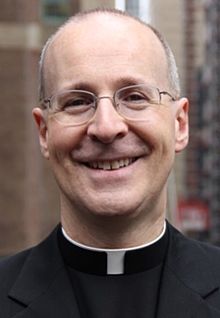
Father James Martin

In Jesus: A Pilgrimage, Father James describes a pilgrimage he made to the Holy Land to view the many historic places associated with Jesus in Jerusalem and vicinity and in Galilee.  He describes the site, his reaction to it, reveals what other religious writers have said about it.  He includes the New Testament verses that relate to the events that are though to have taken place there, and he offers theological commentary on the significance of the events.

But this book is not a heavy theological tome, because Father James also covers the joys and difficulties of journeying through the Holy Land.  His touch is light, his prose in simple; the journey is spiritual, but also light-hearted.

I found nothing to criticize in this book.  At 465 pages, it was lengthy, but it progressed naturally from site to site, following Jesus’ time line.  To have abbreviated it, would necessarily have made it more superficial or more theological.

The book was particularly interesting for me as my wife and I toured Israel several years ago and visited many of the sites mentioned.  Since our interests were secular as well as religious (we wanted to learn more about Christianity, Judaism and Islam), we missed some of the iconic places mentioned.  It was good to draw a mental and spiritual picture of them.

Those of you who have read my books know that I am a committed Christian. I was entirely comfortable with nearly everything Father James said; his spiritual beliefs tended to confirm my own.  But what advice can I give to those potential readers who consider themselves adherent of other faiths, or agnostics, or atheist?  My view is that Jewish and Muslim readers, who may have some curiosity about Christianity, would find the book interesting in that it clearly defines what Christianity is about, without any reference to other religions.  Agnostics may struggle with the intensity of the evidence that Father James presents.  It is difficult to be ambivalent about it.  Atheists will almost certainly put the book aside after reading, at most, the first four pages, and declare: “this book isn’t for me.”

How Long Does It Take to Publish a First Book?

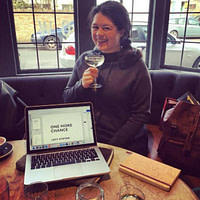
Lucy Ayrton was featured on the Jericho Writers blog recently with her story about the time it took to get her first book published.  Lucy’s debut novel, One More Chance, is out 28th June (ebook and audio) and 15th November 2018 (paperback) with Dialogue Books. The novel follows the story of Dani, a London prison inmate, and combines physiological suspense with contemporary women’s fiction.

How long does it take to publish your first book

“The first time I thought I’d finished my novel was in November 2015. It was 80,000 words and it had a beginning, a middle and an end, and I’d given it to some friends for feedback and made some minor changes. I was DONE. Well done, me!

I sent it off to a couple of competitions and put my feet up, resolving to send it to some agents in the new year. I felt very, very pleased with myself.

The next time I thought I’d finished my novel was the summer of 2016.

I’d been shortlisted for one of the prizes I entered and had some feedback from agents and publishers. I’d done a rewrite, swallowed my pride, deleted a load of my beautiful, precious words to make way for new ones, and done another proof.

I mean … NOW I was done, right?

The next time was the spring of 2017. I had found a brilliant agent who loved my book and had some ideas of how to make it even better. We had worked on it together, tweaking, making changes, polishing and rearranging. Now, it was the eve of the London Book Fair and we were officially ready to send it out on submission. The book was surely finished.

In September that year I started working with my publisher and editor. Of course, the fact that “editor” is a job title should have tipped me off that she may want me to spend further time on the work. I was really happy about the changes that we were making together! It was exciting to be nearly finished.

In October that year I discovered that line edits were different to structural edits.

In November I discovered that copy edits are different again.

In January this year, I was sent a fully typeset manuscript to proofread. My book, typeset! Now for real it was done, hurray!

All I would have to do, I was sure, was have a quick skim through to make sure it was all in order – something I had done many times before – tell them it was all okay, and we were off. I set aside a whole day to do this, which seemed excessive. I figured I would probably be able to knock off and go to the pub mid-afternoon.

In late March, after a fair few back and forths and me spending an entire panicked weekend staring at a text, believing myself to have forgotten how to read. (Professional proofreaders spend FIFTY HOURS with a novel, guys! It turns out you can’t knock it out in a long afternoon.) I got an email from my production manager. She said that this was the very last round of edits, and that after this one, we wouldn’t make any more changes – it would be sent to the printers. It would finally and truly be done.

As I emailed back the approval, I didn’t feel as triumphant as I thought I would. I felt a little bit sad, almost scared. I’d spent so long with that book, with my protagonist and in my world. I didn’t really want to let her go. I love that book. What if I couldn’t write anything as good ever again? I almost didn’t want to sign the proofs off.

But I did it. I hit send, and I turned back to my work in progress. And over the next couple of weeks, I found I had a lot of energy on this new project. It seems so unlikely that a scrappy little manuscript will ever come to anything, but I think this one can. I know I could do it again, you see, because I’ve done it before.

I’ve finally finished a novel.”

Adult Illiteracy

There was an article in The Daily Telegraph written by Anita Singh on January 5, 2019 entitled “Adult Illiteracy is Ignored, Says Top Publisher”.

“Millions of British adults are functionally illiterate but the subject is ignored because it is not a ‘fashionable’ cause, according to the most powerful woman in publishing.

“Dame Gail Rebuck, chair of Penguin Random House, founded the Quick Reads scheme, which distributes specially-written books designed to encourage adults to discover the joy of reading.  Dame Gail devised Quick Reads after first founding World Book Day for children in 1997. She said: ‘At the time, and this seems like another age, people were worried about kids watching videos. They weren’t reading – this was pre-JK Rowling and there was a real sense that we were losing a generation.’

“The scheme began in 2005 and attracted some of the country’s best-selling authors, including Joanna Trollope, Adele Parks and Andy McNab. But this year it faced closure after failing to find a corporate sponsor and was only saved after Jojo Moyes, the writer, stepped in with £120,000 of her own money.

Jojo Moyes

Wikipedia says, “Jojo Moyes (born 4 August 1969) is an English journalist and, since 2002, a romance novelist and screenwriter.  Early in her writing career, Moyes wrote three manuscripts that were all initially rejected. With one child, another baby on the way, and a career as a journalist, Moyes committed to herself that if her fourth book was rejected, she would stop her efforts. After submitting the first three chapters of her fourth book to various publishers, six of them began a bidding war for the rights.  Moyes became a full-time novelist in 2002, when her first book Sheltering Rain was published.  Moyes’ publisher, Hodder & Stoughton, did not take up the novel Me Before You and Moyes sold it to Penguin. It sold six million copies, went to number one in nine countries, and reinvigorated her back catalogue resulting in three of her novels being on the New York Times bestseller list at the same time.”

“‘It’s a huge sum of money but not to a corporate sponsor, Dame Gail told the Telegraph. ‘But the point is, it’s not fashionable, is it? You can talk about little kids reading – we can all relate to that, we all want children to read books, it’s lovely.’

“‘But adults not reading? Or adults in the workplace not having enough literacy to fill in a form, to work on a computer, to be promoted? That’s not something that people like to talk about. But it exists.’

“The National Literacy Trust estimates that 5.1 million adults in England are functionally illiterate, meaning that they have a reading age of 11 or below and can understand only the most straightforward, short texts on familiar topics.

“Dame Rebuck said, ‘I was asked to give a World Book Day lecture and I mentioned that there are five million adults in the UK who are functionally illiterate. After giving the lecture, people came up to me and said, ‘What are you going to do about it?’ I actually hadn’t thought of doing anything, but it suddenly occurred to me that if you have a household where there are no books, where the adults are either illiterate or so nervous about their literary capabilities that they don’t get engaged in their kids’ education or their homework, you have a cycle of deprivation that goes on through generations.’

“‘We got publishers involved and create a library of books to excite and engage emerging adult readers. We are very thankful to Jojo Moyes, who passionately believes in the power of reading to transform lives.’

“Moyes will fund Quick Reads for the next three years. She said when the donation was announced earlier this year:  ‘There’s a political side of me that feels dismayed that it’s down to an individual to keep a scheme that is basically for the public good going. In an ideal world it wouldn’t be me … but we are where we are.  We live in really difficult times and I felt sometimes you just have to put your money where your mouth is, and this is a cause I believe in.'”

Brava, Jojo!

Review: Another Country

I bought this book at an airport bookshop in May, because I’ve never read anything by James Baldwin.  I’m glad I did, because Another Country is like no other novel I’ve read.

James Baldwin was born in Harlem, NY in 1924.  His mother left his biological father because of his drug abuse.  She then married a Baptist preacher, David Baldwin, with whom she had eight more children.  Young Baldwin was treated harshly by his step father, but he followed in the elder Baldwin’s footsteps to become a junior minister.  He later described himself as not religious, but his church experience clearly influenced his world view and his writing.  In 1948, Baldwin emigrated to Paris, discouraged by the racial prejudice in the US and aware that he was gay.  He spent most of the rest of his life in France, returning to the US a number of times to participate in the civil rights movement.  He wrote six novels, of which Another Country is the third, two plays, nine collections of essays and one collection of poems.  He died in 1987.

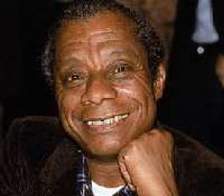
James Baldwin

Another Country begins with Rufus, a young, black drummer from Harlem who has fallen on hard times, with drugs, too much alcohol, too few gigs.  Rufus meets Leona, a poor, white, Southern girl in a bar.  They go to a party, have sex and she follows him to his place, where Vivaldo, Rufus’ only friend, a failing writer, who is white meets them.  The three of them encounter Cass who is married to Richard, Vivaldo’s friend and high school English instructor, who is about to publish a novel he has written. Rufus drifts into a homosexual prostitution encounter, and losing his self esteem, beats up Leona and self destructs, committing suicide.

The scene then shifts to Ida, Rufus’ adoring sister, who becomes Vivaldo’s lover, but there is constant friction between them over their respective identities. They meet Steve Ellis, who is a promoter working with Richard.  Ellis senses singing and sexual talent in Ida.

The scene shifts to France where Eric, a bisexual friend of Vivaldo and Cass is making arrangements to travel to New York to take up a lead role in a play, and must take temporary leave from his young French boyfriend, Yves.

In New York, Cass, who has become estranged from Richard, has an affair with Eric, and Vivaldo who is desperate with suspicion over the affair between Ida and Ellis, also has a fling with Eric.

Richard learns of his wife’s infidelity with Eric; he had suspected Vivaldo; he is enraged but they are talking.  Ida confesses her unromantic affair with Ellis, and they, also are talking.   Yves and Eric meet at Idlewild airport.

This novel has a beautifully crafted, credible plot.  It delves into a nether world of drugs, music, self-gratification and self-deception. It deals with perceptions of racial identities on both sides of the divide in the US: neither blacks nor whites are happy, to the detriment of society generally.  It also deals with the gaps between actual and longed-for identities, and masculinity, which can lead to self-destruction.  As such, it is a portrait of a dysfunctional society.  One cannot help but feel that in the 1960’s when Another Country was published the portrait was accurate for some.

The only criticisms I have of Another Country are that some of the dialogue, while realistic, is just chit-chat and does not add value for the reader.  Similarly, some of the narrative about the perceptions and feelings of characters can be lengthy, complex and therefor loses some focus and clarity.  Finally, the environment of the relationship between Cass and Richard isn’t clear enough to support either Cass’ disappointment or Richard’s outrage.  I can only theorise that Baldwin did not have experience of long-time heterosexual relationships.

If you haven’t read Another Country, I highly recommend it.