Review: The Satanic Verses

download


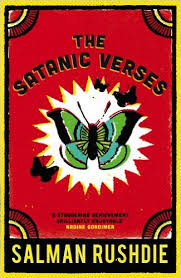
I decided to read this novel by Salman Rushdie because I had not read any of his work, because this particular novel is famous, and because of my interest in better understanding Islam.  The novel is famous for the fatwa issued by the Ayatollah Khomeini calling for the death of Rushdie for having committed blasphemy and for mocking the Islamic faith.   There was a bounty of £2.8 million on Rushdie’s head and several failed assassination attempts; others associated with the novel were not as fortunate: Hitoshi Igarashi the Japanese translator, was stabbed to death on 11 July 1991, and a number of attempts were made on the lives of others.  The novel was published in 1988, and it was shortlisted for the Booker Prize, but won the Whitbread Award for novel of the year. The fatwa was issued on 14 February 1989.  In the UK, 13 Muslim barristers drafted an indictment for the High Court attempting to justify a charge of blasphemy.  This attempt failed and blasphemy is no longer an offense under English law. For years, Rushdie lived at no fixed abode under Special Branch protection.  In 1998, Iran issued a conciliatory statement and Rushdie declared he would no longer live in hiding.   The Iranian state news agency reported in 2006 that the fatwa would remain in place permanently since fatwas can only be rescinded by the person who first issued them, and Khomeini had since died.

In the context of blasphemy, it is worth a brief description of the origin of the term ‘satanic verses’.  Muhammad was living in Mecca at the time and he was experiencing difficulty persuading powerful Meccans to accept that he was the prophet of God.  There is a theory – repeated in Rushdie’s novel – that, as a concession to these men, he gave brief permission for prayer to three popular idols.  What is certain is that Muhammad originally recited several verses naming the idols, praising them and indicating that they should not be neglected.  Muhammad then inserted three replacement verses which say that the idols are only ‘names’ and that ‘God revealed no authority for them’.  His explanation for the change was that Satan had managed to slip in the verses without him knowing it.

In the novel, Muhammad (called Mahound) comes across as a weak, indecisive individual who uses religion for his own benefit.  But the sequences in the novel involving Mahound are contained in the dreams of the character, Gibreel Farishta, who is mentally ill and who believes that he has become the archangel Gabriel, so these characterisations cannot be said to represent the author’s personal views.

The central plot of the novel is that two Indian Muslim actors fall from the sky over the English Channel when the flight they are on is blown up.  Miraculously, they both survive, and they take on the personalities of the archangel Gabriel (Gibreel Farista) and the devil (Saladin Chamcha).  Each of them has difficulty being accepted in London, each finds to a prior love, and each returns to his previous occupation.  Chamcha seeks revenge on Farista for having deserted him after their fall from the sky, and he stokes Farista’s pathological jealousy, destroying his love relationship.  Farista realises what his colleague has done and he forgives him.  Nonetheless, Farista kills his lover, Alleluia Cone, and commits suicide.  Chamcha returns to India and is reconciled to his dying father.

The novel – at 547 pages – has a great deal beyond this simple plot, including dream sequences involving the prophet Mahound.  There are also sequences involving relationships of the primary characters with lovers, friends and acquaintances.

This is not an easy book to read.  The sentences are long, sometimes complex, and the references to characters, places and things unfamiliar.  There is one sentence 146 words long.  Being somewhat familiar with Islamic history, I recognised some to the dream characters, but I could have benefited from a working knowledge of Indian mythology.  It is also not easy to follow what is going on: is this part of a dream or reality?  Having said that, I did find much of the writing uniquely engaging.

The feelings one encounters in reading the book are doubt bordering on hopelessness with some offsetting glimpses of humour.  The doubt has to do with the purpose of life, religion, acceptance as an individual, and perception vs reality.


Publishing Success

There is a story in The Daily Telegraph last month about how Andrew Michael Hurley achieved success with his first novel, The Loney which won the Costa Prize for the year’s best first novel.  This May, it won the Book of the Year award at the British Book Industry Awards.   Hurley is a former teacher from Preston (northern England).  He self-published two collections of stories before taking up part-time work as a librarian, so that he would have time to work on a novel.  He spent almost four years working on The Loney before showing it to friends and colleagues.

images

Andrew Michael Hurley

The people who read it, he recalls, “Said it was great – but where would it go in bookstores?”  (The novel is set on a wild stretch of northwest English coast, and mixes captivating descriptions of the landscapes with a mixture of the ridiculous and the terrifying.)  The article says, “It follows the activities of a small group of hardline Catholics – the narrator, his developmentally challenged adult brother, his fervently religious parents and two elderly friends – as they mount an expedition to a holy well in the company of their new parish priest.”

Three years ago, Mr Hurley couldn’t find a publisher anywhere.  “He sent it to agents and small publishers, all of whom responded either with silence or with polite notes of refusal.  Eventually, searching the internet for possible publishers, he came across Tartarus, a small press specialising in ‘literary supernatural/strange/horror fiction’ and run from a house in the Yorkshire Dales by the writers Ray Russell and Rosalie Parker.  ‘It was just one of many books when it arrived,’ says Russell.  ‘Ros read it and loved it, but I was slightly sceptical, mainly because over the years we’d had the impression that our customers preferred short story collections.  But as Ros said, the whole idea of Tartarus was to publish books that we liked – and if we liked then, hopefully other people would as well.’

“In London, the sharp-eyed publisher Mark Richards at John Murray read the book and recognised it, he says, as ‘a first novel of extraordinary assuredness.  It felt like the work of someone who had been writing for 40 years.’  He made contact with Hurley and the proprietors of Tartarus and arranged ‘to bring it to the mass market audience that the book could definitely reach.’

“Hurley says, ‘I’m 41 now, so it’s been a long time coming.  I’m very grateful that I can concentrate on doing something that I love more than anything else.  All the rest is just an added – though very welcome – extra. . . . I’m terrible at giving advise on writing,’ he says, ‘but perseverance has to be the key.  So many times you feel like giving up and thinking, this isn’t going to happen.  But it does.  It absolutely does.'”

Review: Whiskey Tango Foxtrot

My wife and I saw this film last weekend.  It was a disappointment.  The film, which is military code for ‘what the f**k’, is based on the memoir, The Taliban Shuffle, written by Kim Barker, about her assignments as a war correspondent in Pakistan and Afghanistan.  I haven’t read the book; I read an article about Ms Barker and the book that appeared in The Telegraph.  The book sounded interesting and thoughtful, with a black sense of humour.  In fact, the New York Times book review confirmed this.

jp-book-popup

Kim Barker

The film, which has Tina Fey playing Ms Barker, begins with her volunteering for an assignment in Afghanistan to escape her humdrum assignment of covering minor stories; besides: she is single with no children.  She is thrown into cheap accommodation in the green zone with a lot of other expatriates, some of whom are competing for the same stories.  A US Marine general regards her as an inexperienced liability, but she achieves credibility by gaining candid interviews with US soldiers, putting herself in harms way to capture video footage, and by gaining the respect of some Afghans.  Eventually, she realises that being a war correspondent is not in her best long term interest, and she returns to the States.

Tina_Fey_Muppets_Most_Wanted_Premiere_(cropped)

                                                                                                                                   Tina Fey

I had three problems with WTF.  First of all there was too much emphasis on the partying going on among the correspondents and other expats.  The film left me with the impression that every night was an Animal House blow-out.  While I’m sure there was uninhibited drinking and casual sex, the emphasis on that aspect of life as a war correspondent made it difficult to position the film as a serious commentary, which Ms Barker’s book clearly is.

Secondly, the dialogue was difficult to follow.  Actors were speaking at a frantic pace and using lots of slang.  Eventually, I realised I could understand what was going on by just watching the video.  If the audience can’t follow the dialogue, why include it?

Third, and most important, the film was a series of events, some funny, some sad, some thought provoking, some totally forgettable, without a unifying theme or message, except that the danger involved in covering a war can be addicting.  Ms Barker, in her book draws several sobering conclusions about the ‘Af-Pak’ region, and why the West was doomed to fail in its strategy of involvement.

I will say that Tina Fey is engaging in the lead role, Christopher Abbott is credible as her Afghan fixer, and Martin Freeman does a fine job as the lustful, flippant Scottish correspondent.  Some of the video footage is worth seeing, and there are some examples which illustrate the huge culture gap, but these opportunities are largely lost.

Publishers Have a Lot to Learn from J K Rowling

Allison Pearson had a column in The Daily Telegraph last Wednesday under the above title.  Ms Pearson is a Welsh author and newspaper columnist. Her novel, I Don’t Know How She Does It, published in 2002, has been made into a movie of the same name  starring Sarah Jessica Parker.   Her second novel, I Think I Love You,  was published in 2010.   A sequel to I Don’t Know How She Does It was announced in 2015.  The column will amuse all of us who struggle to receive a contract from a first line publisher.

index

Allison Pearson

“J K Rowling has shared a rejection letter from a publisher for her first adult crime novel, written under the pseudonym of Robert Galbraith.  The publisher suggests that The Cuckoo’s Calling could not be published ‘with commercial success’, and adds, for good measure, that the author might be helped by a writing course.

“Rowling is to be congratulated for not immediately conjuring a Harry Potter spell, such as Avada Kedavra (Killing Curse) against this dimwit with no literary judgement.  As it happens, I am addicted to Rowling/Galbraith’s novels with their wonderful Caliban-meets-Columbo detective, Cormoran Strike.  The quality, both of writing and observation, is evident from the first page.

“Rejection, alas, is the lot of the new writer.  I am currently judging the Lucy Cavendish College Fiction Prize and am reading the entries with tender  care – so well do I remember the sting of being rejected myself.

“Fourteen years ago, I sent some chapters and a synopsis to a celebrated editor of women’s fiction.  I was quietly confident that the story of a stressed-out working mother would strike a chord.  The editor emailed back and said that the novel was not for her.  Should I seriously wish to become an author, I might like to go away and read a recent novel by one of her writers.  Was I familiar with her work?

“I was, indeed.  Ah, rejection dejection.  The slump lasted a while until I was lucky enough to be snapped up by a couple of brilliant women editors at Chatto and Vintage.  The book they published, the same one rejected by the first editor, was I Don’t Know How She Does It.

“When that novel was number one on Amazon in the Unites States, did I think with quiet satisfaction of the nitwit who had rejected it?  I did, dear reader, I certainly did.  As J K Rowling would probably tell you, revenge is a dish best served cold with an international bestseller.”

Review: The Past

I bought Tessa Hadley’s latest novel, The Past, because of a very favourable review in Time Magazine.  Ms Hadley is the author of five previous novels which have achieved recognition.  She has also produced two short story collections, and her writing appears regularly in The New Yorker.

index

Tessa Hadley

The Past is about the journey of three sisters and a brother, all adult, to their grandparents’ run-down, abandoned, old home in the Somerset countryside.  They meet there for three weeks of holiday in the summer to decide what to do with the house, now that their parents are dead.  The house is filled with memories; their mother took them there as children when she left her husband.  Conflicts, jealousies and attachments emerge during the three weeks.  Fran’s two young children, Ivy and Arthur; Molly, Roland’s sixteen-year-old daughter; his third wife, Pilar; and Kasim, the twenty-year-old son of Alice’s ex-boyfriend, add interest and complexity.

Ms Hadley’s writing is beautiful.  The descriptions of the Somerset country are almost poetic: her fondness for rural England is unmistakable.  The characters are real and well-drawn, with the possible exceptions of Kasim, who often seems petulantly distant for a man of college age, and Ivy, whose behaviour seems unaccountably contrarian.

The only problem I had with The Past is that nothing of real significance happens.  There is plenty of interaction among the characters which sheds light on their personalities and values.  Personal histories emerge.  The most significant events are the children finding a dead dog, Kasim and Molly making love, Harriet making a pass at Pilar, and one of the sisters estranged husbands’ being sent away.  The inside of the dust jacket says, “small disturbances build into familial crises”, but the crises are neither grand, nor ultimately meaningful.

However, if one is seeking a comfortable, quintessential British story about family, The Past would be a very good choice.

Review: So Much for That

This novel attracted my attention as it is written by Lionel Schriver, the author of We Need to Talk About Kevin, which won the Orange Prize for fiction in 2005 and which has sold over one million copies in twenty-five languages. Lionel Schriver wrote seven novels before Kevin, which she called her ‘make or break’ creation after seven years of professional disappointment and ‘virtual obscurity’. Six of her seven novels were published; one failed to find a publisher. Since Kevin, Ms Schriver has written five novels, including So Much for That, which was published in 2010. She is an inspiration to all of us novelists who feel that our creations have not received the deserved recognition.

index

Lionel Schriver

So Much for That’s principal character, Shep Knacker, is an entrepreneurial handyman, who is both skilled and likeable. He is able to sell his New York City-based business for one million dollars, and his plan is to move his wife Glynis, his son Zach, and his daughter Amelia to Pemba Island off the coast of Tanzania to live her rest of their lives in low-cost, stress-free comfort. Glynis, though she has been involved in numerous searches around the world to find the perfect place for their ‘Afterlife’, has doubts. Just as she is being confronted with a decision to go or to stay, she is diagnosed with a virulent form of cancer. Escape to Pemba has to be postponed while Glynis undergoes months of treatment. The American healthcare system being what it is, Shep’s nest egg is gradually depleted by co-insurance payments and invoices for un-covered treatments. In order to keep the insurance he has, Shep must continue on the payroll of his prior company, under the unsympathetic supervision of the new owner. Glynis finds that the likely cause of her cancer is exposure to asbestos, with which she had contact in her metal-working hobby. She decides to sue the company which made the asbestos products. Just as Shep is on the verge of bankruptcy, Glynis wins her case and the money received covers an Afterlife in Pemba.

There are several other characters, including Shep’s friend, Jackson, who engages in diatribes against the Mooches (the freeloaders) and the systems that lets them take advantage of the Mugs. Jackson’s daughter, Flicka, who suffers from a horrible, terminal, childhood illness is a vehicle, along with Glynis, for debating the value of human life. There are doctors of doubtful honesty with their patients. And there are decisions about whether to be a Mooch or a Mug.

So Much for That is an entertaining story. It is human, sad, funny, heroic, and, and it is difficult to put down. I felt, at times, though, that the author was lecturing me about the dreadful state of healthcare in the US, and other assorted inequities in life. Several characters, including Flicka, and Shep’s sister, Beryl, are so polarised that one tends to lose what sympathy we should have for them. At the outset, I found it difficult to buy into Shep’s vision of the Afterlife; acceptance of his vision came when his troubles grew acute. Occasionally, I found the text somewhat oblique. For example: “It was disconcerting to be systematically punished for what might have engendered a modicum of gratitude.” Why not say: “He was annoyed to be punished for acts of kindness”? Sometimes, for me, the dialogue didn’t ring true, but perhaps I am being too picky.


I liked So Much for That. It makes some very important points about what is to be human: what’s good about our humanity and what’s not so good.

Review: The Meursault Investigation

This novel, written by Kamel Daoud, reveals the hidden side of Albert Camus’ novel The Stranger.  In The Stranger, Camus has his principal character, Meursault, shoot and kill a nameless Arab for no apparent reason other than possible disorientation from sunstroke.  In The Meursault Investigation, Daoud names the murdered Arab as ‘Musa’ (Moses), and considers the implications of the murder from the viewpoint of Musa’s brother ‘Harun’ (Aaron).

Camus was a French-Algerian philosopher, an ‘absurdist’ who held that human life is absurd.  He was also regarded as an existentialist (he disagreed) and a pacifist.  He was born in 1913, won the Nobel Prize for Literature in 1957, and died in 1960.  In The Stranger, which was published in 1942, Camus used the murder of the nameless Arab for no reason as an example of the absurdity of human life.

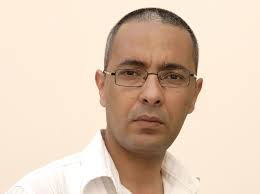
Kamel Daoud is an Algerian journalist based in Oman.  His background is similar to that of Camus: French-speaking, Algerian writer and philosopher. The Mersualt Investigation is Daoud’s first novel, published in 2015, and it has been recognised with several prizes in France.

index

Kamel Daoud

In The Mersault Investigatiom, Harun is in a bar in Oman reflecting morosely on his brother, his mother and the book by the listener’s hero (Camus).  Included in his reflections are thoughts on Algeria, its people and its relationship to France.  The tone of the book is pessimistic and its conclusions are ambiguous (much like the tone and content of The Stranger).  One is left with the impression that there can be no God, and that life itself can have no meaning.

This is not an enjoyable book to read, because of its pessimistic philosophy, and because nothing conclusive arises from its reflective monologue.  No new ‘facts’ emerge about any of the characters, except that Musa was a real person who was loved by his mother and close the the heart of his younger brother.  Still, one has the impression that The Mersault Investigation is a classic in the absurdist philosophical tradition.  If you liked Camus’ writing, you will certainly appreciate Daoud’s.  He has created a well-written philosophical sequel to one of Camus’ great works.

Payments to Authors

There was an interesting article in The Daily Telegraph two days ago about the payments authors receive from the publishers of e-books, as follows:

“Professional writers could become and ‘endangered species’ unless publishers start paying them properly for e-books, the Society of Authors has warned.  The society said lovers of literature would soon be left with less and less quality content.  In an open letter to publishers, the society called on executives to treat authors more fairly, drawing up less punishing contracts and paying them more.  Research has shown that the median income of British authors is £11,000, which the society argues is far below the ‘level deemed necessary for a socially acceptable living standard’.  Nicola Solomon, the society’s chief executive said: ‘Unless publishers treat their authors more equitably, the decline in the number of full-time writers could have serious implications for the breadth and quality of content that drives the economic success and cultural reputation of our creative industries’.  The society calls on publishers to give authors ‘at least 50%’ of revenue from their e-books, as opposed to a ‘mere 25%’, and not to ‘discriminate’ against writers who do not have powerful agents.”

If I look at the 100 Kindle edition paid best sellers on Amazon, the top price is $14.99 (3 books), and the cheapest books were $0.99 (20 books).  There is another list of the 100 Kindle edition free best sellers.  The books selling at very low prices are there because their authors are trying to promote them into best sellers.  This way the author gets ‘fame’ if not fortune.  But if one looks at the best authors, the prices seem to start at $8.99.  There are five J K Rowling books for sale at $8.99.  So, it’s fair to note that authors have some control over the price at which their books are sold as e-books, and, presumably, also some control over their level of royalties.

The problem, it seems to me, is for the relatively unknown author who is trying to make a living from writing good, serious literature.  Let’s say s/he can persuade the publisher to sell his/her e-book at $6.99, with a 25% commission.  If so, s/he will earn $1.75 a copy, and to make £11,000 per year,  s/he has to sell 9,400 copies per year.  This will put his/her book on somebody’s best seller list.  The point is that it is very difficult for a good, serious writer to make a living selling e-books, unless s/he has a best seller.  So, I think the Society of Authors has a point.

What can be done by whom?  I think it’s pretty unlikely that the publishers will all agree to raise their prices enough to give their authors 50% of the price.  They’ll be afraid of losing volume.  Besides, there’s plenty of margin for the publisher in an $8.99 e-book.  Production costs are far less than a dollar, so their major expenses are corporate overheads, author royalties, and advertising, over which they have control.  It’s even less likely that an ‘author’s union’ will be able to force through price increases.

But I think that once an author and a publisher have reached a basic deal to publish hard copies, there’s room for negotiation on the price of the e-book.  This negotiation would recognise the author’s per copy royalty on hard copies, the publishers costs, volume assumptions, and the sensible price differential between hard copies and e-copies from a user’s point of view.  For example, if the hard copy is selling for $17.50, and a Kindle fanatic wants the book, why wouldn’t s/he pay $12 for it, so that the author gets $4 per copy and the publisher gets $8?

Review: Where My Heart Used to Beat

Christian Faulks’ new novel is the story of a male psychologist, Robert, told in the first person.

index

Sebastian Faulks

Robert is a middle-aged and living alone with his dog.  There is a girl friend  who ditches him for incongruous reasons.  His social life seems rather awkward, and his practice somewhat neglected.  Robert was two when his father was killed in the First World War; he was brought up by his mother in rural England in constrained financial circumstances.  Robert, however, was a good student: selected for grammar school, and able to get a place at a good university, he joined a partnership with others psychologists who ran a care home for people with severe psychological problems.

He receives a letter from an aging army colleague, Pereira, of his father’s who lives in the south of France and who promises information about his father, as well as the opportunity to manage some psychological intellectual property.  Having accepted Pereira’s invitation to go to his house on an island in the Mediterranean, Robert discloses much of his history.  He joined the army in the Second World War and fought in North Africa, later in Italy. His experiences in Italy are told in graphic detail.  They left a lasting impression on him.  While he is on medical leave recovering from a serious wound, Robert meets an Italian girl, Luisa, and the two fall hopelessly in love.  However, the two are separated when Robert is called back to duty.  He later learns that the Italian girl has gone back to her husband.

We are brought back to the present (1970’s), and Robert is sought out by the brother-in-law of Luisa.  Luisa is very ill and wants to see Robert again.  They meet again, but I won’t give away the ending of the story.

Where My Heart Used to Beat is a solemn, somewhat pessimistic story, and one of the themes of the novel has to do with the extent to which we have choices in life.  Nonetheless, I found it hard to put down.  One is torn between sympathy for the difficulties Robert faces, and frustration that he does not make better choices for himself.  Faulks does an excellent job building Robert into an understandable, complex character.  We are aware of his thoughts and feelings as well as his actions. Some of the psychological sub-themes didn’t work for me: for example, Robert has a theory that some severe mental illnesses have cellular causes.  The arguments for the theory were rather obscure and I failed to see the relevance of the theory to the novel.  Unless it is that our choices is life are limited by the cells in our brains, but, as I say, this didn’t work for me.  What did work was the picture of a tragic life that could have been less tragic.  The story of that life is beautifully written, and attention-capturing.  Most of the events in that life are rather extraordinary.  This, I think, makes it more difficult to draw general (ordinary) conclusions from it.

Review: The Power of the Dog

This novel is probably the grittiest I have read. I mean ‘grittiest’ in the sense of terse, violent and gripping. In 541 pages, Don Winslow sets out a compelling picture of the drugs wars in the America from New York City to Columbia. Nothing is withheld, abbreviated or glossed-over: the actions, reactions and motivations of dozens of very real characters. The scope of the novel draws in not only the drugs lords, the law enforcers and their subordinates on many levels, but also the politicians, and the military, so that, ultimately, it is not just about drugs, but also about perceived national interest and long term political strategy. One has to admire the depth of research Winslow must have completed to write this novel. The details of places, organisations, and procedures are all there with crystal clarity. One is tempted to believe that this is not a novel, but a description of the real world.

index

Don Winslow

The characterisations are excellent. There are about six characters who make it all the way through the book, and dozens more who fall (or are pushed) by the wayside. Each of the characters is distinct, and none is completely repellent: we understand their motivation even if it is just survival. The dialogue is terse, but fit for purpose.

One challenge for a reader of this novel is being able to connect the threads of location, character and motivation, as the story skips around from place to place. But Winslow is not trying to tell a simple story, and his skipping about technique reinforces the overall message: this game is very complex.

I found the book hard to put down, but when I did, I looked forward to finding out ‘what happens next’.

Winslow’s style of writing is not ‘literary’. This is not a work of literary art; it is a fast-moving story told in the street language of the characters themselves.

This book is not a pleasant read: the casual violence can be gut-wrenching, but if you are a reader with a strong stomach, and a love of realistic, complex and, ultimately, important action, this is the book for you.