Review: So Much for That

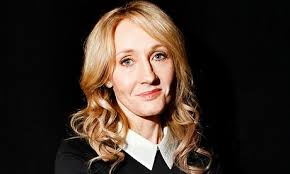
This novel attracted my attention as it is written by Lionel Schriver, the author of We Need to Talk About Kevin, which won the Orange Prize for fiction in 2005 and which has sold over one million copies in twenty-five languages. Lionel Schriver wrote seven novels before Kevin, which she called her ‘make or break’ creation after seven years of professional disappointment and ‘virtual obscurity’. Six of her seven novels were published; one failed to find a publisher. Since Kevin, Ms Schriver has written five novels, including So Much for That, which was published in 2010. She is an inspiration to all of us novelists who feel that our creations have not received the deserved recognition.

index

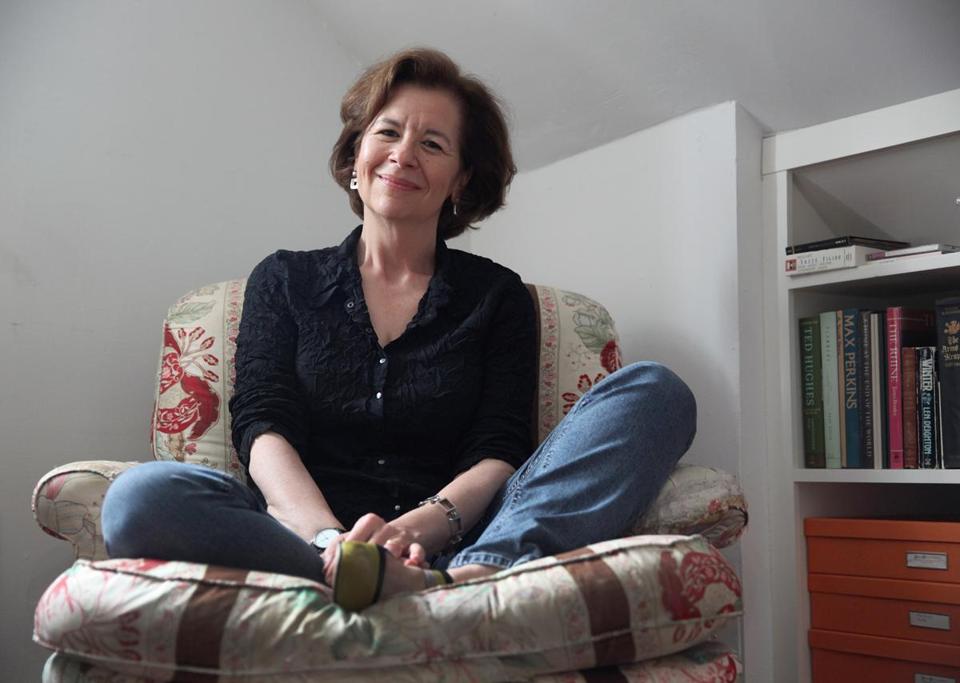
Lionel Schriver

So Much for That’s principal character, Shep Knacker, is an entrepreneurial handyman, who is both skilled and likeable. He is able to sell his New York City-based business for one million dollars, and his plan is to move his wife Glynis, his son Zach, and his daughter Amelia to Pemba Island off the coast of Tanzania to live her rest of their lives in low-cost, stress-free comfort. Glynis, though she has been involved in numerous searches around the world to find the perfect place for their ‘Afterlife’, has doubts. Just as she is being confronted with a decision to go or to stay, she is diagnosed with a virulent form of cancer. Escape to Pemba has to be postponed while Glynis undergoes months of treatment. The American healthcare system being what it is, Shep’s nest egg is gradually depleted by co-insurance payments and invoices for un-covered treatments. In order to keep the insurance he has, Shep must continue on the payroll of his prior company, under the unsympathetic supervision of the new owner. Glynis finds that the likely cause of her cancer is exposure to asbestos, with which she had contact in her metal-working hobby. She decides to sue the company which made the asbestos products. Just as Shep is on the verge of bankruptcy, Glynis wins her case and the money received covers an Afterlife in Pemba.

There are several other characters, including Shep’s friend, Jackson, who engages in diatribes against the Mooches (the freeloaders) and the systems that lets them take advantage of the Mugs. Jackson’s daughter, Flicka, who suffers from a horrible, terminal, childhood illness is a vehicle, along with Glynis, for debating the value of human life. There are doctors of doubtful honesty with their patients. And there are decisions about whether to be a Mooch or a Mug.

So Much for That is an entertaining story. It is human, sad, funny, heroic, and, and it is difficult to put down. I felt, at times, though, that the author was lecturing me about the dreadful state of healthcare in the US, and other assorted inequities in life. Several characters, including Flicka, and Shep’s sister, Beryl, are so polarised that one tends to lose what sympathy we should have for them. At the outset, I found it difficult to buy into Shep’s vision of the Afterlife; acceptance of his vision came when his troubles grew acute. Occasionally, I found the text somewhat oblique. For example: “It was disconcerting to be systematically punished for what might have engendered a modicum of gratitude.” Why not say: “He was annoyed to be punished for acts of kindness”? Sometimes, for me, the dialogue didn’t ring true, but perhaps I am being too picky.


I liked So Much for That. It makes some very important points about what is to be human: what’s good about our humanity and what’s not so good.

Review: The Meursault Investigation

This novel, written by Kamel Daoud, reveals the hidden side of Albert Camus’ novel The Stranger.  In The Stranger, Camus has his principal character, Meursault, shoot and kill a nameless Arab for no apparent reason other than possible disorientation from sunstroke.  In The Meursault Investigation, Daoud names the murdered Arab as ‘Musa’ (Moses), and considers the implications of the murder from the viewpoint of Musa’s brother ‘Harun’ (Aaron).

Camus was a French-Algerian philosopher, an ‘absurdist’ who held that human life is absurd.  He was also regarded as an existentialist (he disagreed) and a pacifist.  He was born in 1913, won the Nobel Prize for Literature in 1957, and died in 1960.  In The Stranger, which was published in 1942, Camus used the murder of the nameless Arab for no reason as an example of the absurdity of human life.

Kamel Daoud is an Algerian journalist based in Oman.  His background is similar to that of Camus: French-speaking, Algerian writer and philosopher. The Mersualt Investigation is Daoud’s first novel, published in 2015, and it has been recognised with several prizes in France.

index

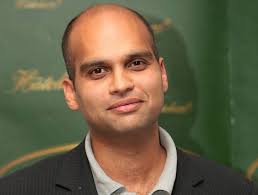
Kamel Daoud

In The Mersault Investigatiom, Harun is in a bar in Oman reflecting morosely on his brother, his mother and the book by the listener’s hero (Camus).  Included in his reflections are thoughts on Algeria, its people and its relationship to France.  The tone of the book is pessimistic and its conclusions are ambiguous (much like the tone and content of The Stranger).  One is left with the impression that there can be no God, and that life itself can have no meaning.

This is not an enjoyable book to read, because of its pessimistic philosophy, and because nothing conclusive arises from its reflective monologue.  No new ‘facts’ emerge about any of the characters, except that Musa was a real person who was loved by his mother and close the the heart of his younger brother.  Still, one has the impression that The Mersault Investigation is a classic in the absurdist philosophical tradition.  If you liked Camus’ writing, you will certainly appreciate Daoud’s.  He has created a well-written philosophical sequel to one of Camus’ great works.

Payments to Authors

There was an interesting article in The Daily Telegraph two days ago about the payments authors receive from the publishers of e-books, as follows:

“Professional writers could become and ‘endangered species’ unless publishers start paying them properly for e-books, the Society of Authors has warned.  The society said lovers of literature would soon be left with less and less quality content.  In an open letter to publishers, the society called on executives to treat authors more fairly, drawing up less punishing contracts and paying them more.  Research has shown that the median income of British authors is £11,000, which the society argues is far below the ‘level deemed necessary for a socially acceptable living standard’.  Nicola Solomon, the society’s chief executive said: ‘Unless publishers treat their authors more equitably, the decline in the number of full-time writers could have serious implications for the breadth and quality of content that drives the economic success and cultural reputation of our creative industries’.  The society calls on publishers to give authors ‘at least 50%’ of revenue from their e-books, as opposed to a ‘mere 25%’, and not to ‘discriminate’ against writers who do not have powerful agents.”

If I look at the 100 Kindle edition paid best sellers on Amazon, the top price is $14.99 (3 books), and the cheapest books were $0.99 (20 books).  There is another list of the 100 Kindle edition free best sellers.  The books selling at very low prices are there because their authors are trying to promote them into best sellers.  This way the author gets ‘fame’ if not fortune.  But if one looks at the best authors, the prices seem to start at $8.99.  There are five J K Rowling books for sale at $8.99.  So, it’s fair to note that authors have some control over the price at which their books are sold as e-books, and, presumably, also some control over their level of royalties.

The problem, it seems to me, is for the relatively unknown author who is trying to make a living from writing good, serious literature.  Let’s say s/he can persuade the publisher to sell his/her e-book at $6.99, with a 25% commission.  If so, s/he will earn $1.75 a copy, and to make £11,000 per year,  s/he has to sell 9,400 copies per year.  This will put his/her book on somebody’s best seller list.  The point is that it is very difficult for a good, serious writer to make a living selling e-books, unless s/he has a best seller.  So, I think the Society of Authors has a point.

What can be done by whom?  I think it’s pretty unlikely that the publishers will all agree to raise their prices enough to give their authors 50% of the price.  They’ll be afraid of losing volume.  Besides, there’s plenty of margin for the publisher in an $8.99 e-book.  Production costs are far less than a dollar, so their major expenses are corporate overheads, author royalties, and advertising, over which they have control.  It’s even less likely that an ‘author’s union’ will be able to force through price increases.

But I think that once an author and a publisher have reached a basic deal to publish hard copies, there’s room for negotiation on the price of the e-book.  This negotiation would recognise the author’s per copy royalty on hard copies, the publishers costs, volume assumptions, and the sensible price differential between hard copies and e-copies from a user’s point of view.  For example, if the hard copy is selling for $17.50, and a Kindle fanatic wants the book, why wouldn’t s/he pay $12 for it, so that the author gets $4 per copy and the publisher gets $8?

Review: Where My Heart Used to Beat

Christian Faulks’ new novel is the story of a male psychologist, Robert, told in the first person.

index

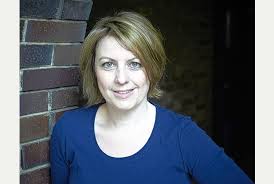
Sebastian Faulks

Robert is a middle-aged and living alone with his dog.  There is a girl friend  who ditches him for incongruous reasons.  His social life seems rather awkward, and his practice somewhat neglected.  Robert was two when his father was killed in the First World War; he was brought up by his mother in rural England in constrained financial circumstances.  Robert, however, was a good student: selected for grammar school, and able to get a place at a good university, he joined a partnership with others psychologists who ran a care home for people with severe psychological problems.

He receives a letter from an aging army colleague, Pereira, of his father’s who lives in the south of France and who promises information about his father, as well as the opportunity to manage some psychological intellectual property.  Having accepted Pereira’s invitation to go to his house on an island in the Mediterranean, Robert discloses much of his history.  He joined the army in the Second World War and fought in North Africa, later in Italy. His experiences in Italy are told in graphic detail.  They left a lasting impression on him.  While he is on medical leave recovering from a serious wound, Robert meets an Italian girl, Luisa, and the two fall hopelessly in love.  However, the two are separated when Robert is called back to duty.  He later learns that the Italian girl has gone back to her husband.

We are brought back to the present (1970’s), and Robert is sought out by the brother-in-law of Luisa.  Luisa is very ill and wants to see Robert again.  They meet again, but I won’t give away the ending of the story.

Where My Heart Used to Beat is a solemn, somewhat pessimistic story, and one of the themes of the novel has to do with the extent to which we have choices in life.  Nonetheless, I found it hard to put down.  One is torn between sympathy for the difficulties Robert faces, and frustration that he does not make better choices for himself.  Faulks does an excellent job building Robert into an understandable, complex character.  We are aware of his thoughts and feelings as well as his actions. Some of the psychological sub-themes didn’t work for me: for example, Robert has a theory that some severe mental illnesses have cellular causes.  The arguments for the theory were rather obscure and I failed to see the relevance of the theory to the novel.  Unless it is that our choices is life are limited by the cells in our brains, but, as I say, this didn’t work for me.  What did work was the picture of a tragic life that could have been less tragic.  The story of that life is beautifully written, and attention-capturing.  Most of the events in that life are rather extraordinary.  This, I think, makes it more difficult to draw general (ordinary) conclusions from it.

Review: The Power of the Dog

This novel is probably the grittiest I have read. I mean ‘grittiest’ in the sense of terse, violent and gripping. In 541 pages, Don Winslow sets out a compelling picture of the drugs wars in the America from New York City to Columbia. Nothing is withheld, abbreviated or glossed-over: the actions, reactions and motivations of dozens of very real characters. The scope of the novel draws in not only the drugs lords, the law enforcers and their subordinates on many levels, but also the politicians, and the military, so that, ultimately, it is not just about drugs, but also about perceived national interest and long term political strategy. One has to admire the depth of research Winslow must have completed to write this novel. The details of places, organisations, and procedures are all there with crystal clarity. One is tempted to believe that this is not a novel, but a description of the real world.

index

Don Winslow

The characterisations are excellent. There are about six characters who make it all the way through the book, and dozens more who fall (or are pushed) by the wayside. Each of the characters is distinct, and none is completely repellent: we understand their motivation even if it is just survival. The dialogue is terse, but fit for purpose.

One challenge for a reader of this novel is being able to connect the threads of location, character and motivation, as the story skips around from place to place. But Winslow is not trying to tell a simple story, and his skipping about technique reinforces the overall message: this game is very complex.

I found the book hard to put down, but when I did, I looked forward to finding out ‘what happens next’.

Winslow’s style of writing is not ‘literary’. This is not a work of literary art; it is a fast-moving story told in the street language of the characters themselves.

This book is not a pleasant read: the casual violence can be gut-wrenching, but if you are a reader with a strong stomach, and a love of realistic, complex and, ultimately, important action, this is the book for you.

Review: Remains of the Day

This ‘modern classic’ was first published in 1989, and won the Booker Prize that year. While I had heard of the novel, I had never read it; I was further motivated to read it as a Booker Prize winner and by the author being a Japanese writer I didn’t know.

Kazou Ishiguro was born in Nagasaki, Japan in 1954 and moved to the UK at the age of five. He has written six novels, all of which have won prizes or received major recognition. He currently lives in London with his wife and daughter.

untitled

Kazou Ishiguro

The novel is told in the first person by Stevens, who was the butler in Darlington Hall, which was the residence of Lord Darlington in the 1930’s. Darlington Hall was a grand place, with many servants, Stevens having overall responsibility. Lord Darlington was a man of considerable wealth and influence, both socially and politically. He died after the war, and Darlington Hall was sold to an American, Mr Faraday, who has downsized both the staff and the use of the Hall.

Much of the book is Stevens’ recollections of events that took place when his lordship was in residence, and we learn that Stevens is preoccupied with the extent to which he was (like his father) a top butler. Stevens comes to define a top butler as a true professional who carries great dignity to his profession. The descriptions of relationships (and dialogue) among staff and with the lord of the manor are brilliant: they convey clearly the culture of the English aristocracy in the 20’s and 30’s.

Mr Faraday plans to be in the States for an extended period, and he suggests to Stevens that he take the motorcar on a sightseeing trip. Stevens accepts his offer and coincidently decides to call on a Miss Kenton who was the one who supervised all the housemaids at Darlington Hall. Miss Kenton left the Hall years ago, and has married. Now, Stevens wonders whether he can persuade her to return to the Hall, as there are hints that her marriage is in difficulty. The working relationship between Stevens and Kenton was very formal, but one cannot help but wonder if there is an unacknowledged attraction between them.   In the last chapter, they meet again, and the message of the novel is revealed: Stevens muses: “After all, what can we ever gain forever looking back and blaming ourselves if our lives have not turned out quite as we might have wished?”

The novel moves at a very leisurely pace, with very little action. Major events are recounted by Stevens factually and without emotion. The characters, the setting and the story-telling all completely support that retrospective, self-doubting theme. In spite of Stevens’ wordiness, his character shines through in a way that he is able to maintain the reader’s attention.

If one is looking for tale with plenty of action and excitement, The Remains of the Day would not be a good choice. But if one would like to curl up with a superbly-written story, immersed in history, and long-forgotten characters, a story that succeeds admirably in making its point, then Remains is for you.

As a sort of aside, I would add that the criteria for winning the Booker Prize may have shifted over the last twenty-five years. It’s hard to imagine that a novel with little overt physical or emotional action could win, given the level of current competition.

The Guilty Secretes of E-book Readers

There was an article in The Daily Telegraph last week which reported on the popularity of titles of e-books vs titles of physical books.

“A newly published list of Amazon.co.uk’s biggest selling e-books of the year features psychological thrillers, misery memoirs, Mills and Boon and a book by the Tory MP Nadine Dorries, whose first work was memorably described by a Telegraph reviewer as “the worst novel I’ve read in 10 years”.  Notably, 18 of the top 20 authors were women, including thriller writers Angela Marsons, Fiona Neill and Rachel Abbott.

“However a parallel list  of physical books compiled by Waterstones to cover the same period is significantly more highbrow, and features four times as many male authors.  They include Richard Flanagan, author of the Man-Booker Prize-winning The Narrows Road to the Deep North, and Anthony Doerr, with his All the Light We Cannot See.  There were also books by Colm Toibin, Ian McEwan and Victoria Hislop.  The print list is topped by Harper Lee’s Go Set a Watchman, which does not make the Amazon e-books list.

“There is some overlap.  Paula Hawkin’s runaway bestseller The Girl on the Train, and the latest risqué offering form E L James appear in the top three of both lists. But the disparity between the books we put on show and those we download suggests that e-book reads can be ‘guilty pleasures’.

“Benedict Page of The Bookseller said: ‘There are certain kinds of books that people like to own.  If they have a favourite heavyweight literary author who they have followed for many years, they are likely to want to possess the printed book because it’s beautiful and durable and represents a readerly commitment.'”

I think that Page’s analysis is probably correct in that we tend to regard e-books as disposable, and printed books something to be retained. The high proportion of female writers on the e-book list is interesting.  My theory would be that at least some of the female authors on the e-book list write primarily for women, and are more interested in achieving volume than literary recognition.  I’m also guessing that more women than men own e-book readers.  These two theories seem to converge on the supply and demand sides.

What’s your view?

Review: Writing with the Master

This is the true story of a retired businessman who’s been writing novels and having them rejected by publishers/agents.  The businessman’s friend John Grisham (the best-selling author) offers to coach him in the writing of a new novel. The book sets out, in detail, all of the coaching provided over two years.

511C2LhqQFL__UX250_imagesT0ZHRO92

Tony Vanderwarker                               John Grisham

Tony Vanderwarker is a retired advertising executive who had his own, very successful, ad agency, sold it and moved from Chicago to Charlottesville, Virginia with his family.  John Grisham, also a Charlottesville resident, is a friend of Tony’s, and one day, over lunch, John offers to ‘mentor’ Tony in writing a new novel.  Grisham had previously referred one of Tony’s works to an agent whose review was positive, but not quite good enough to be published.

The process started with John asking Tony what he wanted to write about.  Tony’s first two ideas were rejected out of hand.  His third idea was a thriller about nuclear weapons lost by the US Air Force in air crashes where the weapon was not recovered.  There are nearly a dozen such weapons, dating back to the 1950’s.  Tony prepared a three sentence description of the plot and then a full, multi-page outline.  At each stage we see portions of what Tony has written and John’s written critiques.  The critiques are blunt and to the point.  After three and a half months of trial and error, Tony revises his plot outline, and is ready to start chapter outlines.  During this process, we see a reflection of the way John Grisham writes his novels.  First, a one paragraph outline: is it interesting enough, strong enough?  Then the three page outline, complete with characters: do the subplots support the main plot or are they extraneous?  Are the events credible?  Are the characters interesting and likeable?  Then comes the first draft of the manuscript.  In Tony’s case, John tears into the manuscript and points out a number of problems:

  • the writing is sloppy: there are repeated words and phrases and factual inconsistencies.
  • there are too many distractions to the basic plot
  • the actions of a key character don’t make sense
  • too many bad guys
  • minor character isn’t fully credible
  • inserting the author’s political views into the story
  • make the dialogue real: repeat it out loud.
  • Show! Don’t Tell!

Tony is absolutely gutted by this critique!  He turns his attention to the notes John has written on individual pages of the manuscript.  Here, again, we see the text and the comment.  Tony divides the manuscript into seven piles and begins the task of rewriting, which takes a year.  Once again Grisham responds with a cover letter describing his principal concerns and returns the manuscript with page-by-page comments, including:

  • too many detours; too much backfilling
  • don’t be afraid to cut
  • not allowing the suspense to build

Tony makes the suggested changes and submits the manuscript to John’s agent, who likes it and refers it to another agent because it doesn’t fit for him.  The agent to whom it is referred is very complimentary but declines. Tony goes back to the default mode of mass submissions, without success.

When Tony has essentially given up on getting his novel published, he gets a great idea.  Why not write a book about the process that he and John Grisham have been through.  Grisham agrees, and the book is published by Skyhorse Publishing, who also agree to publish the mentored novel: Sleeping Dogs.

For anyone who is interested in the process of writing fiction, this book is a must read.  And for those with only a passing interest in the creative effort, there is enough of the rest of Tony’s life fitted neatly in to make to book a good read: his life as an advertising executive, his work for an environmental charity, his relationship with his wife and the Charlottesville area.

Personally, I’m not surprised that Sleeping Dogs didn’t get published on the first attempt.  From my point of view, there’s too much that stretches credibility.  But, I’m not surprised that Skyhorse decided to take it up.  Writing with the Master is a great promotion for Sleeping Dogs.

As for John Grisham’s advice, I think that ninety percent is spot on.  Two quibbles: I believe in outlining, but not to the extent that John does.  I think that detailed outlines can stifle creativity, and I notice that Tony has reached a similar conclusion.  There’s not much in John’s advice about the use of creative language, which I think is important to differentiate the writer and his/her text from the mundane.

Tony writes well, and I’m glad that he decided to follow-up on his brainstorm: why not write a book about the mentoring process?

Social Media Backlash

There was an article entitled “Authors Stifled by Fear of Social Media Backlash, Franzen Warns” which appeared in the 22 August edition of The Daily Telegraph.  Jonathan Franzen is an award-winning novel and author of Freedom and The Corrections.

images

Jonathan Franzen

Franzen claims it is becoming more difficult for writers to produce great novels in the era of social media because they are too frightened of a public backlash to be truthful.  He says that the “firewalls” protecting authors from their readers have now disappeared, and there is now too much pressure to use social media to promote new works.

The article says that he has famously refused to go on Twitter, having labelled it “unspeakably irritating”.  Now he has spoken of his concern it its impact on novelists, telling The Guardian: “The ways in which self-censorship operates – the fear of being called a bad name – people become very careful.  And it becomes very hard to be creative, actually.  Because you’re worried  about what you might be called, and whether its true or not.  There used to be rather serious firewalls between the artist and the buying public – the gallery, the publisher.  And technology demolishes that wall and basically says: self-promote or die.  And that is a bad head for any sort of artist to be forced into.”

Yesterday he was derided on Twitter after revealing he had once considered adopting an Iraqi orphan, adding: “One of the things that had put me in mind of adoption was a sense of alienation from the younger generation.  They seemed politically not the way they should be as young people.”

I’m afraid I don’t agree with much of what Franzen says.  I congratulate him for wanting to adopt and Iraqi orphan; let’s hope it wasn’t critics who dissuaded him!  I grew up in an era where we used to say to bullies, “Sticks and stones will break my bones, but names will never hurt me!”

I believe that if an author takes a well-reasoned position on a subject which may be controversial, and he is derided by trolls, there will be plenty of people who agree with the author but don’t bother to say so.  This is what good authors have done for centuries, and this is no time, in an age of social media and terrorism, for authors to lose their courage to speak freely!

Franzen might well say to me, “Well, but you have never been attacked by trolls.”  True.  But I’m certainly not going to change my position if they do.  Besides, I live in a country where personal threats are illegal.  There are some things which my characters have said in my novels which may very well offend some sensitive people.  They’ll just have to get over it.

As to social media, I have this blog and several Facebook accounts.  I’m on Goodreads and Amazon.  I’m not on Twitter – mainly for the reason that I don’t have time to prepare daily tweets.  The world is changing: get on board!

Franzen bemoans the loss of “firewalls”.  I don’t think that firewalls are helpful to the author in the long run.  Any artist should have access to the public’s reactions to his/her work – good or bad.  Dickens had very few “firewalls” between himself and the public.  Why should we?

The Creative Benefits of Keeping a Diary

There is an article by Maria Popova on her BrainPickings.org site about the creative benefits to writers of keeping a diary.  Since I have not kept a diary except briefly in my early teens, and that has long since disappeared, I was curious about the benefits.  Maria Popova is  a Bulgarian writer, blogger, and critic living in Brooklyn, New York.  Her Brain Pickings blog features her writing on culture, books, and eclectic subjects.

Maria Popova founder of Brain Pickings

Maria Popova

Ms Popova says: Journaling, I believe, is a practice that teaches us better than any other the elusive art of solitude — how to be present with our own selves, bear witness to our experience, and fully inhabit our inner lives.  She goes on to quote famous writers who have kept journals to discover their perceived benefits.

Anais Nim, from a lecture at Dartmouth college: Of these the most important (benefits) is naturalness and spontaneity. These elements sprung, I observed, from my freedom of selection: in the Diary I only wrote of what interested me genuinely, what I felt most strongly at the moment, and I found this fervour, this enthusiasm produced a vividness which often withered in the formal work.

Virginia Wolff says:  Still if (my diary) were not written rather faster than the fastest type-writing, if I stopped and took thought, it would never be written at all; and the advantage of the method is that it sweeps up accidentally several stray matters which I should exclude if I hesitated, but which are the diamonds of the dust heap.

André Gide’s view: A diary is useful during conscious, intentional, and painful spiritual evolutions. Then you want to know where you stand… An intimate diary is interesting especially when it records the awakening of ideas; or the awakening of the senses at puberty; or else when you feel yourself to be dying.

Susan Sontag says: Of course, a writer’s journal must not be judged by the standards of a diary. The notebooks of a writer have a very special function: in them he builds up, piece by piece, the identity of a writer to himself. Typically, writers’ notebooks are crammed with statements about the will: the will to write, the will to love, the will to renounce love, the will to go on living. The journal is where a writer is heroic to himself. In it he exists solely as a perceiving, suffering, struggling being.

Eugéne Delacroix muses: Even one task fulfilled at regular intervals in a man’s life can bring order into his life as a whole; everything else hinges upon it. By keeping a record of my experiences I live my life twice over. The past returns to me. The future is always with me.

Virginia Wolff again: How far, we must ask ourselves, is a book influenced by its writer’s life — how far is it safe to let the man interpret the writer? How far shall we resist or give way to the sympathies and antipathies that the man himself rouses in us — so sensitive are words, so receptive of the character of the author? These are questions that press upon us when we read lives and letters, and we must answer them for ourselves, for nothing can be more fatal than to be guided by the preferences of others in a matter so personal.

And, in conclusion, Ms Popova writes: This, perhaps, is the greatest gift of the diary — its capacity to stand as a living monument to our own fluidity, a reminder that our present selves are chronically unreliable predictors of our future values and that we change unrecognizably over the course of our lives.

I must say that I’m un-persuaded.  I don’t feel the need for a ‘living monument’ to my fluidity of self.  I seem to have enough difficulty managing the fluidity of my feelings, my values, my priorities, my relationships, my identity from moment to moment and from day to day!  But it does seem to me that the idea of capturing a ‘diamond in the dust’ is a good one; perhaps I should establish just such a file!  One activity that I find myself engaged in more and more as I grow older and I observe what are actually ordinary things and events is to ask Why? The answers are quite astonishing sometimes, ranging from the whimsical to the unlikely to the enlightening.  Also, I’m beginning to make a habit, when I observe an unusual facial expression or event, of asking, How would you describe that?  It’s an exercise in creativity, of avoiding ordinary language.