Judging a Literary Award

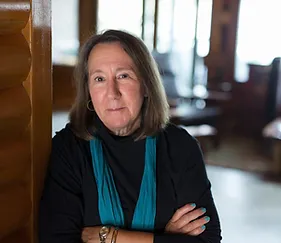
The Reader Views Blog has an article by Sheri Hoyte, Managing Editor, regarding the process of scoring titles for the Reader Views Reviewers Choice Literary Awards.  Sheri Hoyte’s website says that she is an aspiring children’s picture book author.  “I worked in the corporate world for over thirty years, honing my business and professional writing skills until 2012, when my passion for stories called me home to Reader Views an online publicity company for authors. Over the next couple of years I read and reviewed books for Reader Views, becoming the editor and social media manager in 2014. I am now one of the managing editors.”

Sheri Hoyte

In the blog she says: “So what do judges look for when scoring a literary awards title? Much like reading with a writer’s hat on, reading with a judge’s hat takes a different focus. Following are the guidelines I use when judging a literary awards title:

·         Content.  Does the author’s voice convey a distinct and consistent style throughout?  Does the flow of the book draw the reader in at an appropriate pace?  Does the reader have a clear understanding of who the characters are in the story?

·         Presentation and Design.  There is nothing more distracting to a great story than editing and proofreading errors.  This is the easiest thing to fix or prevent in the first place.  I can tell within the first few pages whether or not a professional editor has been used.  An occasional typo won’t make or break the book, but consistent use of poor grammar will cost points in the presentation category.

·         Production Quality.   Is the cover attractive and appropriate for the genre and the story?  Yes, I know the cliché, but a dull and drab cover, or a noisy cover with hidden titles and too much information can be a turn off.  Does the binding fall apart when opening the book?  Is the paper quality adequate or just so-so?  I have a hard time concentrating on a story when the book I’m reading is falling apart or the pages are tearing because the paper is so thin.

·         Innovation.  To stand out in any genre, innovation is the key.  Is the subject matter original?  Does the author bring a fresh voice to the genre?   Are writing elements being used in interesting and creative ways?

·          Social Relevance and Enjoyment.  For fiction books: Is the book impactful on the community of the genre?  Is it reflective of important social issues? Is it highly entertaining and completely engrossing?  Would I re-read this book?  Was I left wanting more?

·         Resourcefulness.   For self-help, business, how-to, etc. type of books: Is the book easy to follow, clear and concise? Are credible sources noted? Does the author have credibility in the subject matter?

When I read a book, whether for pure enjoyment, to learn a new skill, expand my knowledge, or for a literary contest, I want to feel a connection to that book.  Fiction or non-fiction, humorous or biographical, when I’ve finished a book and it lingers in my mind for days – that is the sign of greatness.

Review: Another Country

I bought this book at an airport bookshop in May, because I’ve never read anything by James Baldwin.  I’m glad I did, because Another Country is like no other novel I’ve read.

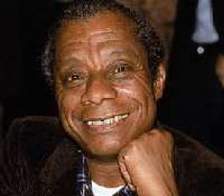
James Baldwin was born in Harlem, NY in 1924.  His mother left his biological father because of his drug abuse.  She then married a Baptist preacher, David Baldwin, with whom she had eight more children.  Young Baldwin was treated harshly by his step father, but he followed in the elder Baldwin’s footsteps to become a junior minister.  He later described himself as not religious, but his church experience clearly influenced his world view and his writing.  In 1948, Baldwin emigrated to Paris, discouraged by the racial prejudice in the US and aware that he was gay.  He spent most of the rest of his life in France, returning to the US a number of times to participate in the civil rights movement.  He wrote six novels, of which Another Country is the third, two plays, nine collections of essays and one collection of poems.  He died in 1987.

James Baldwin

Another Country begins with Rufus, a young, black drummer from Harlem who has fallen on hard times, with drugs, too much alcohol, too few gigs.  Rufus meets Leona, a poor, white, Southern girl in a bar.  They go to a party, have sex and she follows him to his place, where Vivaldo, Rufus’ only friend, a failing writer, who is white meets them.  The three of them encounter Cass who is married to Richard, Vivaldo’s friend and high school English instructor, who is about to publish a novel he has written. Rufus drifts into a homosexual prostitution encounter, and losing his self esteem, beats up Leona and self destructs, committing suicide.

The scene then shifts to Ida, Rufus’ adoring sister, who becomes Vivaldo’s lover, but there is constant friction between them over their respective identities. They meet Steve Ellis, who is a promoter working with Richard.  Ellis senses singing and sexual talent in Ida.

The scene shifts to France where Eric, a bisexual friend of Vivaldo and Cass is making arrangements to travel to New York to take up a lead role in a play, and must take temporary leave from his young French boyfriend, Yves.

In New York, Cass, who has become estranged from Richard, has an affair with Eric, and Vivaldo who is desperate with suspicion over the affair between Ida and Ellis, also has a fling with Eric.

Richard learns of his wife’s infidelity with Eric; he had suspected Vivaldo; he is enraged but they are talking.  Ida confesses her unromantic affair with Ellis, and they, also are talking.   Yves and Eric meet at Idlewild airport.

This novel has a beautifully crafted, credible plot.  It delves into a nether world of drugs, music, self-gratification and self-deception. It deals with perceptions of racial identities on both sides of the divide in the US: neither blacks nor whites are happy, to the detriment of society generally.  It also deals with the gaps between actual and longed-for identities, and masculinity, which can lead to self-destruction.  As such, it is a portrait of a dysfunctional society.  One cannot help but feel that in the 1960’s when Another Country was published the portrait was accurate for some.

The only criticisms I have of Another Country are that some of the dialogue, while realistic, is just chit-chat and does not add value for the reader.  Similarly, some of the narrative about the perceptions and feelings of characters can be lengthy, complex and therefor loses some focus and clarity.  Finally, the environment of the relationship between Cass and Richard isn’t clear enough to support either Cass’ disappointment or Richard’s outrage.  I can only theorise that Baldwin did not have experience of long-time heterosexual relationships.

If you haven’t read Another Country, I highly recommend it.

Editing Isn’t Easy (for the author)

I have finished the manuscript for my latest novel.  I’ve read and re-read it several times, always finding small things that needed to be improved.

It was time to call in a professional editor, and I wanted a good one.  The editor who worked on Achieving Superpersonhood: Three East African Lives didn’t seem to understand that there were three narrators: a universal narrator, God’s representative, and the devil’s representative.  She objected repeatedly when the latter two infrequently appeared, even though each of them introduced himself (or herself) on their first appearances.  This lack of understanding seemed to colour her experience of the novel in a negative way.  Only one of the reviews since publication has disliked this device.  One was almost ecstatic about it.  From my point of view, it didn’t take a great deal of brainpower to figure it out.

Author or Editor?

So, finding a good editor isn’t easy, even though there are literally thousands of them who have set out their shingles on the Internet.  I started off trying one of the ubiquitous websites that promises all manner of help for the Indie writer.  Their offering was that they have a stable of scores of editors, and that all I had to do was specify the type of editing, and the genre of the novel.  I didn’t want copy editing (spelling, punctuation and basic grammar), and I didn’t need a re-write editor.  What I wanted was a structural editor, who would pay attention to what could be deleted, what should be added or clarified.  My input yielded the names of five editors.  To each of them I sent a message: “Yes, tell me more!”  All five of them declined; some for workload reasons; some for “don’t do that genre” reasons.

At that point, I threw the Indie approach out the window, and started looking at professional editing websites.  Having narrowed it down to one website, there were two named editors, both of whom liked working on inspirational novels, and both had glowing testimonials.  I sent each of them the synopsis.  The woman said she would take a month longer than the man.  They both were charging $0.03 per word.  I went with the man, who was enthusiastic about working on a novel about fear of dying.

The editor overran his completion target by two weeks, but he sent me several “almost finished” emails.  Then, he wanted my postal address to send me the physical edited manuscript.  There was no soft copy.  He offered to get it scanned for an extra hundred dollars.  The problem for me is that I spend the summer in Sicily, which has a third world postal service.  It took two more weeks for the physical manuscript to arrive.

I found it somewhat easier to make corrections from the physical manuscript, with the original soft copy on my laptop than to switch back and forth between copies on my laptop.

The editor was very conscientious about use of commas (I use too many); he frequently broke my long sentences into two (I generally felt he was right); he corrected my use of ‘that’ vs ‘which’ (as a result, I’ve learned the ‘that vs which rule’); he put a full stop after each abbreviated title (Dr. vs Dr).  Actually, in the UK we don’t put a full stop after Mr.; it’s always just Mr; perhaps he should have asked, because the manuscript is set in London.

He commented when a point in the text wasn’t clear, and usually, I would make a clarification.  Exception: when he challenged a character’s statement to her husband that he had determined the gender of their unborn child.  I left the text unchanged and pointed out to the editor that the male sperm determines the child’s sex, the egg is neutral.

Occasionally, he would suggest that I show the emotion a character is feeling, rather than just have him/her express it.  Being a relatively non-emotive person, I have let the characters say what they feel, but gradually I have realised that it deepens the reader’s experience to have a character express and show her feelings.

The most difficult part for me was the very frequent suggestion to ‘skip this’ of ‘drop this character’.  The compromise I worked out was that I would eliminate the social, chit-chat portions of dialogue that make it seem more real but don’t add any value for the reader.  I also scrutinised scenes to eliminate portions which seemed real, but added no value.

Here is what I said in my email to him: “You made a number of recommendations to cut scenes and characters on the basis that they tended to “stop” the story/plot.  Leaving aside that to do so would have reduced the manuscript to a sub-saleable size, your advice seems to imply that a fictional biography has a linear story/plot.  I would argue that no one has a linear life; rather, it is a collection of kaleidoscopic experiences and characters that, in the end, make us who we are.

“I have tried to structure Fear of Dying with Bertie’s fear of death as the central theme, and with three supporting themes which converge on the central theme and moderate it.  The supporting themes are Bertie’s views and feelings about family, vocation and faith.  Having read the manuscript through an extra time, I’m confident that every scene and every character supports the development of at least one of the supporting themes.  If I had a doubt about the relevance of a scene or character, I had Bertie express his view.”

His response was to the effect of “it’s your novel, you decide.”

So, my next hurdle is finding an agent.  I’ll let you know how that works out.

Don’t Be Precious

The IBPA Independent magazine ran an article in the December 2017 issue which I missed at the time, but has recently re-surfaced.  It caught my attention because the full title is “Don’t Be Precious (with Your Ideas)”.

It was written by Scott Berkun, who, according to the Independent, is a bestselling author and popular speaker on creativity, philosophy, culture, business, and many other subjects. He is the author of six books, including The Myths of Innovation, Confessions of a Public Speaker, and The Year Without Pants.

Scott Berkun

“Three magic words for people who create things are: Don’t be precious. Being precious means you’re behaving as if the idea you’re working on is the most important thing in the history of the universe. It means you’ve lost perspective and can’t see the work objectively anymore. When you treat a work in progress too preciously, you trade your talents for fears. You become conservative, suppressing the courage required to make the tough choices that will resolve the work’s problems and let you finish. If you fear that your next decision will ruin the work, you are being precious.

“When I see a young writer struggling to finish a book, I say “don’t be precious.” If you truly love your craft, there are an infinity of projects in your future. There will be other chapters. Whatever you’re making, it doesn’t have to be perfect. Perfection is an illusion.

“Obsessing about every little choice is a surefire way to prevent great work from happening. Try a bold choice. Put the beginning at the end, or the top at the bottom. Blow your work up into jagged pieces and put them back together. You might just find this opens doors you didn’t even know were there. If you’re too precious, you miss the hundreds of big choices that might reveal the path to completion, or convince you the project is a puzzle that needs to be abandoned for a time. But if you spin your wheels faster and faster on smaller and smaller details, you’ll never move anywhere. You’ll never call anything finished, denying yourself the essential experience of looking back from a distance and learning from what you’ve already made.

“Some Buddhist monks make mandalas, intricate paintings made from colored grains of sand. When completed, the mandalas are destroyed. It’s a recognition that while your work might mean everything to you in the moment, in the grand scheme of your career, your life, and the universe itself, it’s just another thing that will someday fade away.

“Of course, it is important to strive for greatness. You should care deeply about people and ideas that matter to you. To make good things requires intense effort and practice. There’s a long history of masters, from Michelangelo to Twyla Tharp, who obsessed about the smallest details of their works and demanded the best from everyone who worked with them. In some ways, they were very precious indeed. But they didn’t let those ambitions stop them from finishing their works.

“It’s rarely discussed, but all good makers leave a legacy of abandoned drafts, unfinished works, mediocre projects, and failed ideas—work that enabled them to learn what they needed to finish the projects they are famous for. If your high standards, or self-loathing, is preventing your progress, don’t be precious about it. It takes hundreds of experiences with the cycle of starting, working, and finishing creative works before you have the talent to make finished things that match the grandeur of the ideas in your mind.”

I thought this is an excellent piece of advice, not only for artists of all sorts, but for also for practitioners of life in general.

Review: A Farewell to Arms

I had never read this World War I novel by Ernest Hemingway, so that when my wife suggested that I select some books for us to listen to while we were driving down to Sicily, I selected it.  The particular edition I bought is read by John Slattery, an American film and television actor, who is best known, perhaps, for his role as Roger Sterling in the TV drama series Mad Men; his diction is excellent, he reads with the requisite emotional emphasis, and with the distinct accents of characters of various nationalities.

Hemingway, born in 1899, was a reporter for The Kansas City Star for a few months after graduation from high school before leaving for the Italian front in World War I to serve as an ambulance driver, having been rejected by the US Army because of his eyesight.  He was seriously wounded and returned home.  This experience formed the basis of his third novel, A Farewell to Arms.  Similarly, the love story of the protagonist in A Farewell to Arms with the British nurse, Catherine Barkley, is similar to Hemingway’s affair with the American nurse Agnes von Kurowsky, who was seven years his senior and he had planned to marry, but who become engaged to an Italian officer.

Ernest Hemingway

Frederick Henry, an American paramedical officer serving in the Italian Army in World War I, is introduced by an Italian doctor friend to a pretty British nurse, Catherine Barkley, and though Frederick does not want a relationship, he tries to seduce her.  In combat, he is wounded in the knee by a mortar shell and is sent to a hospital in Milan where Catherine has also been sent.  As Frederick’s knee slowly heals from surgery, he and Catherine spend time together and fall in love.  He is kicked out of the hospital for concealing alcohol, sent back to the front line, and by the time he can return to Milan, Catherine is three months’ pregnant.  When he returns to his unit, he finds that morale has declined precipitously, and not long after, the Austro-Hungarians break through the Italian lines at the Battle of Caporetto.  During the ensuing chaos, it becomes necessary to abandon the ambulances and Frederick kills an insubordinate sergeant.  He finds his way back to the main retreating column, and on crossing a bridge, he discovers that officers not accompanied by their men are suspected of cowardice and ‘treachery’, supposedly leading to the Italian defeat.  Solitary officers are being interrogated and summarily shot.  Frederick dives into the river and is carried downstream to a point where he can board a freight train which carries him to Milan.  At that point, he renounces his military service.  Catherine, however, has been relocated to Stresa, where he finds her, and he is aware that as a deserter, he is subject to execution.  Learning that he is about to be arrested, he and Catherine row a small boat some thirty-five miles up Lago Maggiore to Switzerland, where they are permitted to remain.  Catherine experiences a very difficult birth which results in a Cesarean delivery of a still-born boy, and she has a fatal hemorrhage.  Frederick returns to the hotel alone.

A Farewell to Arms is remarkable in its realistic, unadorned depiction of the absolute futility of war, and of the terrible price it can inflict on participants and bystanders, alike.  Without any actual combat scenes, one still has the sense of ultimately futile involvement.  Hemingway has a remarkable facility with dialogue that defines his characters.  Emotional impact is not explicit; rather, it is inherent in the careful scene setting, and the dialogue.  Exterior settings often leave one with not only a mental picture, but with the feeling such a place would evoke.  Indoor settings are brought to life with just a few words: a ladder-back chair here, a rickety table there.  Hemingway’s recollections of specific places like the Galleria in Milan are remarkably clear after over a decade time lapse.

The only fault I could find with this novel is that there were times that I felt that the pace needed to pick up a bit, particularly with Frederick and Catherine were together, and there was little really new in their interactions.  Of course, the ending is very sad, but the reader knows that the end will be tragic.

Famous Writing Quotes

The Reedsy blog has 170 quotations on writing from famous writers.  Here are some of my favourites:

  •  “You should write because you love the shape of stories and sentences and the creation of different words on a page. Writing comes from reading, and reading is the finest teacher of how to write.” — Annie Proulx
  • “The greatest part of a writer’s time is spent in reading, in order to write; a man will turn over half a library to make one book.” — Samuel Johnson
  • “Find a subject you care about and which you in your heart feel others should care about. It is this genuine caring, not your games with language, which will be the most compelling and seductive element in your style.” — Stephen King
  • “Write what disturbs you, what you fear, what you have not been willing to speak about. Be willing to be split open.” — Natalie Goldberg
  • “Sometimes the ideas just come to me. Other times I have to sweat and almost bleed to make ideas come. It’s a mysterious process, but I hope I never find out exactly how it works. I like a mystery, as you may have noticed.” — J.K. Rowling
  •  “Your writing voice is the deepest possible reflection of who you are. The job of your voice is not to seduce or flatter or make well-shaped sentences. In your voice, your readers should be able to hear the contents of your mind, your heart, your soul.” — Meg Rosoff
  • “There are some books that refuse to be written. They stand their ground year after year and will not be persuaded. It isn’t because the book is not there and worth being written — it is only because the right form of the story does not present itself. There is only one right form for a story and, if you fail to find that form, the story will not tell itself.” — Mark Twain
  • “First, find out what your hero wants, then just follow him.” — Ray Bradbury
  • “Get it down. Take chances. It may be bad, but it’s the only way you can do anything really good.” — William Faulkner
  •  “Abandon the idea that you are ever going to finish. Lose track of the 400 pages and write just one page for each day, it helps. Then when it gets finished, you are always surprised.” — John Steinbeck
  • “I don’t wait for moods. You accomplish nothing if you do that. Your mind must know it has got to get down to work.” — Pearl S. Buck
  • “I would advise any beginning writer to write the first drafts as if no one else will ever read them — without a thought about publication — and only in the last draft to consider how the work will look from the outside.” — Anne Tyler
  • “You don’t start out writing good stuff. You start out writing crap and thinking it’s good stuff, and then gradually you get better at it. That’s why I say one of the most valuable traits is persistence.” ― Octavia E. Butler
  •  “It is worth mentioning, for future reference, that the creative power which bubbles so pleasantly in beginning a new book quiets down after a time, and one goes on more steadily. Doubts creep in. Then one becomes resigned. Determination not to give in, and the sense of an impending shape keep one at it more than anything.” — Virginia Woolf
  • “When your story is ready for a rewrite, cut it to the bone. Get rid of every ounce of excess fat. This is going to hurt; revising a story down to the bare essentials is always a little like murdering children, but it must be done.” — Stephen King
  • “People say, ‘What advice do you have for people who want to be writers?’ I say, they don’t really need advice, they know they want to be writers, and they’re gonna do it. Those people who know that they really want to do this and are cut out for it, they know it.” — R.L. Stine
  • “Each writer is born with a repertory company in his head. Shakespeare has perhaps 20 players. I have 10 or so, and that’s a lot. As you get older, you become more skillful at casting them.” — Gore Vidal

We Need to Talk About Children’s Books in a Grown Up Way

There was an article in the Evening Standard on 28 January with the above title written by Katie Law, an ES journalist, covering the views of Lauren Child, the best-selling author-illustrator and current Children’s Laureate, on the problems faced by children’s books.

Lauren Child

Law says: “Lauren Child thinks children’s book publishing still gets a bad deal. It’s one of the reasons she is so happy to be a judge for this year’s Oscar’s Book Prize ‘There’s still a lot of snootiness about children’s books. Just look at the teeny-weeny percentage that get reviewed compared to adults. It’s as if there’s a kind of hierarchy.’

“Child is best known for her books featuring Clarice Bean, Charlie and Lola (who became a TV series), Ruby Redfort and Hubert Horatio, which together have sold more than five million copies worldwide. In the two decades since we first met quirky, snub-nosed Clarice Bean and her chaotic, trendy family, her legions of original fans have become adults. ‘The most touching experience in my whole career is talking to grown-ups who tell me what the book meant to them when they were growing up,’ says Child, 53. ‘It’s why I’m so passionate about the idea that children’s book writing and illustrating should get more recognition, and why prizes like Oscar’s Book Prize are so important, because there is so little coverage. We know that a child’s life can be changed by what they read, so why don’t we spend more time thinking about what that material is?’

“Pippi Longstocking, Mary Poppins and The Secret Garden — all of which she has illustrated — were the books that had the most profound effect on Child when she was growing up. ‘The Secret Garden was a gamechanger because it was about someone who was so hard to like. She was plain, had a horrible expression on her face, was bossy and ungrateful. As a child I felt like her, I felt all of those things. I felt it was me. So for children who might think bad things about themselves, these stories can help let them off the hook. It’s all a drip-drip effect, which is why it’s important we talk about children’s books in a grown-up way, in terms of what they’re about, rather than just saying ‘Isn’t it lovely?’

Clarice Bean

“Ms Child says: ‘We’re great at giving prizes for unusual adults’ books but not so good at praising people who have different ideas about children’s books; things need to be a bit more extraordinary.’ Her own trajectory is a great example: Clarice Bean only took off when she stopped trying to please her publishers. ‘I was young and kept trying to do what they wanted and getting it wrong, so every time I rewrote or redrew something, it would get more dead. It had none of me in it, so quite rightly they rejected it. I actually started writing Clarice Bean as a film and forgot about all the things you need to make a book, and that’s when the publishers suddenly became interested. It’s about the need to reject everything you think they want and find your own voice.’

“The National Literacy Trust finds that one in 11 children and young people in the UK don’t own a book (a figure that rises to one in eight children on free school meals), and that book ownership is one of the highest predictors of reading attainment and mental well-being.

“Child grew up in Wiltshire in a happy family not unlike Clarice Bean’s. Today she lives in north London with her partner, criminal barrister Adrian Darbishire, and their daughter Tuesday, now nearly nine, whom she adopted from Mongolia at the age of two-and-a-half after visiting the country as part of a Unesco project.  ‘Having Tuesday doesn’t change the way I write or illustrate but it does make me see more than ever how important illustration is. We had no common language when she arrived. But we did have drawing, and she was a natural right from the start, which really helped us communicate. It’s important for children that their drawings are looked at and that it has a wide role in education because it’s about learning to observe and understand, just like creative writing, and having these skills can make you much more empathetic.'”

I particularly agree with what Ms Child says about book publishers: they don’t know what they want, but when they find something eclectic that is well-written and full of the author’s passion, they go for it.


Doing Whatever It Takes

There is an article by Sandra Wendel which appeared in the December 2017 issue of the IBPA Independent magazine.  Ms Wendel is an experienced book editor who specializes in helping authors write, polish, and publish their manuscripts; she gives the following example of “doing whatever it takes” as an editor.  Her website is https://www.sandrawendel.com/.


Sandra - headshot 082918.JPG

Sandra Wendel

“After working his way up through the ranks in narcotics and homicide, putting plenty of bad guys in prison, and retiring from exemplary work on the Omaha Police Department, detective Brian Bogdanoff sat down to write a story.”  (A true story of two bad guys who stole tons of marijuana from three Mexican drug minions, shot the three and burned their bodies along the roadside near Omaha.)

“Brian and I met in a book-writing class I was teaching at the community college. The manuscript he brought me read like a police report with words like “vehicles,” “perpetrators,” and “victims.” So I invited him to my home office, sat him down, and we began.

“He had written:

As I spoke with each of them separately, I could see nobody wanted to talk yet, so I made it very clear to Preston and Gaylan that I was a homicide detective, not a narcotics officer, and this case that brought me to them was just getting started.

As if he were on the hot seat in an interrogation room, I grilled him: “What did Gaylan look like?” “What was he doing?” “What exactly did he say?” “And then what did you say?” “Describe the room—how big, furniture, what?”


Here’s the revision of the same passage:


Gaylan was first. If someone was going to talk, I thought it would be Gaylan.

I walked into a fourth-floor interview room of the Criminal Investigation Bureau at downtown police headquarters. Gaylan was sitting at the same table where he’d been sitting for nine hours while we were searching his house, the recording studio, the lawn service, the remaining storage units, and his secondary houses.

His head was down, he looked up at me and said, “What’s up, man?”

He’s a big guy, twenty-four years old, and was tired from sitting in a ten-by-ten room all day. He wasn’t handcuffed, but there was a guard outside the door.

“You got big problems.” I opened the conversation. “I got a receipt and inventory of all the stuff we recovered today, and it doesn’t look good.” I handed him a list of the property seized.

“I’m a homicide cop, and that’s what this is all about, so you might be in your best position right now to tell me what you know,” I said. “If someone else wants to talk first, they’ll get all the good things that come with it.” And he chose not to talk.

I gave the same spiel to Preston. He had the same attitude. He wasn’t talking.

Roscoe and I then walked Gaylan to the jail elevator and rode it to the basement of the police station. We put our guns in the gun locker and walked him into jail. He was booked in for his marijuana charges and taken to his concrete ten-by-ten cell in solitary confinement, which on the street has earned the name Bedrock.

We did the same procedure for Preston.

“And the story came out, excruciating detail by detail, so readers could go inside the mind of this talented detective and follow his story from crime scene to courtroom, gasping when blood was found under the carpet of a home, unbeknownst even to the current residents. Readers followed the thread of a note found in the pocket of one of the burned bodies to the hotel where the cartel guys stayed.

“We described more key scenes with fresh detail and dialogue. And then we went to the crime scenes themselves where I took photos of the roadside burn site where religious artifacts had still been left presumably by grieving family five years later; to the yellow house where the gangbangers shot the Mexicans and loaded their bodies into a pickup that left a dripping blood trail down the street; to the neighborhood where the bangers lived that didn’t feel safe even at two in the afternoon with an armed police officer giving the guided tour.

“We gathered yet more detail, so I could add pertinent facts and observations. That’s what an editor does.”

Three Bodies Burning by Brian Bogdanoff

The moral of this article is that it takes a different mentality to be a good homicide detective, than the mentality of a writer who can make the detective’s story come alive in the mind of the reader.

Ten Steps to an Unputdownable Book

A group of seven bookworms called New Novel offers three packages to help fledgling novelists with the novel-writing process.  Their packages involve the use of the Internet, email, and, in the case of their best package, telephone.  Their aim is to provide both direction and motivation.  I have no experience of their packages, but I thought their Ten Steps make sense.  I have inserted my comments after each step, and I have quoted Now Novel where indicated.

Step 1: Promise revelation in your story premise.

This one is important. It involves presenting the theme of the novel on the first page in a way that is implied by the opening action.  It’s not necessary to say: “This book is about . . .”  Rather, what happens on the first page tells the reader what to expect, captures her attention and motivates her to keep on reading.

Step 2: Make each chapter beginning and ending tantalizing.

Like the first page, the beginning of each chapter should tantalize the reader to continue.  At the end of the chapter, there should be a situation in suspense to keep the reader’s interest.

Step 3: Master novel writing basics: narration and description.

I would add ‘and dialogue’.

Step 4: Make your characters great company.

Even if some of your characters aren’t people you’d want to spend time with, they should be interesting enough to arouse our curiosity.

Step 5: Mix seriousness with humour.

Good point

Step 6: Help the reader see place in your story.

Having an interesting place in the story that seems real and in which the characters live naturally makes a story both more credible and more captivating

Step 7: Write wish, wonder and surprise into your novel.

Readers tend to wish for something in a novel – for example that a heroine would get married.  Wonder is something extraordinary which occurs.  We always enjoy nice surprises.

Step 8: Keep the story moving with suspense and tension.

Amen.

Step 9: Make dialogue natural but interesting.

One way to keep it interesting is to keep it brief and a trifle ambiguous: did he really mean this or possibly that?  Remove any words which don’t convey meaning.  And keep control of the flow.

Now Novel says: “Showing characters’ personalities through the kind of language they use as well as how much or little they speak.  Writing dialogue that makes the reader feel like they’re eavesdropping. Characters should sometimes say things to each other that they wouldn’t  dream of saying in front of other people.”

Step 10: Know your audience.

Now Novel says: “Besides mastering novel writing basics such as writing good description and narration, make sure you know your audience whenever you start writing a novel. When you invent story ideas, ask:

  • Who would the typical reader of this story be?
  • What similar well-known books would they love?

Writing the book you’ve always wanted to read and writing to a specific imaginary reader whose tastes and interests you can anticipate will help you to craft an unputdownable book that ticks all of the ideal reader’s boxes.”

Darkness in Kids Books

Last month, there was an essay in Time Magazine by Matt de la Pena, author of the childrens’ books, in which he discussed the importance of writing about painful experiences in the books he writes.

Matt de la Pena

He says, “A few weeks ago, illustrator Loren Long and I learned that a major gatekeeper would not support our forthcoming picture book, Love, an exploration of love in a child’s life, unless we “softened” a certain illustration. In the scene, a despondent young boy hides beneath a piano with his dog, while his parents argue across the living room. There is an empty old fashioned glass resting on top of the piano. The feedback our publisher received was that the moment was a little too heavy for children. And it might make parents uncomfortable. This discouraging news led me to really examine, maybe for the first time in my career, the purpose of my picture book manuscripts. What was I trying to accomplish with these stories? What thoughts and feelings did I hope to evoke in children?”

“This particular project began innocently enough. Finding myself overwhelmed by the current divisiveness in our country, I set out to write a comforting poem about love. It was going to be something I could share with my own young daughter as well as every kid I met in every state I visited, red or blue. But when I read over one of the early drafts, something didn’t ring true. It was reassuring, uplifting even, but I had failed to acknowledge any notion of adversity.

“So I started over.

“A few weeks into the revision process, my wife and I received some bad news, and my daughter saw my wife openly cry for the first time. This rocked her little world and she began sobbing and clinging to my wife’s leg, begging to know what was happening. We settled her down and talked to her and eventually got her ready for bed. And as my wife read her a story about two turtles who stumble across a single hat, I studied my daughter’s tear-stained face. I couldn’t help thinking a fraction of her innocence had been lost that day. But maybe these minor episodes of loss are just as vital to the well-adjusted child’s development as moments of joy. Maybe instead of anxiously trying to protect our children from every little hurt and heartache, our job is to simply support them through such experiences. To talk to them. To hold them.”

He went on to say that he was in Rome, Georgia, reading to some school children, when “I decided, on a whim, to read Love to them, too, even though it wasn’t out yet. I projected Loren’s illustrations as I recited the poem from memory, and after I finished, something remarkable happened. A boy immediately raised his hand, and I called on him, and he told me in front of the entire group, “When you just read that to us I got this feeling. In my heart. And I thought of my ancestors. Mostly my grandma, though … because she always gave us so much love. And she’s gone now.”

“And then he started quietly crying.

“And a handful of the teachers started crying, too.

“I nearly lost it myself. Right there in front of 150 third graders. It took me several minutes to compose myself and thank him for his comment.  On the way back to my hotel, I was still thinking about that boy, and his raw emotional response. I felt so lucky to have been there to witness it. I thought of all the boys growing up in working-class neighborhoods around the country who are terrified to show any emotion. Because that’s how I grew up, too — terrified. Yet this young guy was brave enough to raise his hand, in front of everyone, and share how he felt after listening to me read a book. And when he began to cry a few of his classmates patted his little shoulders in a show of support. I don’t know if I’ve ever been so moved inside the walls of a school.  That’s why I write books. Because the little story I’m working on alone in a room, day after day, might one day give some kid out there an opportunity to “feel.” And if I’m ever there to see it in person again, next time hopefully I’ll be brave enough to let myself cry, too.”

I have to add that the illustration Matt is talking about is evocative.  Unfortunately, I couldn’t find it on line, but is it focused on a grand piano with a small boy, hugging his legs, head down, sheltered beneath it.  His dog is cuddled up next to him.  On the left is a woman, covering her face with her hands, and on the right is a man, leaving the room.  The text says: “But it’s not only stars that flame out, you discover.  And friendships.  And people.”