A Letter on Justice and Open Debate

On July 7, 2020, Harper’s Magazine has published a letter with the above title signed by over 150 writers and academics.  I would also have signed it, if I had been invited.

The full text of the letter and the list of signatories is below.  Harper’s says, “The below letter will be appearing in the Letters section of the magazine’s October issue. We welcome responses at letters@harpers.org.”

“Our cultural institutions are facing a moment of trial. Powerful protests for racial and social justice are leading to overdue demands for police reform, along with wider calls for greater equality and inclusion across our society, not least in higher education, journalism, philanthropy, and the arts. But this needed reckoning has also intensified a new set of moral attitudes and political commitments that tend to weaken our norms of open debate and toleration of differences in favor of ideological conformity. As we applaud the first development, we also raise our voices against the second. The forces of illiberalism are gaining strength throughout the world and have a powerful ally in Donald Trump, who represents a real threat to democracy. But resistance must not be allowed to harden into its own brand of dogma or coercion—which right-wing demagogues are already exploiting. The democratic inclusion we want can be achieved only if we speak out against the intolerant climate that has set in on all sides.

The free exchange of information and ideas, the lifeblood of a liberal society, is daily becoming more constricted. While we have come to expect this on the radical right, censoriousness is also spreading more widely in our culture: an intolerance of opposing views, a vogue for public shaming and ostracism, and the tendency to dissolve complex policy issues in a blinding moral certainty. We uphold the value of robust and even caustic counter-speech from all quarters. But it is now all too common to hear calls for swift and severe retribution in response to perceived transgressions of speech and thought. More troubling still, institutional leaders, in a spirit of panicked damage control, are delivering hasty and disproportionate punishments instead of considered reforms. Editors are fired for running controversial pieces; books are withdrawn for alleged inauthenticity; journalists are barred from writing on certain topics; professors are investigated for quoting works of literature in class; a researcher is fired for circulating a peer-reviewed academic study; and the heads of organizations are ousted for what are sometimes just clumsy mistakes. Whatever the arguments around each particular incident, the result has been to steadily narrow the boundaries of what can be said without the threat of reprisal. We are already paying the price in greater risk aversion among writers, artists, and journalists who fear for their livelihoods if they depart from the consensus, or even lack sufficient zeal in agreement.

This stifling atmosphere will ultimately harm the most vital causes of our time. The restriction of debate, whether by a repressive government or an intolerant society, invariably hurts those who lack power and makes everyone less capable of democratic participation. The way to defeat bad ideas is by exposure, argument, and persuasion, not by trying to silence or wish them away. We refuse any false choice between justice and freedom, which cannot exist without each other. As writers we need a culture that leaves us room for experimentation, risk taking, and even mistakes. We need to preserve the possibility of good-faith disagreement without dire professional consequences. If we won’t defend the very thing on which our work depends, we shouldn’t expect the public or the state to defend it for us.”

Elliot Ackerman
Saladin Ambar, Rutgers University
Martin Amis
Anne Applebaum
Marie Arana, author
Margaret Atwood
John Banville
Mia Bay, historian
Louis Begley, writer
Roger Berkowitz, Bard College
Paul Berman, writer
Sheri Berman, Barnard College
Reginald Dwayne Betts, poet
Neil Blair, agent
David W. Blight, Yale University
Jennifer Finney Boylan, author
David Bromwich
David Brooks, columnist
Ian Buruma, Bard College
Lea Carpenter
Noam Chomsky, MIT (emeritus)
Nicholas A. Christakis, Yale University
Roger Cohen, writer
Ambassador Frances D. Cook, ret.
Drucilla Cornell, Founder, uBuntu Project
Kamel Daoud
Meghan Daum, writer
Gerald Early, Washington University-St. Louis
Jeffrey Eugenides, writer
Dexter Filkins
Federico Finchelstein, The New School
Caitlin Flanagan
Richard T. Ford, Stanford Law School
Kmele Foster
David Frum, journalist
Francis Fukuyama, Stanford University
Atul Gawande, Harvard University
Todd Gitlin, Columbia University
Kim Ghattas
Malcolm Gladwell
Michelle Goldberg, columnist
Rebecca Goldstein, writer
Anthony Grafton, Princeton University
David Greenberg, Rutgers University
Linda Greenhouse
Rinne B. Groff, playwright
Sarah Haider, activist
Jonathan Haidt, NYU-Stern
Roya Hakakian, writer
Shadi Hamid, Brookings Institution
Jeet Heer, The Nation
Katie Herzog, podcast host
Susannah Heschel, Dartmouth College
Adam Hochschild, author
Arlie Russell Hochschild, author
Eva Hoffman, writer
Coleman Hughes, writer/Manhattan Institute
Hussein Ibish, Arab Gulf States Institute
Michael Ignatieff
Zaid Jilani, journalist
Bill T. Jones, New York Live Arts
Wendy Kaminer, writer
Matthew Karp, Princeton University
Garry Kasparov, Renew Democracy Initiative
Daniel Kehlmann, writer
Randall Kennedy
Khaled Khalifa, writer
Parag Khanna, author
Laura Kipnis, Northwestern University
Frances Kissling, Center for Health, Ethics, Social Policy
Enrique Krauze, historian
Anthony Kronman, Yale University
Joy Ladin, Yeshiva University
Nicholas Lemann, Columbia University
Mark Lilla, Columbia University
Susie Linfield, New York University
Damon Linker, writer
Dahlia Lithwick, Slate
Steven Lukes, New York University
John R. MacArthur, publisher, writer
Susan Madrak, writer
Phoebe Maltz Bovy
, writer
Greil Marcus
Wynton Marsalis, Jazz at Lincoln Center
Kati Marton, author
Debra Mashek, scholar
Deirdre McCloskey, University of Illinois at Chicago
John McWhorter, Columbia University
Uday Mehta, City University of New York
Andrew Moravcsik, Princeton University
Yascha Mounk, Persuasion
Samuel Moyn, Yale University
Meera Nanda, writer and teacher
Cary Nelson, University of Illinois at Urbana-Champaign
Olivia Nuzzi, New York Magazine
Mark Oppenheimer, Yale University
Dael Orlandersmith, writer/performer
George Packer
Nell Irvin Painter, Princeton University (emerita)
Greg Pardlo, Rutgers University – Camden
Orlando Patterson, Harvard University
Steven Pinker, Harvard University
Letty Cottin Pogrebin
Katha Pollitt
, writer
Claire Bond Potter, The New School
Taufiq Rahim
Zia Haider Rahman, writer
Jennifer Ratner-Rosenhagen, University of Wisconsin
Jonathan Rauch, Brookings Institution/The Atlantic
Neil Roberts, political theorist
Melvin Rogers, Brown University
Kat Rosenfield, writer
Loretta J. Ross, Smith College
J.K. Rowling
Salman Rushdie, New York University
Karim Sadjadpour, Carnegie Endowment
Daryl Michael Scott, Howard University
Diana Senechal, teacher and writer
Jennifer Senior, columnist
Judith Shulevitz, writer
Jesse Singal, journalist
Anne-Marie Slaughter
Andrew Solomon, writer
Deborah Solomon, critic and biographer
Allison Stanger, Middlebury College
Paul Starr, American Prospect/Princeton University
Wendell Steavenson, writer
Gloria Steinem, writer and activist
Nadine Strossen, New York Law School
Ronald S. Sullivan Jr., Harvard Law School
Kian Tajbakhsh, Columbia University
Zephyr Teachout, Fordham University
Cynthia Tucker, University of South Alabama
Adaner Usmani, Harvard University
Chloe Valdary
Helen Vendler, Harvard University
Judy B. Walzer
Michael Walzer
Eric K. Washington, historian
Caroline Weber, historian
Randi Weingarten, American Federation of Teachers
Bari Weiss
Sean Wilentz, Princeton University
Garry Wills
Thomas Chatterton Williams, writer
Robert F. Worth, journalist and author
Molly Worthen, University of North Carolina at Chapel Hill
Matthew Yglesias
Emily Yoffe, journalist
Cathy Young, journalist
Fareed Zakaria

Institutions are listed for identification purposes only.

Moral Dilemmas Make Better Characters

Writer’s Digest has an article on making characters more impactful written by Steven James and dated September 1, 2016, which is quite interesting.

Steven James is the critically acclaimed author of thirteen novels. He serves as a contributing editor to Writer’s Digest magazine, hosts the biweekly podcast The Story Blender, and has a master’s degree in storytelling. Publishers Weekly calls him “[a] master storyteller at the peak of his game.”

Steven James

Selections from the article follow:

Give Your Character Dueling Desires.

Before our characters can face difficult moral decisions, we need to give them beliefs that matter: The assassin has his own moral code not to harm women or children, the missionary would rather die than renounce his faith, the father would sacrifice everything to pay the ransom to save his daughter.

A character without an attitude, without a spine, without convictions, is one who will be hard for readers to cheer for and easy for them to forget.

So, to create an intriguing character facing meaningful and difficult choices, give her two equally strong convictions that can be placed in opposition to each other.

For example: A woman wants (1) peace in her home and (2) openness between her and her husband. So, when she begins to suspect that he’s cheating on her, she’ll struggle with trying to decide whether or not to confront him about it. If she only wanted peace she could ignore the problem; if she only wanted openness she would bring it up regardless of the results. But her dueling desires won’t allow her such a simple solution.

That creates tension.  And tension drives a story forward.

So, find two things that your character is dedicated to and then make him choose between them. Look for ways to use his two desires to force him into doing something he doesn’t want to do.

Put Your Character’s Convictions to the Test.

We don’t usually think of it this way, but in a very real sense, to bribe someone is to pay him to go against his beliefs; to extort someone is to threaten him unless he goes against them.

For example:

  • How much would you have to pay the vegan animal rights activist to eat a steak (bribery)? Or, how would you need to threaten her in order to coerce her into doing it (extortion)?
  • What would you need to pay the pregnant teenage Catholic girl to convince her to have an abortion (bribery)? What threat could you use to get her to do it (extortion)?

Look for ways to bribe and extort your characters. Don’t be easy on them. As writers we sometimes care about our characters so much that we don’t want them to suffer. As a result we might shy away from putting them into difficult situations.

That’s the exact opposite of what needs to happen in order for our fiction to be compelling.

Force Your Character Into a Corner.

Don’t give him an easy out. Don’t give him any wiggle room. Force him to make a choice, to act. He cannot abstain. Take him through the process of dilemma, choice, action and consequence:

If there’s an easy solution there’s no true moral dilemma. Don’t make one of the choices “the lesser of two evils”; after all, if one is lesser, it makes the decision easier.

For example, say you’ve taken the suggestion in the first point above and forced your character to choose between honoring equal obligations. He could be caught between loyalty to two parties, or perhaps be torn between his family obligations and his job responsibilities. Now, raise the stakes—his marriage is at risk and so is his job, but he can’t save them both. What does he do?

The more imminent you make the choice and the higher the stakes that decision carries, the sharper the dramatic tension and the greater your readers’ emotional engagement. To achieve this, ask “What if?” and the questions that naturally follow:

What if an attorney finds herself defending someone she knows is guilty? What does she do? What if that person is her best friend?

Again, make your character reevaluate his beliefs, question his assumptions and justify his choices. Ask yourself: How is he going to get out of this? What will he have to give up (something precious) or take upon himself (something painful) in the process?

Explore those slippery slopes. Delve into those gray areas. Avoid questions that elicit a yes or no answer, such as: “Is killing the innocent ever justified?” Instead, frame the question in a way that forces you to take things deeper: “When is killing the innocent justified?”

Let the Dilemmas Grow From the Genre.

Examine your genre and allow it to influence the choices your character must face. For instance, crime stories naturally lend themselves to exploring issues of justice and injustice: At what point do revenge and justice converge? What does that require of this character? When is preemptive justice really injustice?

Love, romance and relationship stories often deal with themes of faithfulness and betrayal: When is it better to hide the truth than to share it? How far can you shade the truth before it becomes a lie? When do you tell someone a secret that would hurt him? For example, your protagonist, a young bride-to-be, has a one-night stand. She feels terrible because she loves her fiancé, but should she tell him what happened and shatter him—and perhaps lose him—or keep the truth hidden?

Fantasy, myth and science fiction are good venues for exploring issues of consciousness, humanity and morality: How self-aware does something need to be (an animal, a computer, an unborn baby) before it should be afforded the same rights as fully developed humans? At what point does destroying an AI computer become murder? Do we really have free will or are our choices determined by our genetic makeup and environmental cues?

Look for the Third Way.

You want your readers to be thinking, I have no idea how this is going to play out. And then, when they see where things go, you want them to be satisfied.

There’s a story in the Bible about a time religious leaders caught a woman committing adultery and brought her to Jesus. In those days, in that culture, adultery was an offense that was punishable by death. The men asked Jesus what they should do with this woman. Now, if Jesus had told them to simply let her go free he would have been contravening the law; if, however, he told them to put her to death, he would have undermined his message of “forgiveness and mercy.”

It seemed like a pretty good trap, until he said, “Whoever is without sin among you, let him cast the first stone.”

I call this finding the Third Way. It’s a solution that’s consistent with the character’s attitude, beliefs and priorities, while also being logical and surprising.

We want the solutions that our heroes come up with to be unexpected and inevitable.

Present yours with a seemingly impossible conundrum.

And then help him find the Third Way out.”

Putting characters into a difficult dilemma is a great way to add tension to a story and ramp up the reader’s interest!

Audio Books Continue to Mushroom

There is a press release dated 18 June 2020 from the Audio Publishers Association which tells an interesting story about the growth of audio books.

It says, in part:

“Audiobook sales and consumption continues to grow according to recently released results from the Audio Publishers Association’s annual sales survey conducted by independent research firm InterQ and their annual consumer survey conducted
by Edison Research. Based on information from responding publishers, U.S. audiobook sales in 2019 totaled 1.2 billion dollars, up 16% from the previous year, with a corresponding increase in units.

This continues the EIGHT-year trend of double-digit revenue growth.“Eight straight years of double-digit revenue growth is simply phenomenal,” says Chris Lynch, co-chair of the APA’s Research Committee and President & Publisher of Simon & Schuster Audio. “Even more encouraging are the continued upward trends in consumer listening behavior – both in how many titles they listen to per year and in their finding more time in their
day to listen.”

In addition to the sales increase, Edison Research’s national survey of American audiobook listeners ages 18 and up found that the average number of audiobooks listened to per year increased to 8.1 in 2020, up from 6.8 in 2019. The most popular audiobook genre continues to be Mysteries/Thrillers/Suspense. 57% of frequent audiobook listeners are under the age of 45; this is up from 51% in 2019. And audiobook publishers reported that there were 60,303 new titles produced in 2019, an 18% increase over 2018.

Other notable findings from the surveys include:
• Audiobook consumers place a high priority on quality of narration. Non-fiction and fiction listeners alike prefer a professional voice actor to the author as a narrator.
• For the third year in a row, more than 50% of audiobook listeners say they are making
“new” time to listen to audiobooks and consuming more books.
• A clear market for shorter audiobooks exists, with 43% of audiobook purchasers saying
they would buy an audiobook that is one to three hours long.
• The car remains the #1 overall place for listening, but the home remains the place where
people listen most often.”

From my point of view, I would agree with some of the survey’s findings.  My wife and I took a long car trip recently and we had downloaded some audiobooks.  One of the books was by Toni Morrison, but we couldn’t understand the author who was reading it.  In principle it seems right to have the author reading, but from a listener’s point of view, a professional voice actor is a better choice.  Instead, we listened to Wild Swans by Jung Chang read by Pik-Sem Lim.  Ms Lim must also be Chinese and her accent adds an air of authenticity, but her diction is clear and precise.  When I was doing a lot of travelling by car for business, I always had an audio book (on cassettes from the library).  Some of my favourites were the Flashman and Patrick O’Brian series


Books About Race and Anti-Racism: ‘Surging’

An article with the above title, Porter Anderson, appears in the June 16 issue of Publishing Perspectives.  Porter Anderson has been named International Trade Press Journalist of the Year in London Book Fair’s 2019 International Excellence Awards. He is Editor-in-Chief of Publishing Perspectives.

Porter Anderson

Excerpts from the article are as follows:

“A demonstration of how responsive the US marketplace can be to a national crisis: Have a look at Amazon Charts‘ nonfiction listings.

Normally updated on Wednesdays, these titles are showing No. 1 and 2 in both the charts’ Most Sold and Most Read categories to be, respectively White Fragility: Why It’s So Hard for White People to Talk About Racism (Beacon Press, 2018) and How to Be an Antiracist by Ibram X. Kendi (Penguin Random House, 2019), respectively.

Those two titles went onto the list two and three weeks ago, respectively just after, and one week after, George Floyd’s death for which former police officer Derek Chauvin now is charged with second-degree murder.

And just out a week ago, on June 9, Our Time Is Now: Power, Purpose, and the Fight for a Fair America (Macmillan/Henry Holt) is the timely new release from Stacey Abrams on voter suppression.

On the list of potential vice-presidential candidates for the Joe Biden ticket, Abrams’ book arrived with eerie timing last week–just as Georgia (where she has run for governor) went into a primary-election meltdown of voting-machine failures and waiting lines between four and eight hours long.

More from the Amazon Charts, Most Sold in nonfiction–and the timing on many of these, most on the list for one or two weeks, indicates the drivers to which publishing’s content is responding:

I think it’s pretty remarkable the extent to which writers and publishers are responding to a national crisis as evidenced by the dominance of these non-fiction works on the Amazon Most Sold List.


Male and Female Writers’ Coverage Bias

There is an article by Alison Flood in The Guardian on March 18, 2019 in which she analyses the Emilia Report.

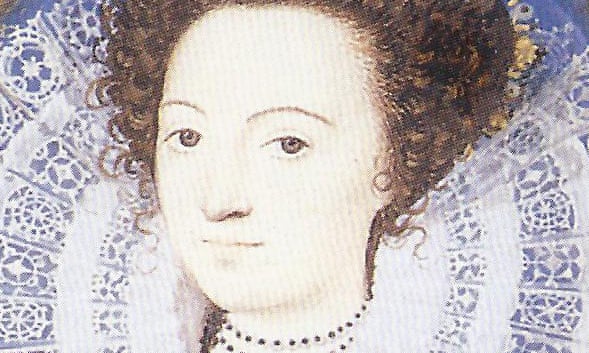
Emilia Bassano (portrait circa 1590 by Nicholas Hilliard)


Excerpts from the article are quoted below:

“Emilia Bassano became England’s first published female poet in 1611 and – according to some – could be the “Dark Lady” of Shakespeare’s sonnets. But Bassano has largely been forgotten by posterity, with her reputation eclipsed by male contemporaries. Four hundred years later, research commissioned by the producers of Emilia, a play about Bassano’s struggle for recognition as an artist, has found that women writers continue to be judged by the “pram in the hallway”, and pigeonholed as domestic rather than taken seriously as authors.

“The Emilia Report compared broadsheet coverage of 10 male and female writers in the same market. It found a “marked bias” towards male writers, who received 56% of review coverage. Looking at comparable authors Neil Gaiman and Joanne Harris, who had both written new works of fantasy – Gaiman’s Norse Mythology and Harris’s A Pocket Full of Crows – researchers found that while Gaiman’s received widespread coverage, Harris’s did not receive any coverage at all. A similar story emerged for commercial fiction authors Matt Haig and Rowan Coleman; his How to Stop Time was mentioned 12 times by newspapers, in a mix of reviews, interviews and news, while her The Summer of Impossible Things got just three mentions.

“References to women writers’ ages were “ubiquitous”, even in reviews, the researchers found, with women twice as likely to have their age referenced as part of their coverage. In the case of Sally Rooney, only five pieces out of 16 failed to mention her age, three of which were reviews.

“Coleman, one of 27 female authors interviewed for the report on her experience of being published, said she had never been reviewed by a broadsheet, despite writing a string of bestselling novels. “For a man writing is a career,” she said. “For a woman, so often her writing is treated like it’s a hobby, it is a nice thing to do on the side. That attitude is deeply embedded in our culture.”

“Harris reported similar experiences: “In general, when you compare the coverage of my work to that of men writing in similar areas, the emphasis in my case has been on the domestic, and in theirs on the academic,” she said. “Women are still viewed as a niche group, dealing solely with women’s issues, whereas men (even in the same area) are thought of as dealing with important, universal themes.”

“Danuta Kean, the report’s author, said that just as it was for Bassano, “women still aren’t provided with an equal platform to men upon which their work can be judged.”

“The Emilia report recommends challenging publishers over gender stereotypes on covers, which “undermine the credibility of fiction by women and their ability to be taken seriously”, and asking literary editors to examine any gender bias in their review coverage.

“Playwright Morgan Lloyd Malcolm, whose play Emilia is transferring to London’s West End, said that the research showed that Bassano’s struggles for recognition “sadly still chime with those of her fellow women writers 400 years later”.

“Bassano managed to publish a book, Salve Deus Rex Judaeorum, getting around censorship that limited women to writing only religious texts. Yet she is scarcely known outside academic circles.”

What was it the Virginia Slims cigarette advertisement used to say?  “You’ve come a long way, baby.”  (From 1590 to 2020, but there’s a long way still to go.)

Would Be Authors Bombard Publishers with Manuscripts

There is an article by Yohannes Lowe in The Daily Telegraph of June 1st with the above title.

Yohannes Lowe works as an apprentice for The Telegraph and won the National Council for the Training of Journalists apprentice of the year award in 2019.   He says, “I have always enjoyed talking to people and finding out about their personal stories.  That interest combined with a hunger for current affairs, made journalism a natural fit. But with no formal writing experience, I took up a teaching assistant role after graduating from university in 2017.  It did not last more than six weeks.  I then looked for reporting jobs. An NCTJ apprenticeship was vital for training me in the basic skills of the profession, allowing me to be competent in a national newsroom with little formal experience.  The apprenticeship, which included regular teaching sessions at PA Training was great as it taught me to write shorthand quickly and the basics of media law and court reporting.”

Yohannes Lowe

The article says, “Budding authors have been inundating publishers with manuscripts during lockdown, with dystopian novels being among the most commonly offered.  The time freed up by working hours from home has given many aspiring authors more hours in the day to finish off their book proposals.

Avon, a commercial fiction division of HarperCollins, has seen ‘unagented submissions’ increase threefold between March and May compared with the same time last year.  They have received a large number of crime and thriller novels from writers who are drawing their inspiration from their pandemic-induced social surroundings.  Literary agents, which represents writers and help send their scripts to publishers, have also seen a growing trend for dystopian themes.

Sarah Revivis-Smith, a fiction reader at the Eve WhiteLiterary Agency, said, “I would say we’re seeing lots of people working out their fears of the current situation through dystopias, with submissions that either explore Covid-19 overtly or have an unknown virus or disease spreading through humanity.”

The UK’s publishing industry reached record sales of £5.7 billion in 2018, consolidating its position as the  globe’s top book exporter.

Literary agencies are expecting even more manuscripts to flood in by autumn from those who started in late March.

Sam Copeland, director of RCW literary Agency, which boasts Zadie Smith and Kazuo Ishiguro among its published authors, added: “Submissions have continued to be relentless during lockdown, increasing from around 80 a week to 100 . . . I am expecting that number to rise again still further, though, with all the people who have been writing their novel in lockdown.  ‘I have had the odd Covid quick book in, funny books, that sort of thing, and some canny authors have tried  twisting their pitch to reflect the lockdown.  But I think the main rush of Covid books is still to come.'”

Small Publishers Fear Closure

There is an article by Alison Flood in the May 7th issue of The Guardian which is timely.  Te headline is “Majority of Small Publishers Fear Closure in the Wake of Coronavirus.   Alison Flood is the Guardian’s books reporter and the former news editor of the Bookseller.

Alison Flood

The article says, “More than half of the UK’s small publishers fear they could be out of business by the autumn as a result of the coronavirus pandemic, according to research by the Bookseller, which warns of a “whole tranche of writers that either will not write, or will be unable to see their work published”.

With author events cancelled, titles delayed and bookshop sales severely hit by lockdown, the survey of 672 small publishers reveals almost 60% fear closure by the autumn. The Bookseller said that 57% reported they had no cashflow to support their business, and 85% had seen sales drop by more than half.

According to the Bookseller’s editor Philip Jones, the survey shows that the outbreak threatens many small presses, including some of the UK’s best-known independents.

“These are not big publishers, or even the bigger indies, but the very smallest, many of them Arts Council-funded, publishing into areas often overlooked by other publishers, with a particular emphasis on debut writers, and those from BAME or working-class backgrounds,” said Jones. “There’s a whole tranche of writers that either will not write, or will be unable to see their work published, if these fears come true, and it is incumbent on the publishing sector, arts funders and governments to look at how the situation can be resolved.”

Independents often take risks on authors that mainstream publishers shy away from: Norwich-based indie Galley Beggar Press published Eimear McBride’s award-winning A Girl Is a Half-formed Thing after it was rejected by a string of major presses, while independents dominated the longlist for this year’s International Booker prize.

After winning the London category of the small press of the year award at the 2020 British Book Awards, the founder of Jacaranda Books, Valerie Brandes, had been looking at her “strongest, most ambitious year of publishing”, including a commitment to publish 20 black British writers.

“The pandemic and the resultant crisis has not only decimated our plans for these new authors, but has also impacted our publishing programme in every aspect overall, from future acquisitions to sales and distribution,” said Brandes. “We have had to adapt, as small presses have to, turning to our website to sell directly, making changes to our publishing schedule and connecting more with our community. This is all compounded by the industry-wide uncertainty; we have no idea how far we will fall or for how long.”

Jacaranda has teamed up with Knights Of, another publisher specialising in diverse authors, to launch a crowdfunding campaign, administered by independent writing charity Spread the Word. It is looking to raise £100,000, 80% of which will be split between the two presses, with 20% to go to other diversity-focused independents. The money raised will be “vital to ensuring that our shared work can survive this crisis and come out strong and together at the other end”, said Knights Of publisher Aimée Felone.

England’s literature development agencies warned in a joint statement that small and independent presses are “at the forefront of discovering new writers and opening up reading choices through publishing titles often ignored by mainstream publishers” and “if we want to continue to open up writing as a career choice, particularly for under-represented writers, and to develop new audiences for books, we need a healthy independent sector”.”


Do Introverts Make the Best Writers?

On the Introvert, Dear website there is an post from last July which caught my attention.  The title is ‘6 Reasons Why Introverts Make the Best Writers’.  It was written by Christine Bernard who is a novelist, freelance writer, and illustrator.

Christine Bernard

“I’m not saying you have to be an introvert to be a writer. In fact, some of the best writers I know are also incredible socialites and fantastic public speakers. However, if you are an introvert and a writer (like me), you can use it to your advantage. It’s a trait you should be proud of.

Why Introverts Make the Best Writers

1. Introvert writers are aware of emotions in others.

It’s true, we introverts spend a lot of time in introspection, but we also spend a great deal of time aware of the emotions of other people. Many of us “quiet ones” — especially if we’re also highly sensitive — pick up on small nuances and subtleties that other people aren’t aware of. Some might call it a curse, but if used correctly, it can be a huge benefit in a creative capacity.

For example, some introverts can hear what someone is telling them but know right away whether it’s truthful in its meaning based on eye contact, hand movements, voice tone, and other little physical clues. These are all things that can be used within their writing to make their story more authentic and to appeal to a larger audience. Because of this, they can write characters who are multi-faceted rather than static.

2. Introvert writers look within themselves.

Because we spend so much time alone, reflecting on our experiences, we introverts tend to know ourselves deeply. Knowing ourselves so well will have a big impact on creating real characters that others can relate to. Have you ever read a story where you’ve thought, “I know that feeling,” or “That happened to me”? That’s because the writer is creating characters with real depth and emotion.

4. Introvert writers like being alone.

Writing means sitting alone for long stretches at a time, which can be a daunting task for a lot of people. It’s why some people prefer to work in an office environment where they can have maximum contact with other people. For us introverts, writing is a way of being creative without having to interact with anyone else but the characters we’ve created. This means sitting in front of our computer to write can be an exciting task, rather than a daunting one. Just this alone can have a profound impact on how much work an introvert writer gets done on a daily basis, compared to someone who strongly craves the company of others.

5. Introvert writers enjoy meaningful conversation.

Introverts are usually not a fan of small talk. It’s a situation we may feel uncomfortable in and something we generally try to avoid. That doesn’t, however, mean that we don’t enjoy talking at all. We do. However, unlike extroverts, we can be selective about who we talk to and what we’re talking about. Deep, meaningful conversations with the right person can make an introvert seem like an extrovert to the person on the other end of the exchange. These meaningful conversations can be used in our stories to create an exchange that is long lasting on the reader’s mind — and make sure that it’s never too succinct and robotic, but rather interesting and memorable.

Again, I’m not saying that all introverts are creative, but there is definitely a large community of people who benefit from putting all their pent up inner thoughts to good use. We introvert writers can use this creative space as an outlet because we already have such an enigmatic inner world just desperate for the opportunity to be released. We’re creative, and our written stories become a way to showcase this.

Introvert writers can be natural storytellers, because we spend most of our time creating stories and worlds in our own mind. While many introverts see themselves as being stunted in a world built for extroverts, this doesn’t have to be the case. There is a place for everyone on Earth. It’s not a case of one being better than another, but rather a case of using what you have to your best potential. As Susan Cain wrote in Quiet, “Everyone shines, given the right lighting.””

I, too, am an introvert writer, and, in my experience, what Ms Bernard says is correct.


Personalities of Successful Authors

There is a two-year old article in Inc. magazine by Kaleigh Moore titled ‘6 Characteristics Every Great Write Has in Common’, which I found interesting.  Ms Moore’s website says, “I write blog content for eCommerce platforms and the SaaS tools that integrate with them.  I’ve been hired by top companies on the Fortune 500 as well as growing SaaS companies. Some of my past and present clients include AT&T, ReCharge Payments, Shopify, and IBM.  I also write about retail for major publications like Forbes, Vogue Business, and Adweek.”

Kaleigh Moore

While it is unclear where Ms Moore gets the expertise to write about writers, perhaps she is self-taught.  Here is what she said:

“It’s hard to know if you’re a good writer–especially if no one has ever torn apart a piece you’ve written or “ooohed” and “ahhhed” over your work. But one of the easiest ways to spot a great writer is through the qualities he/she exhibits on a daily basis.

These qualities are essential for an effective writer because they spotlight a certain devotion and openness–both of which are necessary to achieve writing greatness. Read through this list and see if you line up with the 6 most important qualities of an effective writer.

1. Attention to Detail

Great writers are observers, always taking mental notes and noting subtle changes around them. This attention to detail not only makes them fantastic editors who can spot the smallest grammatical error during a read-through, but it adds a special touch to their writing, too. No descriptive detail gets left behind.

2. Discipline

Writers who excel are familiar with frustration because re-writes, edits, and improvements all come by maintaining a disciplined approach to writing. Great writers are devoted to constantly re-evaluating their work, no matter how small the task may be. They focus on their craft and are constantly working to get better through intense discipline.

3. Clarity

An effective writer is able to distil complex thoughts and ideas into simple, clear language that’s quickly and easily understood by others. This valuable quality helps them tackle even the densest subject matter by breaking it down into uncomplicated pieces.

4. Strong Vocabulary

No one likes to read the same words over and over again, so a strong, robust vocabulary is an asset to any good writer. Incorporating interesting and unusual words into their writing, this skill helps them maintain a reader’s interest and allows them to communicate more effectively by accessing the perfect word for any situation.

5. Open to Changes

Being open to external edits and suggestions is key for exceptional writers because it enables them to improve their writing, even though it might damage their ego in the meantime. Open-mindedness allows them to see their work through the eyes of others and improve weak points.

6. Passion for Reading

Voracious readers often make great writers, because being immersed in a world of words helps one better understand the nuts and bolts of writing (like syntax, tone, framing, etc.) The more one reads, the more learned he/she becomes on all of the different writing tools and stylistic angles that exist.”


The Self-Publishing School website lists these five characteristics of authors: Exercise Patience, Apply Consistency, Practise Optimism, Value Criticism and Be Empathetic.

It seems to me that Discipline and Apply Consistency and both Discipline; and Open to Changes and Value Criticism are both Value Criticism.  For me, both characteristics are important.

Attention to Detail is important in the text one produces, but being observant of what goes on around you is less important than Being Empathetic; after all, novels are ’empathy machines’.

Clarity is definitely important, and rather than Strong Vocabulary, I would say Excellent Command of English, as being a general skill.

Passion for reading, as Ms Moore says, is important.

Patience can be a useful trait, but I think that if one is Disciplined, one must necessarily also be patient

Practise Optimism doesn’t feel right for me.  While I am an optimist, I think the valuable trait is Be Motivated.  In other words, I think it’s OK to be a pessimist as long as you’re motivated.

For me there is one essential ingredient, particularly if one is a novelist, that is left off both lists:  Creativity

My list of the top 8 characteristics is therefore:

  • Be Empathetic
  • Be Disciplined
  • Be Motivated
  • Be Creative
  • Clarity
  • Excellent Command of English
  • Open to Changes
  • Passion for Reading


Top Ten Publishing Industry Trends

Written Word Media has an article dated January 9, 2020 which sets out their top ten trends for 2020.

Excerpts are as follows:

1. Audiobooks will continue to gain popularity, and more indie authors will invest

It seems like almost everyone you meet is talking about audio these days. Whether it’s podcasts or audiobooks, people are consuming more spoken word audio than ever, and the stats back it up.  A 2019 survey from Edison Research revealed that half of all Americans over the age of 12 have listened to an audiobook in the past year. Additionally, audiobook listeners trended younger. Fifty-five percent of listeners were below the age of 45. The survey stats showed an increase from 2018, and the expectation is that audio will continue to grow. “For audiobooks, 2019 was really the year of the library. We saw incredible library sales growth for authors in 2019.   With better access to audiobook creation and distribution, we expect to see more audiobooks in the marketplace in 2020. Marketing audiobooks remains a challenge for authors but effective marketing will become more important as the space gets more crowded.

2. More indie authors will collaborate on marketing

Authors have long seen success with collaborative marketing techniques like email list swaps and group giveaways. In 2020, we expect to see more cooperative marketing as competition grows and indie authors find creative ways to gain an edge.  Michael Anderle of Kurtherian News sees indies aggressively pooling resources in 2020, saying that “many teams will pool resources to get a minimum of one million emails in their email co-op group.”  Of course, authors will need to be strategic to see success here. Oversaturating readers or marketing to the wrong audience can damage an email list. But, as many authors know, getting it right will pay off.

3. We’ll see more published works from author groups

As we learned from our author survey this year, successful authors tend to have large backlists. In 2020, we expect to see more authors collaborate on series and universes to speed up the process of building their backlists.  Bryan Cohen of the Sell More Books Show broke down how he sees this trend. “2020 will bring more author-publishers. It started with romance but sci-fi and fantasy authors are creating giant interconnected universes with a stable of co-writers and ghostwriters. They’re taking the James Patterson model to the nth degree.”

Granted, sharing a backlist will require sharing income in some fashion, but with tools like Abacus from PublishDrive, revenue sharing is getting easier. We expect more authors to join together and make more money faster from this shared model than they could on their own.

4. Organic reach will decline

This publishing trend is a reality across every online industry. As the big players, like Amazon, Google, and Facebook rely more and more on advertising money, they lose incentive to provide a broad reach for free.  This means that blog posts, Facebook posts, and Amazon book listings will see fewer views for free (also known as organic reach). Facebook CEO Mark Zuckerberg announced in 2018 that organic reach of branded pages would decline, and that has played out as expected over the past two years.  Mark Dawson observed a similar trend on Amazon, “Organic visibility is being reduced on Amazon, with authors – including me – reporting big dips in income when also-boughts disappeared from book detail pages. What replaced them? Carousels of ads.”

5. Running ads will become a requirement

As mentioned in the preceding trend, getting your book in front of readers for free is going to get even more difficult. No one is thrilled about this, but it is the reality of a maturing marketplace.  “Advertising is no longer going to be something that you could do, or even should do – it’s going to become something that you must do, at least if you want to pursue writing as a viable full-time career,” says Mark Dawson. Online advertising is widespread to the point where in many industries, you MUST run ads to compete. As self-publishing grows and organic reach declines, we expect to see the same in publishing.

6. Big five publishers will start using KDP Select

This trend comes to us from the great mind of Michael Anderle. He anticipates that Hachette, HarperCollins, Macmillan, Penguin Random House and Simon & Schuster will look to capitalize on Amazon’s reach by using Kindle Unlimited.   According to Anderle, “We will see big five publishers using KDP (Amazon Kindle Unlimited) in 2020 as they seek to acquire income with their enormous backlists.”  Logically, this makes sense, and some major titles (Harry Potter series) are already available within Kindle Unlimited. Getting readers going on a series is a proven way to make some serious cash, and no one has as many series as the big five.

7. Scam services will continue to pop up

Unfortunately, this trend will continue in 2020. With self-publishing continuing to grow, more shady characters will be attracted to the money in the market.  The good news? There are some tremendous people who regularly expose and spread the word about bad actors. We recommend following Victoria Strauss and David Gaughran on Twitter as they both regularly identify and publicize scams aimed at indie authors.

8. The eBook market will grow even more in 2020

There’s been some buzz about younger readers not buying eBooks, but Nate Hoffelder debunked these rumors in a recent post. Hoffelder includes data from Pew and eBooks.com that show that younger readers are buying eBooks and reading eBooks as much, if not more, than older readers.  As more young readers enter the market, it stands to reason that eBook sales will only increase. Because almost all young people use a digital device every day, moving to eBooks will be a much more seamless transition than the one made by older readers who grew up reading print.

9. Email lists will increase in value

With organic reach declining, spending money on ads becoming a requirement, and collaboration increasing in popularity, an author’s email list becomes an incredibly valuable asset.  Your email list is a marketing channel that you actually own. Once you have a reader’s email, you have a direct, inexpensive line to them. Readers who give you their email addresses are also opting in. They WANT you to email them. Otherwise, they wouldn’t sign up.  An author’s email list is also a valuable way to attract partner authors. The bigger your list, the more authors will want to partner with you to get in front of your audience.  Email isn’t without its challenges. Gmail and other inbox providers will continue to work to declutter their user’s inboxes, so getting eyes on your content may get more difficult. It is increasingly important to maintain clean lists and to educate your subscribers to expect your emails.

10. Creative indies will experiment with new ways to make money

In 2020, more indie authors will experiment with other ways to make money and try new models for selling books.   Jane Freidman aptly noted, “I expect more writers to charge for content that’s been free in the past, although not every writer will be successful at it. I’m seeing more people adeptly use Patreon to secure donations and early sales for all types of work, and Substack to solicit donations and subscriptions for newsletter content.”