Reading

There is an article in the February 18-25 issue of Time magazine that caught my eye.

It begins, “‘The book is dead’ is a refrain I hear often.  When I say what I do, people ask, ‘Does anyone read anymore?’   It’s a throwaway remark: the book is obviously dead, or at least dying, right?”

The author is Lisa Lucas, who is director of the National Bok Foundation, which celebrates the best literature in America, and is the presenter of the National Book Awards.

Lisa Lucas

Her response is: “False.  When people say fighting for books is a futile battle, that’s the moment when my optimism kicks in.  A person who wants to lament the death of reading with me is a person who wants to be convinced otherwise.  I’m here for this fight.

“Not long ago I came across the Pew Research Center finding that 24% of Americans didn’t read a book in 2017.  Now, what I saw was that 76% of Americans did read a book.  If three-quarters of any group is participating in an activity, then you ae surrounded by people doing that very thing.  Meanwhile, book sales have increased every year since 2013.  The American Booksellers Association, which promotes independent bookstores, says its membership grew for the ninth year in a row in 2018.  While headlines proclaim that books are dying, the research says we are a nation of readers.

“Of course, we know that not everyone reads.  But we need to better understand who does and why, and how to encourage them to read more and more joyfully.  We need to figure out who has been left out of the conversation about books and welcome them into the fold with open arms.

“My colleagues at publishers, libraries, bookstores and literary nonprofits share such challenges. Our job is to build readers.  And we do this because the profound pleasures of a good book are for everyone, everywhere.  Storytelling is how we explore and make sense of this world and understand one another.   Because books absorb us and harness our imaginations, they are an essential medium for storytelling.

“Each day, more books are being published that speak to every kind of person, from every kind of place.  And so I believe readers can be built.  After all, we have unlimited invitations to this party.”

Writing Stronger Characters

The Well Storied website has a post by Kristen Kieffer – ’33 Ways to Write Stronger Characters’ – that I think is quite useful.  She divides her advice into three categories:

  1. Fourteen things to give your character
  2. Six things to make your character, and
  3. Thirteen things to find for your character

Ms Kieffer, according to her blog “is an author of fantasy fiction and creative writing resources. At Well-Storied, she strives to help writers craft sensational novels and build their very best writing lives”.  Her website offers workbooks, podcasts, a newsletter, Scrivener Tutorials and free courses,, as well as copies of her books.

Kristen Kieffer

I have selected below some of her more interesting points:

Give your characters a fear: Fear shapes the human experience, creating doubts and insecurities that plague our actions, mindsets, and relationships. Add a little necessary realism to your story by giving your character a few fears as well.

Give your characters a flaw: To be imperfect is to be human. Write a human story by giving your character personality flaws that play into their relationships, fears, disappointments, and discontent.

Give them a history: Our pasts shape who we become. Give your character a rich history that affects both the person they are when your story begins and how they will handle the journey to come.

Give them a quirk: Everyone has their strange qualities or habits, and often times, being a bit strange is just as exciting or memorable as being passionate. Help your character stand out from the crowd by giving them a quirk or two of their own.

Give them a desire: Desires are powerful motivators. They can push your character to great deeds just as quickly as they can tempt them to take action they’ll regret.

Make your characters complex: Don’t stop at simply creating a well-developed character. Actively work to bring your character’s complexities to life on the page by putting them in as many diverse situations as possible.

Make them unique:It’s easy to fall into stereotypes and worn-out character tropes, but don’t give in. Work instead to create characters unique to your story, ones that readers will instantly recognize as your own.

Make them relatable: To relate is to create connection, to see others as just as human as you are. Making even the most evil of characters relatable in some small way can give your character some much needed humanity.

Make them fail: Failure is a springboard to growth. Allowing your character to fail gives them the opportunity to learn from their mistakes and develop as human beings, creating excellent internal conflict for your story.

Make them suffer: Take your character from the highest heights to the lowest depths. By allowing your character to suffer (especially during the Dark Night of the Soul), you prove their mettle, endear readers to their cause, and define their growth as a result of their journey.

Find your characters’ identity: Understanding how your character defines themselves in life can help you better understand how they interact with and present themselves to the world. When defining your character’s identity, consider elements such as their gender identity, race, sexuality, religion, ancestry, and interests.

Find their refuge: When all seems lost, a safe haven can keep hope alive for your character. Allow your character to find this refuge when they most need it, so they can receive the respite they need to recharge for your story’s climax.

Find their redemption: Your character will screw up. They will make decisions that harm themselves or others. They will fail. It’s how they make things right that will define who they are at heart.

Review: Transcription

This is the new novel by Kate Atkinson.  I signed up for it last autumn, six months before it was published, because I very much liked A God in Ruins, her Costa Book Award winner in 2015 – her third time to win the award.

Kate Atkinson was born in York, England in 1951; she studied English Literature at Dundee University, winning her MA in 1974.  She went on to study for a doctorate in American Literature, but she failed at the oral examination stage.  She has written five Jackson Brodie novels, six other novels (three of which won the Costa Award or its predecessor, the Whitbread Award), two plays and a collection of short stories.  She lives in Edinburgh currently.

Kate Atkinson

The central character in Transcription is Juliet Armstrong, who, at age eighteen, becomes the typist in 1940 for the Security Service, MI5.  Her role is to transcribe the conversations a British agent has with German sympathisers: the Fifth Column.  Her boss thinks well enough of her that he gives her the assignment of getting close to Mrs Scaife, a German-sympathising British socialite, the wife of an admiral who has been interred for his pro-Nazi views.  Juliet succeeds rather well in this deception, arranging a meeting between Mr Vanderkamp, an American official opposed to war with Germany and who has access to US secrets, with Mrs Scaif, who intends to pass the information on to the Third Reich.  The pair are arrested as the information is passed between Vanderkamp and Scaife.  Juliet is also involved in the death of a pro-German woman who accidentally discovers that her conversations with the man she thought was a Gestapo are actually being recorded by the British.  Toward the end of the war, Juliet becomes sympathetic to the Russian cause, and an attempt is made to recruit her as a double agent for the British.

As usual, Ms Atkinson does a splendid job researching her subject matter, from the identities of the real-life players, to the settings, to the actual events and messages.  One is transported back to a blacked-out, war time London, where there was much going on in secret, well-lit places.  The principal characters: Juliet, her boss, Perry Gibbons, Godfrey Toby, the fake Gestapo, and Mrs Scaife as well as some of the minor characters are all distinctly drawn and entirely credible.  Ms Atkinson’s writing is confident and authoritative, leading the reader deftly into unexpected turns of events.  This is not a heavy, sinister novel; it has moments of humor and irony.

For me, there are two serious problems with this novel.  First, Juliet’s assignment as transcriber of the conversations is relatively unimportant in the war effort: nothing of significance is learned that will remotely affect the war’s outcome; and second, a large portion of the book is devoted to Juliet’s transcription efforts.  The novel would have been more interesting if it had more to do with Juliet’s spy persona, Iris Carter-Jenkins, and with more of the identity intrigue and double-dealing going on at high levels in MI5.  There were also some details that didn’t seem right to me.  For example, does it make sense for the man who has the power to force Juliet into a double agent’s role to bother sending her anonymous ‘You will pay for what you did’ messages?

This long-anticipated novel is not up to Kate Atkinson’s usual standards.

A Unique Japanese Bookstore

An article appeared in the March 1, 2019 issue of Kyodo News, and it caught my eye because it describes a unique Japanese bookstore, which:

  • charges admission
  • has only one copy of each book
  • buys the books, rather than taking them on consignment.
  • has books which are selected by the staff, rather than being current best sellers
  • arranges the books by relationships rather than by topic

The article was written by Mariko Tamura.  Excerpts from the article are below:

Walk into this new Tokyo bookstore and at first glance you could be forgiven for thinking you’ve stepped into an art gallery. With its elegant glass doors, spacious entryway, books displayed like exhibits on tables and captioned information on the walls, Bunkitsu is clearly no ordinary bookstore.

“That’s what we want people to think — that it’s an art gallery where they can encounter books,” said Hikaru Yoshino, the 26-year-old public relations officer.

Bunkitsu opened in December in Tokyo’s fashionable Roppongi district. The bookstore is unusual in that patrons can browse the 90 or so magazines in the reception area for free, but must pay 1,500 yen ($14) to peruse its 30,000 or so titles on the second floor, where there is also a cafe.

Customers are able to relax in the airy upstairs reading areas and get free refills of tea or coffee provided by the cafe. As the cafe also serves lunch, book hounds can spend all day there if they wish without having to go in search of food.

“Bunkitsu is a place for hard-core book lovers and, at the same time, it’s a place that invites people to walk in and discover books they never thought of reading,” Yoshino said.

There were some initial concerns among the bookstore’s concept team that a fee would discourage potential customers. But the price seemed reasonable considering the fact that a coffee in Tokyo usually costs between 400 and 500 yen and that customers would be able to sip from a bottomless cup while reading for two or three hours, said Yoshino.

They also believed that avid bookworms would welcome a space that offered a relaxed atmosphere coupled with the thrill of discovery.

“It’s like a treasure hunt,” said Yoshino as he passed by a wall lined with magazines. Flip open a panel displaying a particular magazine and more reading material on a related theme appears.
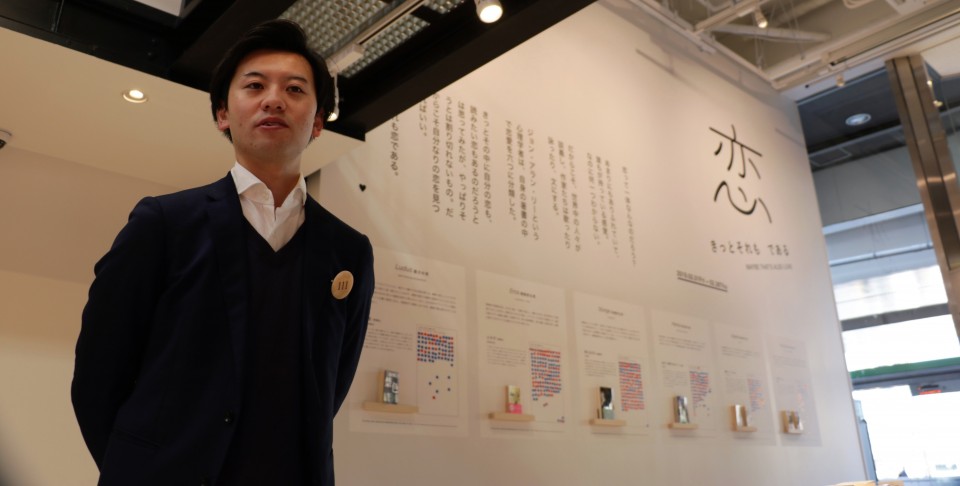
The shelves are curated by section into broad themes like “Travel” or “History” but the books seem tangentially linked.  Lined up next to a history book on Lenin is a series of comic books set during the Russian Revolution. Books are piled haphazardly on tables: a comic book on top of a philosophy book on top of a novel, but are linked somehow — the color black, movies, food. Here, calculated disorder creates happenchance.

“We recognize that if you have a particular book in mind, it is difficult to find it quickly here. But finding a new book is a once in a lifetime encounter. We want that surprise to bring customers back again and again,” said Yoshino.

Each book and magazine is the only copy in the store. Miss the chance to buy it and you might never get another. It’s a gamble for Bunkitsu as well.

Unlike other bookstores, Bunkitsu buys its books and does not sell them on consignment, meaning it must keep unsold copies. Books remain until they catch a reader’s eye.

While the store thinks about moving the merchandise, at the same time it prefers not to stock its shelves with popular works that would boost sales. Staff choose books according to their own interests and not on what’s trending at the time. The entry fee allows them some cushion to stock an eclectic lineup, says Akira Ito, the 36-year-old store manager.

Bunkitsu’s unique business model has not deterred sales so far, according to Ito and Yoshino, who say that between 30 to 40 percent of their customers purchase a book.

“It’s like buying a gift at a museum shop,” says Ito. “People have paid their entry fee so they feel invested in finding a book.”

Adds Yoshino, “They want to take home with them what they experienced here.”

Customers come in many varieties.

“I came here because my friend recommended this place and I wanted to get some new ideas for my job,” said Keito Kondo, a 28-year-old who does marketing for a beer company.

“I thought I might see books I hadn’t thought of,” he said as he sat in the cafe with a number of titles in front of him on sparking inspiration. “I usually buy books that I want from Amazon, but here I found books that I usually don’t read, such as on architecture and art.”

“I didn’t realize that I was interested in fashion until I came here,” said Masato Torikoshi, an 18-year-old student who enjoys studying at Bunkitsu. He twirls his chair to face stacks of fashion books on Issey Miyake, Marc Jacobs and Valentino.

“I was happy to see a customer stretch himself full length against a cushion and read,” Ito said.  In the back is an elevated platform against a large window where customers can kick off their shoes, lie against one of the colorful cushions and chat, read or drink coffee.

A 45-year-old hairdresser enjoyed the space one Monday afternoon. He said that the price was well worth it as people could stay there the whole day. “You can enjoy the sense that you have your own private room,” he said, coffee in hand.

Bookstores are closing down throughout Japan, says Yoshino, citing online behemoth Amazon and the popularity of e-books as possible reasons. But whether the Bunkitsu approach can stem that trend remains to be seen.

He says he is “not sure” if the bookstore’s business model can be exactly replicated elsewhere. While it works in Roppongi, another approach might be needed in a rural area, he said. “You have to look at what’s distinctive about a location. That could lead to different types of bookstores.”

“We need to try somehow to make bookstores survive,” said Yoshino. “We hope that creating Bunkitsu is one way to respond to this challenge.”

Review: A Farewell to Arms

I had never read this World War I novel by Ernest Hemingway, so that when my wife suggested that I select some books for us to listen to while we were driving down to Sicily, I selected it.  The particular edition I bought is read by John Slattery, an American film and television actor, who is best known, perhaps, for his role as Roger Sterling in the TV drama series Mad Men; his diction is excellent, he reads with the requisite emotional emphasis, and with the distinct accents of characters of various nationalities.

Hemingway, born in 1899, was a reporter for The Kansas City Star for a few months after graduation from high school before leaving for the Italian front in World War I to serve as an ambulance driver, having been rejected by the US Army because of his eyesight.  He was seriously wounded and returned home.  This experience formed the basis of his third novel, A Farewell to Arms.  Similarly, the love story of the protagonist in A Farewell to Arms with the British nurse, Catherine Barkley, is similar to Hemingway’s affair with the American nurse Agnes von Kurowsky, who was seven years his senior and he had planned to marry, but who become engaged to an Italian officer.

Ernest Hemingway

Frederick Henry, an American paramedical officer serving in the Italian Army in World War I, is introduced by an Italian doctor friend to a pretty British nurse, Catherine Barkley, and though Frederick does not want a relationship, he tries to seduce her.  In combat, he is wounded in the knee by a mortar shell and is sent to a hospital in Milan where Catherine has also been sent.  As Frederick’s knee slowly heals from surgery, he and Catherine spend time together and fall in love.  He is kicked out of the hospital for concealing alcohol, sent back to the front line, and by the time he can return to Milan, Catherine is three months’ pregnant.  When he returns to his unit, he finds that morale has declined precipitously, and not long after, the Austro-Hungarians break through the Italian lines at the Battle of Caporetto.  During the ensuing chaos, it becomes necessary to abandon the ambulances and Frederick kills an insubordinate sergeant.  He finds his way back to the main retreating column, and on crossing a bridge, he discovers that officers not accompanied by their men are suspected of cowardice and ‘treachery’, supposedly leading to the Italian defeat.  Solitary officers are being interrogated and summarily shot.  Frederick dives into the river and is carried downstream to a point where he can board a freight train which carries him to Milan.  At that point, he renounces his military service.  Catherine, however, has been relocated to Stresa, where he finds her, and he is aware that as a deserter, he is subject to execution.  Learning that he is about to be arrested, he and Catherine row a small boat some thirty-five miles up Lago Maggiore to Switzerland, where they are permitted to remain.  Catherine experiences a very difficult birth which results in a Cesarean delivery of a still-born boy, and she has a fatal hemorrhage.  Frederick returns to the hotel alone.

A Farewell to Arms is remarkable in its realistic, unadorned depiction of the absolute futility of war, and of the terrible price it can inflict on participants and bystanders, alike.  Without any actual combat scenes, one still has the sense of ultimately futile involvement.  Hemingway has a remarkable facility with dialogue that defines his characters.  Emotional impact is not explicit; rather, it is inherent in the careful scene setting, and the dialogue.  Exterior settings often leave one with not only a mental picture, but with the feeling such a place would evoke.  Indoor settings are brought to life with just a few words: a ladder-back chair here, a rickety table there.  Hemingway’s recollections of specific places like the Galleria in Milan are remarkably clear after over a decade time lapse.

The only fault I could find with this novel is that there were times that I felt that the pace needed to pick up a bit, particularly with Frederick and Catherine were together, and there was little really new in their interactions.  Of course, the ending is very sad, but the reader knows that the end will be tragic.

Review: The Immortalists

This novel attracted my attention because it has good reviews.  It also has about five pages of glowing blurbs; how can I go wrong?

The Immortalists was written by Chloe Benjamin, who also wrote The Anatomy of Dreams, which received the Edna Ferber Fiction Book Award.  She is a gradate of Vassar College (which was a happy hunting ground for dates when I was at university) and she received her MFA in fiction from the University of Wisconsin.

Chloe Benjamin

The Immortalists is set in 1969 in New York City’s Lower East Side.  Four Gold children, aged between seven and thirteen, are looking for a travelling psychic who can tell them the date of their individual deaths.  The first to die, on the forecast date, is Simon, the youngest, in his early twenties, of AIDS in San Francisco.  Klara, two years older than Simon, and a magician, who not only wants to entertain her audience with her magic and her death-defying feats, but wants the audience to believe in magic, dies on schedule of an apparent suicide in Las Vegas.  Klara’s older brother, Daniel, a doctor, becomes involved with a policeman who is investigating the psychic in connection with Simon’s and Klara’s deaths.  He is shot by the policeman as he tries to kill the psychic, whom he has tracked down; he, too, dies at the appointed time.  This leaves only Varya, who is expected to die at age eighty-eight.  Varya is involved in experimental work with primates to prove that lifespan can be increased by severely limiting the intake of particular foods, but at the cost of a comfortable life.  Varya leaves the experiment and the novel ends with Varya, at least thirty years before her appointed death, accompanied by her mother, Gertie, and Klara’s daughter, Ruby, while Ruby puts on a memorable magic show.

Ms Benjamin does a good job in persuading the reader to suspend disbelief regarding the reality of the psychic: we are not surprised when the first three siblings die, nor are we surprised that the police would be investigating.  What I particularly liked about this novel are the emotional connections between the siblings: love, regret and sorrow.  The character of Simon is extremely well drawn: his sense of urgency to experience his homosexuality at the expense of self preservation is clear.  Klara is also a unique character for her fascination with and commitment to magic.

For me, Daniel and Varga are not as clearly defined.  For example, what drives Daniel to confront the old woman mystic with a gun, and what drives Varga to be so preoccupied with her stringent diet when she has little to show for it except longevity.  I am also not clear as to why and how Klara chose suicide, or the character and motivation of Eddie, the policeman.  There is a valid attempt to suffuse the novel with an air of mystery and magic: a very difficult task, which I think is only partially successful.

This is a unique story with potentially very interesting, diverse characters; it has mystery and emotional content; it has great promise.  I’m afraid the editor let the author down slightly.

Famous Writing Quotes

The Reedsy blog has 170 quotations on writing from famous writers.  Here are some of my favourites:

  •  “You should write because you love the shape of stories and sentences and the creation of different words on a page. Writing comes from reading, and reading is the finest teacher of how to write.” — Annie Proulx
  • “The greatest part of a writer’s time is spent in reading, in order to write; a man will turn over half a library to make one book.” — Samuel Johnson
  • “Find a subject you care about and which you in your heart feel others should care about. It is this genuine caring, not your games with language, which will be the most compelling and seductive element in your style.” — Stephen King
  • “Write what disturbs you, what you fear, what you have not been willing to speak about. Be willing to be split open.” — Natalie Goldberg
  • “Sometimes the ideas just come to me. Other times I have to sweat and almost bleed to make ideas come. It’s a mysterious process, but I hope I never find out exactly how it works. I like a mystery, as you may have noticed.” — J.K. Rowling
  •  “Your writing voice is the deepest possible reflection of who you are. The job of your voice is not to seduce or flatter or make well-shaped sentences. In your voice, your readers should be able to hear the contents of your mind, your heart, your soul.” — Meg Rosoff
  • “There are some books that refuse to be written. They stand their ground year after year and will not be persuaded. It isn’t because the book is not there and worth being written — it is only because the right form of the story does not present itself. There is only one right form for a story and, if you fail to find that form, the story will not tell itself.” — Mark Twain
  • “First, find out what your hero wants, then just follow him.” — Ray Bradbury
  • “Get it down. Take chances. It may be bad, but it’s the only way you can do anything really good.” — William Faulkner
  •  “Abandon the idea that you are ever going to finish. Lose track of the 400 pages and write just one page for each day, it helps. Then when it gets finished, you are always surprised.” — John Steinbeck
  • “I don’t wait for moods. You accomplish nothing if you do that. Your mind must know it has got to get down to work.” — Pearl S. Buck
  • “I would advise any beginning writer to write the first drafts as if no one else will ever read them — without a thought about publication — and only in the last draft to consider how the work will look from the outside.” — Anne Tyler
  • “You don’t start out writing good stuff. You start out writing crap and thinking it’s good stuff, and then gradually you get better at it. That’s why I say one of the most valuable traits is persistence.” ― Octavia E. Butler
  •  “It is worth mentioning, for future reference, that the creative power which bubbles so pleasantly in beginning a new book quiets down after a time, and one goes on more steadily. Doubts creep in. Then one becomes resigned. Determination not to give in, and the sense of an impending shape keep one at it more than anything.” — Virginia Woolf
  • “When your story is ready for a rewrite, cut it to the bone. Get rid of every ounce of excess fat. This is going to hurt; revising a story down to the bare essentials is always a little like murdering children, but it must be done.” — Stephen King
  • “People say, ‘What advice do you have for people who want to be writers?’ I say, they don’t really need advice, they know they want to be writers, and they’re gonna do it. Those people who know that they really want to do this and are cut out for it, they know it.” — R.L. Stine
  • “Each writer is born with a repertory company in his head. Shakespeare has perhaps 20 players. I have 10 or so, and that’s a lot. As you get older, you become more skillful at casting them.” — Gore Vidal

Review: Gilead

I bought a copy of Gilead because it won the Pulitzer Prize of Fiction, and it appeared on a list of best twenty-first century novels.  It is written by Marilynne Robinson, who was born in 1943 and grew up in Sandoint, Idaho.  She graduated from Pembroke College magna cum laude and Phi Beta Kappa, receiving her doctorate in English from University of Washington.  Ms Robinson began teaching at the Iowa Writers’ Workshop in 1991, retiring in 2016.  Apart from Gilead, she has written three highly acclaimed novels and numerous essays and works of non-fiction.  Her novels are noted for their thematic depiction of both rural life and faith.

Marilynne Robinson

The novel begins in 1956 in Gilead, an unincorporated community in Adair County, Iowa, about 100 km southwest of Des Moines.  The Reverend John Ames, toward the end of his life, is beginning a letter to his young son which constitutes the book.  Ames is at least a third generation Congregational minister, and his father and grandfather were ordained ministers in Iowa and Kansas..  His first wife and daughter died, and he married a younger woman who visited his church about ten years ago.  The story includes anecdotes about his father, his childhood, his brother, Edward – a very bright atheist, and the search for the grave of his grandfather.  A particular focus is on the Broughton family; the father is a Presbyterian minister, also in his seventies; the son, Jack, is an enigmatic figure, who has a special relationship with Ames, dating back to his childhood, but Ames and Jack have difficulty confronting each other about Jacks sins and his agnosticism.  The language is gentle and pious; the setting is, as Edward says, ‘a backwater’.  Any significant actions have largely taken place somewhere else or in the past.  Nonetheless, this is a novel that captures the reader’s attention through the intellectual honest and simplicity of the Reverend Ames.

This isn’t a book about religion or faith per se, though there are references to one or the other on nearly every page.  Rather, it is a novel about the challenges of living a caring, devout, unadorned life, while the external world goes through its thoughtless, irresponsible gyrations.  The title of the novel raises the question of Jeremiah: “Is there no balm in Gilead?”  The answer has been the subject of religious debate for centuries.  There was a balm made from a tree in the region of Gilead (in Jordan), but how effective was it?  Gilead was a place famous for its iniquitous people.  There is also a traditional spiritual praising the balm of Gilead in spiritual terms.  Perhaps Ms Robinson’s intention was to stimulate her readers to consider the merits of Reverend Ames’ lifestyle.

The only reservation I had about this book is whether there should have been more engagement with members of the congregation to add dimensions to the question about the balm of Gilead, and less of the thoughts and musings of Reverend Ames, who, after all, is a clearly defined character from early in the novel.

We Need to Talk About Children’s Books in a Grown Up Way

There was an article in the Evening Standard on 28 January with the above title written by Katie Law, an ES journalist, covering the views of Lauren Child, the best-selling author-illustrator and current Children’s Laureate, on the problems faced by children’s books.

Lauren Child

Law says: “Lauren Child thinks children’s book publishing still gets a bad deal. It’s one of the reasons she is so happy to be a judge for this year’s Oscar’s Book Prize ‘There’s still a lot of snootiness about children’s books. Just look at the teeny-weeny percentage that get reviewed compared to adults. It’s as if there’s a kind of hierarchy.’

“Child is best known for her books featuring Clarice Bean, Charlie and Lola (who became a TV series), Ruby Redfort and Hubert Horatio, which together have sold more than five million copies worldwide. In the two decades since we first met quirky, snub-nosed Clarice Bean and her chaotic, trendy family, her legions of original fans have become adults. ‘The most touching experience in my whole career is talking to grown-ups who tell me what the book meant to them when they were growing up,’ says Child, 53. ‘It’s why I’m so passionate about the idea that children’s book writing and illustrating should get more recognition, and why prizes like Oscar’s Book Prize are so important, because there is so little coverage. We know that a child’s life can be changed by what they read, so why don’t we spend more time thinking about what that material is?’

“Pippi Longstocking, Mary Poppins and The Secret Garden — all of which she has illustrated — were the books that had the most profound effect on Child when she was growing up. ‘The Secret Garden was a gamechanger because it was about someone who was so hard to like. She was plain, had a horrible expression on her face, was bossy and ungrateful. As a child I felt like her, I felt all of those things. I felt it was me. So for children who might think bad things about themselves, these stories can help let them off the hook. It’s all a drip-drip effect, which is why it’s important we talk about children’s books in a grown-up way, in terms of what they’re about, rather than just saying ‘Isn’t it lovely?’

Clarice Bean

“Ms Child says: ‘We’re great at giving prizes for unusual adults’ books but not so good at praising people who have different ideas about children’s books; things need to be a bit more extraordinary.’ Her own trajectory is a great example: Clarice Bean only took off when she stopped trying to please her publishers. ‘I was young and kept trying to do what they wanted and getting it wrong, so every time I rewrote or redrew something, it would get more dead. It had none of me in it, so quite rightly they rejected it. I actually started writing Clarice Bean as a film and forgot about all the things you need to make a book, and that’s when the publishers suddenly became interested. It’s about the need to reject everything you think they want and find your own voice.’

“The National Literacy Trust finds that one in 11 children and young people in the UK don’t own a book (a figure that rises to one in eight children on free school meals), and that book ownership is one of the highest predictors of reading attainment and mental well-being.

“Child grew up in Wiltshire in a happy family not unlike Clarice Bean’s. Today she lives in north London with her partner, criminal barrister Adrian Darbishire, and their daughter Tuesday, now nearly nine, whom she adopted from Mongolia at the age of two-and-a-half after visiting the country as part of a Unesco project.  ‘Having Tuesday doesn’t change the way I write or illustrate but it does make me see more than ever how important illustration is. We had no common language when she arrived. But we did have drawing, and she was a natural right from the start, which really helped us communicate. It’s important for children that their drawings are looked at and that it has a wide role in education because it’s about learning to observe and understand, just like creative writing, and having these skills can make you much more empathetic.'”

I particularly agree with what Ms Child says about book publishers: they don’t know what they want, but when they find something eclectic that is well-written and full of the author’s passion, they go for it.


An Unwelcome Prize?

Last week’s Saturday Telegraph  had and article by Tristram Fane Saunders with the title, ‘Does Anybody Want To Be the Poet Laureate?’

In my early years at university, I used to write reams of ‘classic’, romantic poetry in iambic pentameter, and I would have been enchanted with the thought of being Poet Laureate of anywhere – even Atlantic City – if it had been offered to me.  But, had I read Mr Saunders’ article at the time, I might have had second thoughts.   As far as I can tell, Mr Saunders is a poet, a comic, writer,  translator, commentator for the Telegraph, and all around culture vulture.

Tristram Fane Saunders

He says, “Who would want to be poet laureate? John Skelton, Henry VIII’s tutor and self-proclaimed “Lauryate”, had to put up with rivals “rudely revilyng me in the kynges noble hall”, and royal poets have faced mud-slinging ever since – especially from other poets.

“Dryden, the first modern laureate, called his successor, Shadwell, “a foul mass of corrupted matter”. George III’s poet Pye was guilty of churning out verse “doggedly and dully” according to Southey, who found he suffered from the same problem on inheriting the post.

“In 1999, the appointment of Andrew Motion was denounced as “a shameful failure of integrity and imagination” by Carol Ann Duffy. She had nothing against Motion, but felt the job should have gone to a woman. (Of course, a decade later, for the first time in history, it did.)

“As Duffy’s 10-year tenure comes to an end this year, it’s time for the country to choose its new bardic mascot. But who makes that choice? Until now it has been shrouded in obfuscation, but this time the Government has laid the whole process bare. A “steering group” of 15 named experts has been assembled from the heads of various literary festivals, libraries and poetry organisations around the UK. The group has drawn up a shortlist of four or five poets, culled from a longer list after a bit of back-and-forth with the Department for Digital, Culture, Media and Sport (DCMS).

“It is now up to the DCMS to make the final selection – or selections, if the first choice turns the post down, as Philip Larkin did in 1984. As a formality, the decision is passed on to the Prime Minister, who then submits it to the Queen for approval. In practice, however, the buck stops with the head of the DCMS, Culture Secretary Jeremy Wright.

“I don’t envy the steering group’s job. After all, how can you choose a laureate, when it’s still not altogether clear what a laureate is?

“In theory, being laureate entails no more work than being an OBE. The title is defined online by the royal household as “an honour awarded by HM to a poet whose work is of national significance”. Wordsworth only took the role after being assured by the Prime Minister that “you shall have nothing required of you”. The public may expect topical poems on state occasions, but the Queen doesn’t. Quit writing and move to Majorca, and you’ll still be eligible for your annual salary.

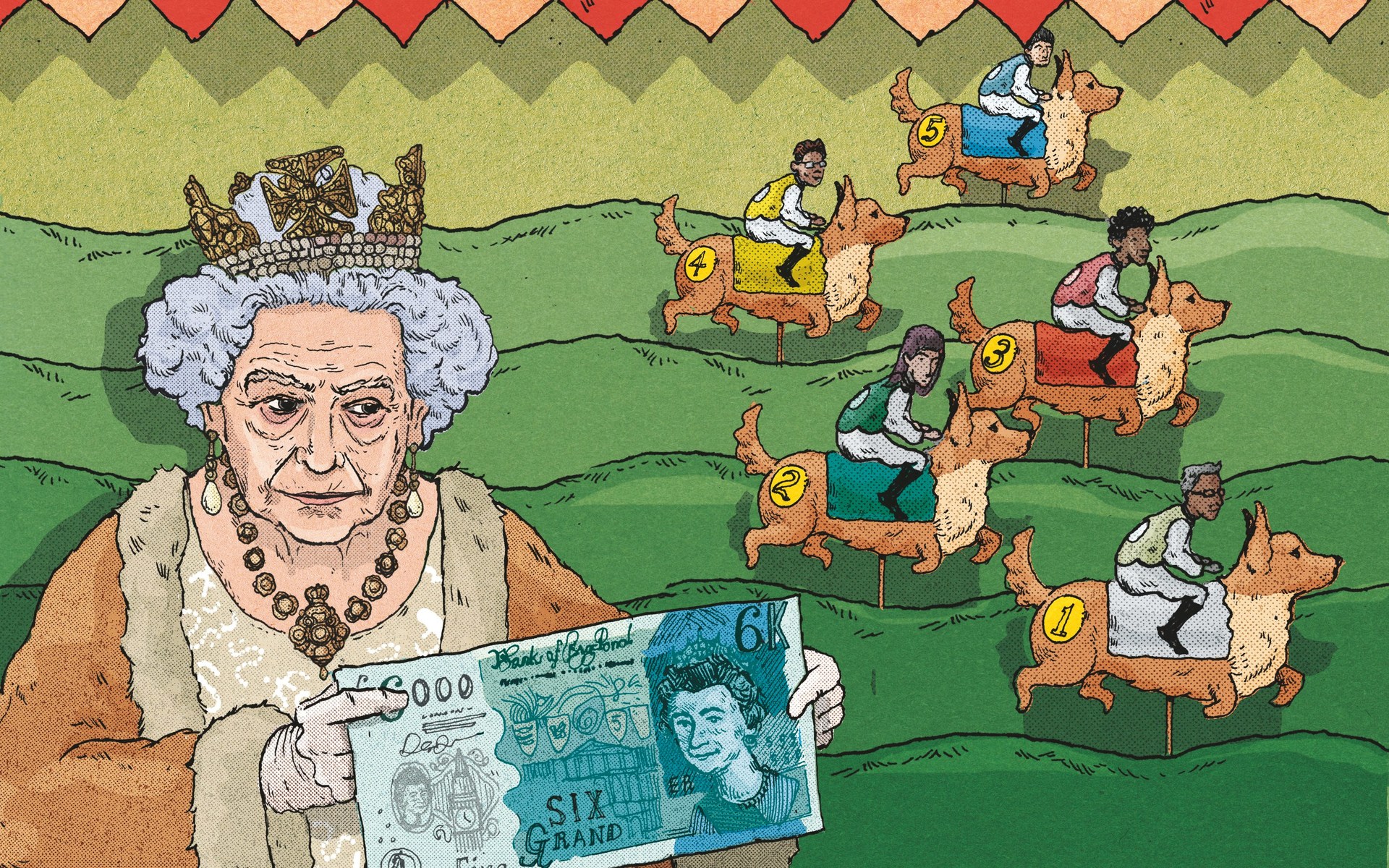
“That salary, as it happens, is £6,000, paid for by DCMS, and a “butt of sack” (cask of sherry) gifted by a vineyard in Spain. The booze was originally a gift received by Ben Jonson, unofficial laureate to James I and Charles I, then revived as part of Dryden’s honorarium. Duffy, Motion and Hughes all received their butt – measured into 720 bottles – from the same producers in Jerez.

“For the past 10 years Duffy has not been sitting on her butt, but giving it away at launches and selling it for charitable causes.

“The lack of hubbub around this year’s appointment is a far cry from the heady days of 1999, when the race was beset by one scandal after another. Rumours that Tony Blair wanted to “modernise” the position and reinvent it as a “People’s Laureate” (though denied by Downing Street) prompted an aghast letter from Hughes’s widow, leaked to the Telegraph, which accused Blair of jeopardising “the sanctity” of the post.

“Then a shortlist of five names was leaked, of which two had already ruled themselves out in verse: Seamus Heaney (“My passport’s green./ No glass of ours was ever raised/ To toast The Queen”) and Tony Harrison, who published a long poem attacking Blair, the monarchy and “toadies like Di-deifying Motion”.

“Derek Walcott, also on the list, was seen as a long shot by reporters at the time, due to doubts over whether he would be willing to move to the UK, and the lingering bad publicity of a 1996 sexual harassment allegation (though the claim was dropped). Of the five, that left only Motion and Duffy. Then came another leak: a Government “source” told the press Blair had quashed Duffy’s chances. The PM, it was claimed, was reportedly “worried about having a homosexual as poet laureate because of how it might play in Middle England”.

(In) “Bloomsbury, one bookseller is running an under-the-table sweepstake. I’m told three names have attracted significant bets from the literati there: Dalit Nagra, Alice Oswald and Lemn Sissay.  I’d add two more to that list: Jackie Kay, already Scotland’s laureate, and Simon Armitage, who’s been tipped as a laureate-in-waiting for at least 20 years.

“As for the laureateship, whoever gets it must have a thick skin. Take a leaf from Betjeman’s book. “Your appointment has been stigmatised as arbitrary and irrelevant,” Martin Amis once told the then poet laureate in a radio interview. “Do you, Sir John, feel yourself to be arbitrary and irrelevant?” Betjeman didn’t hesitate: “Yes, thank God.””