New Novel

My latest novel, Seeking Father Khaliq, has just been published.
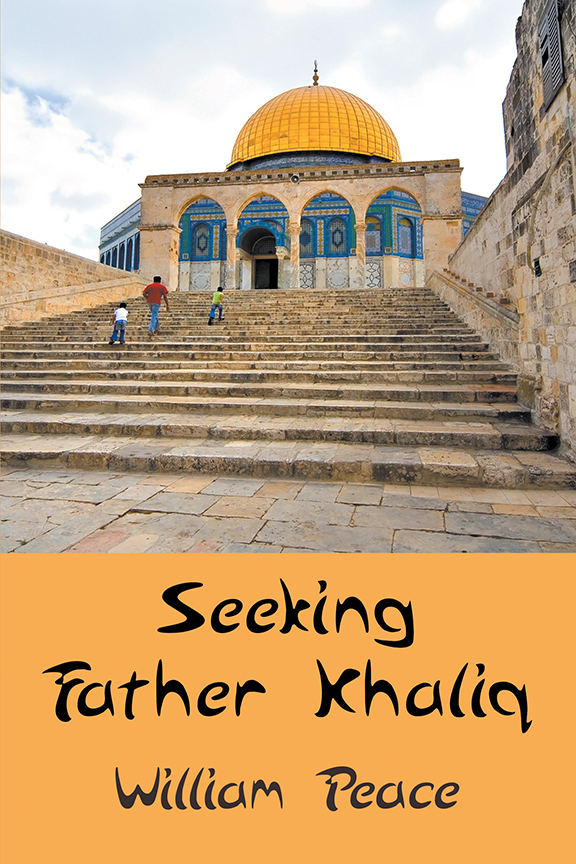
9781681818009-Peace_CV.indd

Seeking Father Khaliq is a modern allegory about one man’s search for spiritual fulfillment. Set in the Middle East, philosophy professor Kareem al-Busiri teaches at a prestigious Egyptian university.
The professor is persuaded by a Princess Basheera to find Father Khaliq for her.  From time-to-time, the professor wonders whether the princess is real or did he imagine her?  In the search, he undertakes important pilgrimages: the Hajj, Arba’een (the huge Shia pilgrimage to Karbala in Iraq), to Medina (the Prophet’s tomb), to Jerusalem and Rome. He falls in love with a colleague who was his late wife’s best friend, and who like his late wife and daughter is a Coptic Christian.  He attempts to manage mortal conflicts of values and ideology between his two sons.  One son is an Egyptian army officer; the other is a lawyer who is secretly providing money and arms to the terrorist insurgency in the Sinai.  Classical Arabic philosophy is woven into the narrative to support certain viewpoints.

The back cover continues:
Carefully researched and constructed, this dynamic story reflects the current religious, political, and social turmoil of the region.
Seeking Father Khaliq is unique in its Middle East setting, and its focus on Islam, as well as elements of Christianity and Judaism. The use of the jihadist conflict in Egypt as a surrogate for larger regional conflicts, the religious pilgrimages, and the resolution of inter-faith marriage issues are also highlighted.

There are two reviews, so far:

E. Lund for Phi Beta Kappa Reviews said, in part:

” . . . Author William Peace has woven a compelling narrative that explores the issues of religion, politics and social change, all while avoiding the pitfalls of becoming a treatise. Instead, “Seeking Father Khaliq” is a moving study of a family caught up in the volatile turmoil of the times, and a father who finds that moving closer to God is a way to navigate forward.  Beautifully written with vivid depictions of religious pilgrimages, the book also delivers three dimensional characters fully realized and equally empathetic. Highly recommended for those who want to know more about this important part of the world, but as much to be enjoyed simply on its narrative merits. “

Deborah Lloyd for Reader’s Favorite said, in part:

“. . . The author’s writing style is clear and concise. The account is thought-provoking and fascinating; the reader will be forever changed. This is a much-needed book during these difficult, challenging times in our modern world.”

I will just add that this book was a great pleasure to write.  I spent at least as much time on the internet researching as I did in the actual writing.  It took two years to write – about half my normal pace.  I also feel that my original idea for the book blossomed very nicely: one man’s search for God, Middle East setting, key character a philosophy professor, told in the first person, two sons on opposite sides of the regional divide.

I hope you enjoy it!
Composition: Music and Prose

Last night, I heard, for the first time, evidence of the shared skills of composers and authors.  My wife and I went to a Royal Philharmonic Orchestra concert which featured Wagner’s Tannháuser Overture, Chopin’s Piano Concerto No. 2, and Beethoven’s Symphony No. 4.  Pierre Vallet was the conductor and Elizabeth Sombart was the pianist.  For me the music got better as the evening progressed.  I should explain that I am no music critic; I never played an instrument, and I can’t really read music, although I sang first tenor and then baritone in two different small singing groups in high school and college.

The Wagner piece was enjoyable, but it didn’t really engage me.  I kept thinking of Nietzsche’s criticism of Wagner: that he became an insufferable egotist.  Elizabeth Sombart’s recital of Chopin was very impressive.   I sat there and thought: ‘How wonderful it must be to be able to play like that!’  And Chopin’s music was lovely.  But it was Beethoven’s Fourth that really caught my attention.  I’ve heard it played at least a dozen times before, but, until last night, never by a live orchestra.

download

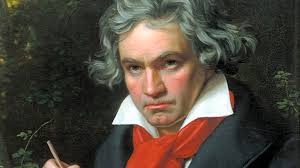
Composer of the Fourth Symphony

The music was captivating, and I watched the musicians play with what seemed like gusto.  I began to think about the composition of the music to which I was listening  This was a very clever composer: he keeps his audience fully engaged.  And I began to identify aspects of the music that I felt bore similarities to the composition of good prose.

  • The piece has a unity to it.  It was clearly the work of one composer: it was telling one musical story in four movements.  Each movement shared musical themes and techniques with the others, but one felt a progression in the movements.  At times, I have felt that a particular piece of classical music could have been serially composed by two or more people.
  • There was plenty of emotion.  Sometimes a flute and first violins would pick out a sweet and gentle theme.  At other times the timpani, brass and eight basses would thunder out in rage.  There was love, there was anger, there was joy and wonder.
  • There was plenty of suspense.  The first movement begins with a dark, gloomy section: What is this about?  But gradually it gives way to a bright, cheerful theme: Will this continue?  Whenever a new theme was introduced, it would begin to tease, and one would wonder what is coming?  The techniques for generating suspense varied: Pianissimo building to Forte, or the other way ’round, or themes evolving in variations; or sudden shifts in the instruments; or instruments playing ascending scales.
  • There was a lot of conversation.  For, example the violins would start a theme which would be picked up and changed by the cellos; the violins would respond with the changed theme and change it further.
  • There were changes in pace.  Sometimes the music was slowly deliberate: in no hurry; at other times, it was in a sensational rush, particularly in the fourth movement.

With this insight, perhaps I will enjoy classical music more than I have in the past.  And I have always enjoyed going to concerts.

A Writer Unmasked

You may have read that the New York Review of Books’ investigative reporter Claudio Gatti has unmasked best-selling novelist Elena Ferrante.

schwartz-unmasking-elena-ferrante-1200

 Perhaps it is best to quote from an article in The New Yorker by Alexandra Schwartz:
“The news that the true identity of the writer Elena Ferrante has, allegedly, been uncovered was published on the blog of The New York Review of Booksat 1 a.m. on Sunday—the Internet’s witching hour, when salacious tidbits are unloaded online to greet the unsuspecting citizens of Twitter bright and early in the morning. It was met with widespread consternation from Ferrante fans. People are pissed. The sleuth, an Italian journalist named Claudio Gatti, has gone beyond the efforts of previous Ferrante truthers, who have generally tried either to compare the biographies of various Italian writers with what is known or inferred about Ferrante’s life or to match their literary style with hers, and used forensic accounting to uncover a money trail that, he believes, leads straight to the source. The process has taken him months. If only someone had got him interested in Trump’s tax returns during the primaries, just think where we might be today.

“I hate to do it, but in the interest of clarity, here, briefly, is what Gatti claims. Ferrante, he says, is Anita Raja, a translator who lives in Rome with her husband, the Neapolitan writer Domenico Starnone. For many years, Raja has translated books from the German for Edizione E/O, the publishing house that puts out Ferrante’s work. Gatti says that payments from the publisher to Raja “have increased dramatically in recent years,” in line with the increase in revenues that Edizioni E/O has enjoyed as Ferrante has become an international literary star, and thus “appear to make her the overwhelming beneficiary of Ferrante’s success.” (He obtained information about Edizioni E/O’s revenue and Raja’s income from an anonymous source.)

“To this evidence Gatti adds the further proof of Raja and Starnone’s real-estate dealings. In 2000, the year that Ferrante’s first novel was made into a movie in Italy, Raja bought a seven-room apartment in what Gatti assures us is an expensive neighborhood in Rome. In 2001, she bought a country house in Tuscany. This past June, Gatti reports, Starnone bought an eleven-room apartment “on the top floor of an elegant pre-war building in one of the most beautiful streets in Rome,” not far from Raja’s apartment. Gatti, after making a brief foray into Italian tax law to explain his suspicion that it is Raja who has purchased the new apartment in Starnone’s name, reminds us that most translators do not earn enough from the sweat of their labor to be able to afford such nice things. Raja has risen suspiciously above her station.

“The part of Gatti’s claim that has unavoidable meaning for readers is that Anita Raja’s biography does not at all correspond to that of Elena Ferrante as gleaned from her novels, or as described in “Frantumaglia,” a work of autobiographical fragments that first appeared in Italy more than a decade ago and which will be published in the United States on November 1st. In that book, Ferrante writes that she grew up in Naples, the daughter of a local seamstress. Raja’s mother, Golda Frieda Petzenbaum, worked as a teacher, and was born in Worms, Germany, into a Polish Jewish family that fled to Italy in 1937. She married a Neapolitan magistrate, but the family moved to Rome, in 1956, when Raja was three. If Raja is Elena Ferrante, that would mean, among many other things, that she has no firsthand knowledge of the postwar Naples milieu that she evokes with such fiercely unsentimental strokes, the oppressive rione on the city’s outskirts that anchors the Neapolitan novels and gives them their extraordinary texture of lived truth.”

Ferrante, through her publisher had said: “I have my private life and as far as my public life goes I am fully represented by my books. . . Thanks to this decision, I have gained a space of my own, a space that is free. . . . To relinquish it would be very painful.”  For me, the appalling aspect of all this is the character of Gatti.  He seems to be motivated entirely by selfish interests: enhancing his career, making money, putting himself in the limelight while injuring the interests of another person.  His allegations that Raja (if indeed it is she) was engaging in a kind of publicity stunt, and that eventually she would be found out.  He seemed to imply that she was asking for it.

I sincerely hope that Gatti will continue to be showered with approbation and that other ‘investigative journalists’ will not try to follow in his footsteps.  Life is about making choices; it is not about frustrating other people’s choices.

Review: Zealot

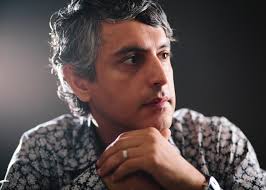
Leafing through this book in a bookstore, I was attracted by the dedication: “For my wife, Jennifer Jackley, and the entire Jackley clan, whose love and acceptance have taught me more about Jesus than all my years of research and study”.  I had noticed that the author, Reza Aslan, had been born in Iran, and now lives in Los Angeles with his wife and two sons.  I thought: Here is a book about Jesus, written by someone who was born a Shia Muslim but is married to a Christian; this should be interesting!

Reza Aslan has written two other books with interesting titles: No God but God: The Origins, Evolution and Future of Islam and How to Win a Cosmic War: Confronting Radical Religion.

index

Reza Aslan

The subtitle of Zealot is The Life and Times of Jesus of Nazareth, and what Mr Aslan does in this biography is to separate the ‘historical Jesus’ from the religious icon whom Christians adore as the son of God.  While there is no original research contained in this book, Mr Aslan draws on over one hundred and fifty other published books to reach his conclusions which are largely credible and interesting.  He paints a picture of life, culture, politics and religious practices in Palestine in the first century.  It is unlikely that He was a carpenter, but because of the minimal use of wood in most houses, He, like many others, was more likely a day laborer, a builder, a tekton, who may have worked in the rapidly growing, near-by city of Sepphoris.  Nazareth was, during Jesus lifetime, a town of about 1000 residents, mostly poor peasants and day laborers.  There is no evidence that a synagogue existed in Nazareth during Jesus life: the temple in Jerusalem was the religious focus for Jews in Palestine.  It is likely that the gospel writers, who began writing at least forty years after Jesus’ death may have assumed that there was a religious meeting place in Nazareth, because by that time the temple in Jerusalem had been destroyed by the Romans.  Data suggests that the illiteracy rate among Jewish peasants in the first century was about 97%, yet somehow, Jesus was able to read the Torah scrolls in the synagogue.

Mr Aslan argues (successfully) that Jesus was, like many contemporaries a zealot, that is: someone strongly committed to a cause, and that his most clearly documented cause was the reform of the corrupt Jewish priesthood.  In fact this antipathy for the Jewish leadership was still strong when the gospels were written, so that politics may have influences some of the words that the writers put into Jesus’ mouth.  For example, Mr Aslan finds it unlikely that Jesus ever met with Pontius Pilot.  If such a meeting ever occurred, it would have been an extraordinary event, since in the normal course of events, Pontius Pilot merely signed the death warrant where capital punishment was sought by the chief priest.  The scriptural dialogue between Jesus and the Roman essentially absolves Jesus of any crimes and places the blame for his death squarely on the hated chief priest.  (I have always wondered why a crowd that brought Jesus so triumphantly into Jerusalem could so loudly demand his crucifixion!)

This biography makes interesting reading, and it does not hesitate to open and explore nearly every controversy about Jesus: His disciples, parents, relationship with John the Baptist, trials, crucifixion, resurrection, what He said or didn’t say, what He may have thought.  The controversies involving the leadership of the church after Jesus’ death are also examined.  These examinations may extend to the historic translations of the original text, as well as both (or even three) sides of the scholarly arguments.  Cultural, political, military, and economic evidence is brought to bear.

This is clearly a scholarly work.  In addition to the extensive bibliography there are nearly seventy pages of notes for those who have lingering curiosity about statements made in the main text.

For me, the only disappointment is that Mr Aslan has made no attempt after shattering what may be a childish image of Jesus to reconcile the ‘historical Jesus’ with the Son of God.

Review: Nietzsche

I had heard of Nietzsche, the wild German philosopher who averred that “God is dead!” when I was in my late teens.  My college roommate seemed to know about him (and Ayn Rand), but I considered anyone who would make such a stupid remark not worthy of further attention.  And Nietzsche was not among the philosophers studied in the Philosophy 101 course.

But he came to my attention about 10 days ago when there was an hour-long BBC program about the man and his life.  In the program, the “God is dead!” exclamation was attributed to the untimely death of his much-admired father at an early age from a horrible brain disease, and to his view of the culture in late 19th century Europe.  As Nietzsche saw it, the culture was wantonly secular, and self-serving.  People cared only about entertainment, pleasure, wealth, status, and image.  His view was that we had killed God (who had been alive).

The novel I am currently writing has a similar theme: society has turned its back on God.  So I bought a copy of Nietzsche by Walter Kaufmann to compare my views with those of the great German philosopher.

index

Friedrich Nietzsche

Walter Kaufmann (1921 – 1980) was professor of philosophy at Princeton University and a world-renowned scholar and translator of Nietzsche.  In fact, Nietzsche was first published in 1950, and has been through four editions, the latest appeared in 1974 in paperback.

It is clear from a mere perusal of the book that Kaufmann devoted much of his life to the study of Nietzsche, who was a difficult and somewhat opaque character, who fought with his mother and sister, and had a tendency to state his case in strong, sometimes extreme, language.  For these reasons, he was not well understood and attracted considerable criticism.  In fact, he became a hero of Nazi ideology, when some of what he said was either misunderstood or taken out of context.  Much of  this misunderstanding is owing to his sister who was an ardent Nazi, and who published re-written pieces of his work.  Nietzsche abhorred the German state and anti-Semitism.  His use of the term ‘blond beast’ was thought to praise Aryan purity, when, in fact, it had reference to the male lion.

The book begins with a history of  Nietzsche’s life: born 1844 and died in 1900, having slipped into insanity on about 1889.  He was made a full professor of classical philosophy at the age of 24; traveled extensively in Europe, and suffered from ill health.  He never married, but he proposed twice to Lou Salomé, a bright, strong-willed woman who was seventeen years his junior.

Nietzsche wrote fifteen books, there are also his lecture notes, his letters and his personal notes.  Rather than deal with each of his works one-at-a-time, Kaufmann addresses themes of Nietzsche’s work.  This is a better approach since Nietzsche made changes to his views from time to time.  Nietzsche was a doubter, a questioner, who took nothing at face value, yet he avoided the label ‘nihilist’ by attempting to establish pieces of a structure to replace what he had torn down.  He was anti-Christian because for him it placed too much value on faith and not enough on good works, and he called himself the Antichrist as a result of inconsistencies he perceived in Christ’s messages and actions, and because he refused to accept Christ’s divinity.  While he averred that ‘God is dead!’ because he thought people had turned their backs on God, it is not clear that Nietzsche was an outright atheist.  He seems to have had a belief in the possibility of God.

One of his better known ideas is that the basic human urge (more important than sex) is the Will to Power.  By this somewhat confusing term he meant striving to overcome the faults and weaknesses in ourselves to become as valuable human beings as we could be.  For Nietzsche there were three categories of humans which exhibited extraordinary value: artists, saints, and philosophers.  When one had overcome one’s faults and weaknesses, one became an ‘úbermensch’ – literally an ‘over man’, which has unfortunately been translated as ‘superman’, which wasn’t at all what Nietzsche had in mind: a sustained, an arduous, personal striving for self improvement which leads to happiness.  Coupled to Nietzsche’s concept of the úbermensch was the idea of ‘eternal recurrence’.  This latter was the unconditional and infinitely repeated circular course of all things; unfortunately, even if one assumes that time is infinite, this has been proven impossible.

Kaufmann is at his best shedding light on Nietzsche’s intentions, his values, and his thought processes.  As a result there is an enormous amount of detail in the book: footnotes and quotations from a wide variety of sources.  Occasionally, the logic of an argument becomes murky, but Kaufmann’s straightforward approach clarifies both the distinct character and the great contribution of this philosopher, and restores his stature in the face of unjust criticism, poor health, broken friendships and little happiness.

If one wants to understand Nietzsche as a whole philosopher, this book – rather that any two or three of his own books – is the one to read.

Designing a Cover

I probably wrote about this subject quite a while ago, but it’s close enough to my heart that it warrants a re-exploration.

My publisher will produce two cover designs, and the author can have his/her choice.  To facilitate the process, there is a questionnaire for the author to fill out.  It includes such questions as:

  • what is the book about?
  • what ideas do you have for the cover?

I usually respond with a fairly detailed cover idea.  In the case of my second novel, Sin & Contrition, I didn’t have an idea, and I probably told the cover designer that the cover should reflect sin and repentance.  What came back was amazing, and I liked it immediately:

413rtvescwl-_sx328_bo1204203200_

But with the five novels that have followed since, I have had to make more of a personal effort.

My latest novel, Seeking Father Khaliq, is a modern allegory about one man’s search for spiritual fulfillment.  It is set almost entirely in the Middle East, and many of the issues involve Islam.  As the title implies a difficult search, I told the designer that I wanted a Middle Eastern maze with the Dome of the Rock (the famous mosque in Jerusalem) positioned at the end of the maze.  What came back was a modern, three-dimensional maze with the Dome of the Rock floating on the horizon.  It just didn’t work.  Next, I found two, antique two-dimensional mazes to choose from, and I suggested that the Dome of the Rock (in miniature) be positioned at the success point in the center.  This also didn’t work; I gave up on the maze.

While browsing dreamstimes.com’s collection of mosque photos, I came across a single photo of some people ascending a long flight of stairs toward the Dome of the Rock.  That’s it.  But meanwhile, my wife, who has a much better eye for things artistic than I, had objected to the font proposed by the designer for the cover: “It’s a dated Western font; there’s nothing Arabic about it!”  So, on a page offering ‘free Arabic fonts’, we found one we liked.

What came back from the designer was a lot better, but I asked that the photo be enlarged and positioned at the top of the cover, and that the white highlights be eliminated from the font.  We’ll see what comes back, and I expect to introduce the book and its cover to you when it goes to press within a month.

It is true that one can’t judge a book by its cover, but the cover can play an important role in introducing the book to the reader!

First Amendment Problems

As you may know the first amendment to the US Constitution covers free speech.  There is an article in my alumni magazine which addresses the ‘First Amendment Problem’.  You will know that freedom of speech is, to me as an author, a key issue.  The article says that hate speech isn’t the issue; politics isn’t the issue; the problem, says the dean of Yale Law School, is that nobody knows how to think about free speech.

The article says,” Take Sorrell v. IMS Health.  In 2007, Vermont passed a law restricting the sale of doctors’ prescriptions to drug companies, which were using the records in their marketing.  The drug companies, along with data mining companies sued, saying that the law violated their First Amendment rights. Vermont argued that the law regulated commerce, not speech.  The case reached the US Supreme Court, where Justice Anthony Kennedy delivered the majority opinion in 2011.  Marketing, he reasoned, consists of speech.  Therefore, singling out marketers amounts to government censorship.

Sorrell wasn’t treated like a blockbuster in the press, but it caused a sensation in the legal world.  It’s hard to argue with Kennedy’s declaration that ‘the state cannot engage in content based discrimination to advance its own side of the debate’.  But if that’s true for pharmaceutical marketers, what else does it apply to?  All kinds of commercial and professional regulations restrict speech based on its content.  Under Sorrell, can states still require psychologists to be licensed, considering that therapy is speech?  Can a public school teacher be fired for telling students that the earth is flat?”

images-1

Robert Post

Robert Post, the dean of Yale Law School and an expert on the First Amendment, has been following Supreme Court rulings on freedom of speech for about 30 years.  He has been trying to deduce the criteria that the court uses in making its decisions.  For example, the Supreme Court recently ruled that a newspaper couldn’t publish confidential information it had obtained through the discovery process in a civil lawsuit.  At first, Post disagreed, but he came to the conclusion that the court had made the right decision.  “The legal system, Post realised, isn’t an open forum for public debate; it’s a government institution designed for a specific purpose.  For the courts to function, judges have to have the power to regulate speech in a trial setting’”

Post’s insight is that “the amendment applies differently is different contexts or ‘constitutional domains’.  The most important domain is what he calls ‘public discourse’, because the goal of free speech is self-government.  Only speech relevant to that goal should get the highest level of protection.  Because public opinion shapes laws in a democracy, people need a chance to affect it: otherwise they won’t experience self-government.”

An interesting example is that some dentists believe that the mercury contained in some dental fillings can leach into the body, but they are punished by their professional regulators for malpractice if they advise their patients to remove the fillings.  The same dentists can, without censure, write op-ed pieces setting out their views.  This latter case is ‘public discourse’ and has First Amendment protection, while advice to a patient is not ‘public discourse’.

The question for an author, whose work is clearly ‘public discourse’, is: how far can you go?  If I were to write a piece belittling or making fun of the Prophet Muhammad (which I have no reason to consider), that would probably be OK, based on the Charlie Hebdo cartoons and The Satanic Verses.  But if I were to write a treatise recommending that the readers go and join ISIL, I might well end up in jail (like Anjem Choudary, the UK hate preacher).  What’s the difference, legally?  Professor Post doesn’t say, but I guess the legal differences arise from two subjective factors:

  • Public opinion, and
  • The perceived threat to a democratic form of government

J K Rowling’s Writing Tips

Recently, I accompanied my grandchildren on a trip to the Harry Potter exhibition at Warner Brothers Studios near Watford.  I have to confess that I am not a Harry Potter fan, but I certainly enjoyed the outing to the exhibition.  I found it astonishing the detail that goes into creating the real visual effects that appear on the screen.

Certainly J K Rowling is a brilliant author to have created the seven Harry Potter books which are so popular, worldwide.  Yesterday, I ran across her top five writing tips on the Now Novel blog.  I thought I would republish and comment on them.

download

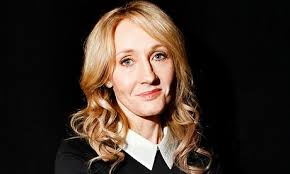
J K Rowling

1.    Write in whatever time you have

One of J.K. Rowling’s most famous quotes is: “Sometimes you have to get your writing done in spare moments here and there.” This is crucial advice on writing a book. It’s easy for us to imagine successful writers spending all day penning beautiful paragraphs, but everybody had to start somewhere. For Rowling, that somewhere included full-time work and finding stolen pockets of time to write. Much as it might be a dream to take six months out to write your book, odds are you’re going to have to fit it into your everyday life.

I agree that it is unwise – even couterproductive – to establish an overall deadline (unless you publisher insists on it).  For me, the minimum size of a ‘stolen pocket’ is an hour.  In less than an hour, I can’t get into a fully creative mode.

2.    Planning is essential

Instead of diving right into line 1, J.K. Rowling advises taking the time to plan out the world your books will live in. She took five years to create and develop every last detail of the Harry Potter world. Every part of Rowling’s books was planned and worked out, right down to how the Wizards and Muggles interacted (and the word Muggles, to begin with!) what the education was like, how magic helped in every day life and how the wizarding world of government worked. She also plotted out all the events of the seven books before she started writing the first.

Great if you can do it!  I write a two page outline of a novel before I start it, but for me, this is just a framework.  I find that characters want to behave differently and therefor events change, or I get an ‘inspiration’ that causes me to deviate from the original plan.  I depend a lot on these inspirations!

3.    Rewriting is just as essential

You would think after five years, J.K. Rowling would just be able to dive right in and write the whole of the first Harry Potter book, Harry Potter and the Philosopher’s Stone, without much rewriting. She rewrote the opening chapter of her first book a total of fifteen times, however. It’s easy to imagine published authors writing with the greatest of ease, but actually the process is just as difficult for them.

I agree!  I don’t think I’ve ever reached fifteen re-writes, but four of five is not uncommon.  For me, the scope of a rewrite tends to decrease over time: after a major rewrite, what follows tends to be less and less radical.

4.    Be aware of plot and pacing

Even when you’ve plotted out all seven of the books you want to write in a series, you can trip yourself up. In fact, that’s one of the big things to be aware of when you’ve done the necessary planning: even though you know what’s going to happen next, your readers shouldn’t. They need to have a sense of excitement and uncertainty as the plot and pacing unfolds because this is where magic lies. After J.K. Rowling finished the first book in the Harry Potter series, she realised she’d given away the whole plot of the series. So she had to rewrite it, and hold back a number of integral plot points.

I tend to make changes to the plot once I’ve started writing a novel.  These changes make the novel more interesting, more exciting, or better convey the overall message of the work.  But I agree that one has to be careful that the revised plot flows seamlessly with no inconsistencies.

5.    Write your passion

Perhaps a favourite J.K. Rowling quote is: “What you write becomes who you are… So make sure you love what you write!” One of the reasons the Harry Potter books are so infectious is because you can tell she really loves the world she created – and all the characters in them. If you’re going to approach your book in a half-hearted manner, there’s no point even beginning it. Make sure you’re passionate about what you write and you’ll draw your readers along with you.

This is very true!  Occasionally, I find that the work is starting to lose interest for me.  Then I know that something is wrong and significant changes are required.  For example, I gave a literary friend a draft of Sable Shadow & The Presence before it was finished.  His comment: “It’s boring.”  I agreed, and I put it aside while I wrote Hidden Battlefields.  When I came back to the manuscript it was with new ideas and new enthusiasm.  When I finished, my friend (like many others) gave it a very good review.

Amazon’s First Bookstore

Amazon opened its first physical bookstore in Seattle, Washington on 2 November last year.  At first glance it looks like any other bookstore, but there are important differences.  All the books are priced at the same prices as on amazon.com.  The books are shown cover-out, rather than spine-out.   The books are arranged by genre and by the number of stars received on Amazon.com.  Included by each book is a review that a customer has placed on the Amazon website.  The photos below are from Time Magazine.

Customers shop inside Amazon Books in Seattle, Washington, on Tuesday, Nov. 3, 2015. The online retailer Amazon.com Inc. opened its first brick-and-mortar location in Seattle's upscale University Village mall. Photographer: Jasper Juinen/Bloomberg

General View of Amazon’s First Bookshop

A customer shops at Amazon Books in Seattle, Washington, on Tuesday, Nov. 3, 2015. The online retailer Amazon.com Inc. opened its first brick-and-mortar location in Seattle's upscale University Village mall. Photographer: David Ryder/Bloomberg

Reminder about price policy

A customer shops at Amazon Books in Seattle, Washington, on Tuesday, Nov. 3, 2015. The online retailer Amazon.com Inc. opened its first brick-and-mortar location in Seattle's upscale University Village mall. Photographer: David Ryder/Bloomberg

Notice the reviews below each book

Customers shop at Amazon Books in Seattle, Washington, on Tuesday, Nov. 3, 2015. The online retailer Amazon.com Inc. opened its first brick-and-mortar location in Seattle's upscale University Village mall. Photographer: David Ryder/Bloomberg

There is also a Kindle station

Inside The First Amazon.com Inc. Brick And Mortar Bookstore

There is a Most-Wished-For section reflecting habits on amazon.com

Inside The First Amazon.com Inc. Brick And Mortar Bookstore

Behind the checkout counter, Amazon displays books that are popular that week.

In the store, customers can try out Amazon’s electronic gadgets: including the Fire TV streaming device, Fire tablet and Kindle electronic reader.

The prices, the cover-out displays, the star ratings and the customer reviews will certainly be attractive to many customers.  Will other book sellers move to copy Amazon?  I doubt it.  The prices, star ratings and customer reviews are unique to Amazon, as are its electronic gadgets.  Over the weekend, I visited a Waterstone’s bookstore near home, and a found that selected books have a small card below them on which were hand-written comments by store employees.  While the cover-out display is attractive, I doubt that it is a feature which will be widely copied, because it results in a dramatic reduction in the number of titles which can be displayed is a store of a given size.

Still the store format does an excellent job promoting the Amazon brand, even it, at the prices charged, the staff employed, and the brick and mortar rental, it will probably lose money – unless the store sells a lot more than a conventional bookstore of the same size.

Review: Why the West Rules ~ for Now

I was given this imposing book by a friend who thought highly of it.  I say ‘imposing’ because it is 645 pages long (including one appendix but not counting 100 pages of notes and index).  I’ve had time to read it because I’m on holiday in Sicily.  Not only is it imposing but it is very interesting and thought-provoking.  The book examines 16,000 years of human history (and other forms of data) to explore why the West has more power than the East, and what is likely to happen in the future.

The author, Ian Morris, was born in 1960; he is currently Willard Professor of Classics at Stanford University.  He is an archaeologist as well as an historian, and the interesting aspect of this book is that in relies of archaeological, biological, geological, linguistic, genetic, social as well as historical evidence.  Published in 2010, the book has won many awards and has  been translated into 13 languages.

index

Ian Morris

The book is a ‘brief’ summary of human history beginning at the end of the last ice age (but with with an exposition of the prior evolution of humanity).  Professor Morris uses four indices of human development to quantify the progress of civilisation in the East and the West.  He provides captivating commentary on why the various indices grew or shrank over time.  His indices are social (the size of the largest city in the region); military (the most powerful military force in the region); technological (who had the technological advantage); and who was making the most use of energy.  There are plenty of brief descriptions of the brilliant (or catastrophically stupid) moves of the movers and shakers – eastern and western -in each age, but he demonstrates that it was not their brilliance or stupidity that really changed history.  Nor was it political or cultural or genetic.  It was geography which finally gave the West a major advantage at the end of he eighteenth century.

Looking ahead, Professor Morris concludes that the East will take over the lead in the twenty-first century: largely based on China surpassing the US in financial terms.  But he also says that it may not matter who ‘rules’, because sometime in this century there is more likely to be one world than an east and west.  Looking still further into the future, he postulates two major scenarios: Singularity where human intelligence becomes so well integrated with computers that all intelligence becomes shared, and humanity becomes something altogether different; and Nightfall where humanity is essentially wiped out by a catastrophe such as nuclear war or environmental disaster.  (There are plenty of other undesirable scenarios suggested.)  At the conclusion, he hopes that Singularity will prevail.

This book is very thought-provoking, interesting reading, calling as it does on a wide range of specific data, and events in human history.  I found it interesting that religion had almost no part to play in human development.  Instead, the steadfast theme of human brutality is omnipresent.  War, it seems, was always the preferred option.  Professor Morris attributes human development to fear, greed or laziness, saying that all human innovation arises from one of those three motivations.  Sadly, I’m afraid he is right  So, in addition to giving the reader a fascinating lesson in human history, Professor Morris provides a rather depressing picture of human character.

I must say that I don’t necessarily agree that the East will – via China – rule the world.  Economic, military or political disaster could overtake China (or the US for that matter).  But I do agree that we are converging on One World rather than East vs West.

This is a brilliant book, worth all the time it takes to consume it all!