Amazon’s £270m Record Loss

There was an article in the Daily Telegraph recently with the above title. It said:

“More than $15 bn was wiped off the value of Amazon last night, after the online retail giant reported the biggest loss in its history. The company increased sales by a fifth to £20.58 bn in the three months to October, but plunged $437 m (£273 m) into the red as it spent heavily on new projects. That figure is more than 10 times the $41 m loss Amazon reported in the same period a year earlier.

The business has been ploughing money into myriad new schemes as it battles to gobble up market share and tries to compete with rivals such as Apple that are increasingly treading on its turf. Jeff Bezos, Amazon’s chief executive and founder, has authorised the company to spend tens of millions of dollars developing drones and much more on new servers for its online data storage business.

He has also led a spending spree on film and television rights, so that Amazon can compete with the like of Netflix and Hulu, and has reportedly been selling gadgets such as its Kindle Fire e-reader as a loss, in order to build up its base of loyal users.

‘We’ve been for several years now, in an investment mode because of the opportunity in front of us,’ Thomas Szkutak, chief financial officer said.

Shares in the company fell more than 11 pc in after-hours trading in New York, to $278.62, their lowest point in over a year.”


As those of you who have read by blog will know, I have mixed feelings about Amazon. When there is something I need for the house or a book I want to buy, I will invariably turn to Amazon for service and price. But, at the same time, I think that Amazon has done a lot a damage to authors and to bookstores.

But, if I set my personal feelings aside, and think about the above announcement with my ex-corporate executive’s hat on, my impression is that Amazon is headed for disaster.

No one has ever built a giant, diversified company on market share alone. The key words in that statement are: giant, diversified and market share alone.

If one thinks of giant, diversified companies which are successful, there is General Electric (which I know reasonably well as I used to compete against them). They are an enormously successful, profit-driven company. Their businesses are mostly ranked among the top three in market share, but they are all profitable. They are all managed by top-flight executives who know their respective businesses very well. They are paid and motivated to increase earnings per share (profit) and the value of GE’s stock.

I think that Amazon could have been quite successful if it had confined its activities to books. It could have sustained a top market share in this sector and worked to make it profitable. But now, it is trying to enter a lot of other businesses and trying to get the top market share, using price as the weapon. This is a doomed strategy. Why? Three reasons:

  1. Price is not a sustainable weapon. Somebody else will always find a way to do it cheaper, if that’s what the customer wants. Meanwhile, the business is bleeding money.
  2. Focus. Executives can pay good attention to only so many things. The more things an executive has to watch, the higher the likelihood that one of those things will go wrong. The secret of diversification is to serve one market. In GE’s case it is the industrial market. What do online data storage, books and drones have in common? Since 1997. When Amazon was first floated, the company has bought about 60 businesses.
  3. Experience. Jeff Immelt has many years’ experience managing huge industrial businesses. Jeff Bezos has no general management experience before he founded Amazon. He worked in computer science, international trade, finance, and internet enabled businesses, but I could find no evidence he had profit responsibility at a high level before Amazon. Information on the rest of the executive team is apparently available only on the proxy report to shareholders. How’s that for transparency?

What do I think will happen?

Well, if Amazon continues to experience losses of this magnitude, shareholders will revolt, and the attitude of Wall Street will turn hostile. As a result, several possibilities emerge:

  • There is shake-up of the executive team (except Bezos)
  • Subsidiaries will be sold to raise cash and to narrow the focus
  • More emphasis will be placed on profit over sales

Interview: John Grisham

In last Saturday’s Daily Telegraph, there was an interview of John Grisham which I thought was interesting, because of some of the points he made.

According to Wikipedia, John Ray Grisham, Jr., born in 1955 is an American lawyer, politician, and author, best known for his popular legal thrillers. His books have been translated into forty-two different languages.  He graduated from Mississippi State University before attending the University of Mississippi Law School in 1981, and practiced criminal law for about a decade. He also served in the House of Representatives in Mississippi from January 1984 to September 1990.  He began writing his first novel, A Time to Kill, in 1984, and it was published in June 1989.  As of 2012, his books had sold over 275 million copies worldwide.   A Galaxy British Book Awards winner, Grisham is one of only three authors to sell 2 million copies on a first printing, the others being Tom Clancy  and J K Rowling.  Grisham’s first bestseller was The Firm. Released in 1991, it sold more than seven million copies.  The book was later adapted into a feature film of the same name, starring Tom Cruise.

images

The interview took place in his loft office in Charlottesville, Virginia.  His interviewers (Peter Foster among them) had tried, without success, to operate the front door intercom.  Coming ’round from the back, Grisham told them, “Sorry, guys, tha’ thing’s been broken for a while. Y’all come round this way”.  There are no agents, flunkies, or receptionist to retrieve his visitors.  His office, where he once hosted a fund-raiser for Hilary Clinton in 2008, is decorated with posters from the movies The Firm, The Pelican Brief, The Client.  There is also a black and white photo from 1993 showing fans queuing around the block to buy a copy of The Client at a Memphis book store.  But Peter Foster says that Grisham recognizes that the world of his heyday has faded, both in the bookstores and in films.  Grisham says that Amazon is drumming the book stores out of business, and the films are no longer being made.  There are five films in development, but “these days the financing always seems to fall through . . . Hollywood doesn’t want to make those sorts of movies any more.”

Foster said that Grisham seems to be genuinely grateful for his monumental success (he still earns $10 million a year), but he is like the big league athlete whose time has passed, but who is conscious that the world has moved on.

As of last week he had a Twitter account, but only because his publishers made him open one.  He says, “I can’t think of anything worse than stopping several times a day and sharing my thoughts and activities with a bunch of people, and I damn sure don’t want to know what you’re doing, so just leave me alone.  I have a Twitter account, but I don’t mess with it.”

He views the rise of Amazon and ebooks in much the same way, equating Jeff Bezos with the ‘Robber Barons’ of the 19th century who established monopolies in order to crush the competition.  “Amazon is driving prices down and they say, ‘We’re good guys, we’ll sell more and everybody makes more money.’  What I want to say is, ‘Hey, I had a very nice career going before Amazon.’

Grisham gets up every morning at 7 am and writes until lunch time.  Every January 2nd, he writes the outline of a new novel, and the process ends on July 1 when he delivers the manuscript for publication in October.

He is a Democrat with some strong political views.  He says that in American politics, “the money is just so rampant and corrosive.  We should call it corruption.  You’re actually buying votes, that’s what you’re doing.  But it’s all legal.  It’s a rotten system and it’s getting worse every year in this country.”

The plot of his next novel is inspired by the shootings of black teenagers by white policemen.  He says he wants to explore the flaws of a criminal justice system in America that imprisons its population at five times the rate of Britain and most other developed countries.  He says that the system, “treats black teenage boys and white teenage boys so differently for the same crimes.  Always drugs.  We have a million black guys in prison now for non-violent drug offenses.  One million.”  He said that the system also comes down too hard on non-violent white collar criminals like Martha Stewart.

I agree with most of what Grisham said, but the article mentions remarks he had made earlier in the week about “old white guys his age who once had too many drinks and looked at some child pornography” ending up in prison.  The case to which Grisham probably had reference didn’t involve ‘some child pornography’; it involved a lot of pictures of children being sexually abused.  In my view, ‘old white guys’ like that ought to go to prison!  Also, I have little sympathy for Martha Stewart who made false statements and obstructed the investigation into insider trading.

Website

I thought I might remind my readers that I have a website, as well as this blog.

My website is http://www.williampeace.net, and it has just recently been updated.  The website is arranged with a home page, which has a bit about me as the author, but I think that the About section of this blog is more informative.  My blog runs down the right hand column of the home page in real time.  (This blog also runs in real time on my Amazon author’s page and on Goodreads.)  Then, there is one page for each of my novels: currently five and a sixth is about to go to the printer.  Each book page has an image of the cover, a short introduction to the novel and a synopsis.  There are links to a sample chapter, the publisher’s press release, and reviews of the novel.  A link the list of awards which a novel has won are also available.

In some cases, there are links to where the book can be purchased, but my books are available from stock on Amazon and Barnes & Noble.  Kindle versions, in addition to hard copies, are available for all.  My first novel, Fishing in Foreign Seas, is the only one available with a hard cover.  The rest are in soft covers, as this is a good way of keeping the cost and price of a book down.

Comments on my website are welcome!

Review: Orfeo

I decided to read Richard Powers’ Orfeo (published in January, this year) when it was on the long list of ten novels for the Booker Prize. It has since been omitted from the short list for this year’s prize.

Richard Powers is an American novelist, born in 1957, in Evanston, Illinois. At the age of eleven, he moved with his family to Thailand where he became an avid musician. He began his studies at the University of Illinois at Urbana-Champaign (UIUC) with a major in physics, but he graduated with a BA in English literature, followed by an MA. He worked as a computer programmer in Boston, but he quit that job to devote time to writing. His first novel was published in 1985. In 1992, he returned to the University of Illinois as writer-in-residence. In 2010 and 2013, Powers was a Stein Visiting Writer at Stanford University, during which time he partly assisted in the lab of biochemist Aaron Straight. He was named the Phil and Penny Knight Professor of Creative Writing in the Department of English at Stanford in 2013. He currently teaches a graduate course in multimedia authoring, as well as an undergraduate course on the mechanics of narrative, at UIUC, where he is the Swanlund Professor of English. He has written ten novels and has won a number of literary awards.

th

Orfeo follows much of the fictional life of Peter Els, a composer, music professor, and amateur bio-scientist. He dabbles in genetic experiments on bacteria and viruses in parallel with music composition, seeing similarities between the infinite variety of music and basic organisms. Els is driven not by fame or fortune, but by a compulsion to compose a piece of music which will have a lasting, ethereal effect on the listener. When he composes a piece which, for the first time, elicits critical acclaim, he refuses offers to stage it again.

The focus of the novel is on the sinister net of terror-prevention which tries to capture him when he becomes a bio-terror suspect, and which he tries to elude.

One has to admire Powers’ multiple competencies as a musician, as a poet and as a technologist. Nonetheless, this is not an easy novel to read. There are no chapters, and the shifts in scene and timeframe are sometimes difficult to follow. I say Powers is a poet because there are frequent passages of music description similar to:

“Then the damning glockenspiel, mute for three songs, silent for so long that the ear forgets the forecast from song one. Child’s toy, funeral chime, light in the night. A bell from out of the pitch-black; a shock but no surprise. A sound that makes hope sound primitive.”

If one is musically literate, and if one is familiar with the piece about which Powers is writing, I’m sure this would be lovely. (I was a singer, and I enjoy classical music, but never learned to read music.) Powers also uses unexpected nouns and adjectives in his descriptions. Sometimes, these seem very clever; at other times they are confusing.

The character of Peter Els is, for me, difficult to relate to: not because he is a musician or a bio-chemist, but because he seems, until near the end, to be a self-proclaimed, born loser. There are not sufficient likeable features with which to empathise. One shakes one’s head each time he makes a stupid mistake (mistakes which Els himself confesses), but there isn’t enough redeeming motivation for the mistake for us to understand and respect him, nonetheless.

Perhaps Powers was not aiming at any particular market when he wrote Orfeo. If you are an amateur composer or a competent musician and someone who is concerned about the encroachment of authority on our freedom of expression, Orfeo is a must read.


Creating Reader-Friendly Books

In the October 2014 issue of Independent, the monthly journal of the Independent Book Publishers Association, has an article “On Creating Reader-Friendly Books for Today’s Busy Readers”.

IBPA_proudmember_1-175w[1]

The article is aimed at non-fiction books, but much of the author’s (Jodie Renner) advice is applicable to fiction, as well, except for the first item which recommends the “use of casual language and everyday words for immediate comprehension and inclusion.”  If it was ever fashionable to write fiction in casual language and everyday words, it has certainly gone out of style today.  One has only to look at the first page of almost any novel on the Booker Prize Long List (I know it has been reduced to a Short List, now) to see the use of unusual words, phrases and construction.  It seems to me that this is intended to announce, “I am an innovative and creative writer!” and is not intended to make things easier for the reader.  I think that the first page of a novel should be about capturing the readers interest (see my December 3, 2011 blog https://williampeaceblog.wordpress.com/wp-admin/post.php?post=34&action=edit).  The use of unusual words, phrases and construction should be confined to intriguing the reader and clarifying the scene better than ordinary text.

Ms Renner goes on to say that one should “write lean; don’t waste the reader’s time”.  I think this is good advice: I find myself deleting extra words that contribute nothing when I review what I’ve written.

She recommends “cut down on the use of -ly adverbs. (adjectives converted to an adverb)  Instead of propping up a weak, overused verb with an adverb, use a strong, specific verb.  Instead of ‘walked slowly’ use strolled, sauntered, ambled, wandered, roamed, or meandered.”  In fact, some critics recommend the banishment of all adverbs.  I think this is a little harsh, but I confess to using my thesaurus to find a verb that’s more suitable than what first sprang to mind.

She says, “Avoid generic words such as things, objects, stuff, items, persons, places, food, plants , animals, pets, kids, which don’t give the reader an instant visual.  “They had lunch in a restaurant” doesn’t evoke a picture for your readers.  Be specific and create sensory imagery so readers know the mood of the gathering, visualise the kind of restaurant, and can almost smell the food and hear the sounds.”  Sometimes when I’m describing a new scene, I find myself going through a sensory checklist: if I were there, what would I hear, smell, see, and feel (both emotionally and tactilily.)

There are other bits of advice in her article, but for my audience their repetition would be boring.

Do Characters Change?

I suppose we enjoy seeing characters whom we like change for the better, and characters we don’t like fail to change and thereby suffer punishment.  Although, likeable characters with   defect, and who are unable to correct the defect, can earn our sympathy.  And then there are characters whom we dislike initially, but who win our sympathy through an act of kindness or a change of heart.   I think it’s fair to say that, as a general rule, a reader likes to see characters change: after all, this is what makes them interesting.  But, if a character changes too much, to quickly, or in completely unexpected ways, that character can lose credibility and may seem contrived.

As I look back at my novels, and think about how the characters changed during the story, I see some interesting points.  Fishing in Foreign Seas was my first novel – a kind of experiment.  It is a romance and a business challenge.  To me, with benefit of hindsight, the characters are somewhat stereotypical, and they don’t change much.  Rather, they learn and grow from the challenges with which they are presented.

Sin & Contrition, my second novel is a kind of morality tale about six characters, friends from the age of 13.  They are quite different characters, from different backgrounds.  As a result of the temptations each of them faces, a few of them change their values and priorities quite significantly; some do not change much (and probably earn the reader’s condemnation).

The next two novels, Efraim’s Eye and The Iranian Scorpion are thrillers.  In both cases, the hero and the villain do not change much at all, but in each case, the key supporting character changes almost beyond recognition.  In Efraim’s Eye, the key supporting character is Naomi, who starts out as a naïve, adorable nomad, and by the end of the book, she has become a pragmatic, tough-minded woman.  In The Iranian Scorpion, Rustam is the key supporting character.  When we first meet him, he is a frightened, insecure, Afghan boy of 15 with sexual fantasies. By the end, he is a confident, secure, married man with a pregnant wife.  How did these changes occur?  Each of these characters underwent a hammering in the forge of real life, and each of them had the mettle to emerge stronger.

My fifth novel, Sable Shadow and The Presence, is told in the first person by a character who is seeking his identity, and it follows his changes from early childhood to middle age.  In a sense, this is a story about the how’s and why’s of character change.

Hidden Battlefields should be published in about six weeks.  It is a sequel to The Iranian Scorpion, but each of the four main characters struggles with an internal conflict, the resolution of which changes his or her life quite dramatically.  This is a novel about what causes us to change, and how it comes about.  By contrast, the two main evil characters, do not change much at all.  You can probably guess what happens to them!

Review: Sable Shadow and The Presence

Readers Favorite has awarded Sable Shadow and The Presence Five Stars:

5star-flat-hr

Their review of the novel is as follows:

Author: William Peace

Genre: Fiction –

General   Appearance: Cover, Construction, Chapter Headings, Illustrations, Table of Contents 5

The appearance of a book makes a dramatic difference in the experience of the reader. Appearance includes everything from an enticing cover and intriguing table of contents, to interesting chapter headings and eye-catching illustrations. This book excelled in all of these areas.

Plot: Concept, Characters, Originality 5

The characters of a book should be well defined, and while they do not have to be likable, the reader does have to be able to form a connection with them. The theme should be consistent and the plot should be original or told from a unique perspective. All of these elements are exceptionally well done in this book.

Development: Description, Dialogue, Creativity, Organization, Length, Fluidity, Coherence 5

Besides the plot, the development of a book is the most critical. The dialogue should be realistic, the descriptions should be vivid, and the material should be concise and flow smoothly. The development of this book is very well done.

Formatting: Editing, Proofreading, Layout 4

Editing and proofreading is where most authors fail. An author should have more than one person proofread their book. The best plot will fail if the reader has to stumble through misspelled words, misused words, bad punctuation, and poor grammar. This book needs a bit of editing.

Marketability: Theme, Subject Matter, Size of Target Audience 5

Marketability refers to how well your book can be marketed and sold. The larger the target audience a book has, the greater the value it will have to publishers and retailers. Although this element is not indicative of the quality of a book, it is important to the success of a book. This book has a wide appeal and can be marketed to many types of readers.

Overall Opinion: Overall Starred Rating 5

This rating takes into account all previous elements and the reader’s overall opinion of the book. This is an excellent, very well written book.

Review: Reviewed by Mamta Madhavan for Readers’ Favorite
Sable Shadow & The Presence by William Peace is the the fictional autobiography of Henry Lawson who hears two voices from his childhood. These two voices represent good and evil and, like any of us, Henry also hears them while making decisions. The story takes us through Henry’s childhood to his college days, to his relationships, to his marriage and his business. Henry suffers a series of tragedies at the peak of his career which sees him attempting suicide. He recovers from that dark phase with the help of his wife and a psychiatrist. It is a story of triumph, tragedy, good, and evil.
The book has many interesting twists and turns in the plot. The author’s fascination for existentialism is revealed through Henry Lawson’s interest in the writings of Jean-Paul Sartre. That contributes a lot of wisdom in the discussions that occur in the story. The characters are well developed and they help in making the plot strong and powerful. There are some thought provoking details on good and evil which give readers an opportunity to think more about their individual beliefs and ideas. I found the representation of the good and the bad voices very practical and relatable. Readers can connect to that very easily.
The character of Henry Lawson has many shades which make him an interesting person. The author has captured well the triumph, tragedy, good, evil, sorrows, and happiness of human life that are palpable
good, evil, sorrows, and happiness of human life that are palpable while reading the book.

Review: Favors and Lies

I decided to buy and read a copy of Mark Gilleo’s novel, Favours and Lies, because it received an award at a recent book festival. (One always wants to understand what other successful writers are doing.)

The brief biography at the back of the book says: “Mark Gilleo holds a graduate degree in international business from the University of South Carolina and an undergraduate degree in business form George Mason University. He enjoys traveling, hiking and biking. He speaks Japanese. A fourth-generation Washingtonian, he currently resides in the DC area. His first two novels, Love thy Neighbor and the national best seller Sweat were recognised as finalist and semi-finalist, respectively, in the William Faulkner-Wisdom creative writing competition.”

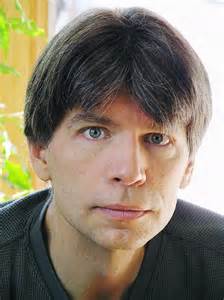
facephoto-150x150

This photo appears on his website.

Favours and Lies concerns Dan Lord, a private investigator with a law degree and a selected list of clients. He works in the DC area on ‘the blurred line between right and wrong’. When his brother’s widowed sister-in-law, Vicky, and her son, Conner, die under very strange circumstances, Dan takes a particular interest. Vicky dies in an apparent suicide and Conner dies of what seems like a drug overdose. Neither of these deaths make sense to Dan. Then the detective who was investigating the deaths of mother and son is killed, as is the son’s girlfriend. Dan finds that the records of several key phone calls have disappeared, and Dan engages a computer wizard to find out what happened to the phone call on-line records. There is a secretive company, the address and phone number of which are unlisted. There is a high class madam, a Russian intelligence officer, a medical doctor, a barber, a martial arts trainer an assistant district attorney, a night club owner, with whom Dan exchanges favors and lies in order to find the killers of his relatives. Some of these people end up dead; Dan, nearly so on several occasions. Toward the conclusion of the novel, we learn the reason for Conner’s death, and of the illegal conspiracy which lay behind it. The motivation for Conner’s death and those responsible is quite a shocking surprise. Fortunately, the favors given to Dan by those friends who remain alive are repaid.

Favors and Lies is a fast-moving book, which is difficult to put down: one wants to find out what happens next. The characters are distinctive and interesting, but they are ‘on stage’ for such short periods, in many cases, and described in terms of their appearance and history more than in terms of their values. One feels little empathy for many of them, the exceptions being Dan and Detective Wallace. The dialogue is clipped and punchy, fully in keeping with a fast-moving detective thriller. The locations of the various scenes are described is such detail that one senses the author’s pride in his familiarity with the streets of the US capital. There is some technology on which the plot for Favors and Lies depends, but it is pretty much understandable. For me – a very literal-minded person – the difficulty I have with Favors and Lies is the credibility of the plot, taken as a rapid-fire whole. But, in the genre of gripping, no-holds-barred detective stories, there are few better.


A Critic’s Article


There was an article by Rowan Pelling in The Daily Telegraph recently. Since the article had to do with literary criticism, I took an interest in it.

According to Wikipedia, Rowan Pelling is a British journalist, broadcaster, writer and stand-up comedienne who first achieved note as the editor (or “editrice”, to use her term) of monthly literary/erotic magazine, the Erotic Review. She was a judge of the 2004 Man Booker Prize. She is now a columnist for the Daily Telegraph, is working on her first novel, and is the mother of two sons.


Ms Pelling’s article (her photo is above) is as follows:

“It is easy to recall the moments in my life when I’ve been so overwhelmed by sudden shame and remorse that I’ve prayed for a meteorite to smite me on the spot. One occurred this summer, as I walked into the green room of The Curious Art Festival at Hampshire’s Pylewell Park. I greeted a friend who gesticulated to the table behind him, saying, “You must know Fay Weldon.” Yes, yes, I know – by daunting reputation – the celebrated writer and feminist icon. You could even say she’s welded on my brain, because I gave a complete stinker of a review to an erotic novel written under a pseudonym; only to be told, once I’d submitted it, that the author was almost certainly Weldon. By then, I’d dismissed the book at “fearful tosh” and opined that it read “like one of those saucy stories written by schoolgirls and passed under the desks at RE”. I considered asking my editor to soften my view as I am generally a big fan of Weldon’s oeuvre. . . . However, my first duty as a reviewer was undoubtedly to the reader, and I wasn’t sure they would be well advised to allocate hard-earned cash to a pseudo-Dennis Wheatley sex romp. So the review ran in its unflattering entirety pointing me inexorably to the day when I would stand quaking before Weldon, wondering whether it was best to apologise, or hope that merciful amnesia had drawn a veil over the episode. But long experience tells me that praise, however extravagant, will be absorbed, or taken as one’s due, while criticism, however trivial, will remain engraved on the artist’s heart. So I grovelled and blushed and the leonine Weldon was magnanimity personified.”

Ms Pelling goes on to mention several instances where authors and film-makers reacted with a mixture of hurt and venom to savage reviews by other critics.

She goes on to say: “Yes, it’s far easier to sit at your desk and take an entertainment apart than to actually write a novel and, yes, any fool with a blog can stumble home drunk and say they loved a film. The difference, however, is that you don’t feel that accountable when you tell your Facebook friends you gave a great big “Meh” to The Grand Budapest Hotel. When you put those judgments into print, however, you feel enormous responsibility; but not primarily to the work’s creators. In an over-stimulated, time-poor world it is ever more the critic’s job to steer his or her readers firmly towards what most deserves their split attention. . . . What’s certain is that not only do critics need rhino hide to function, so do writers who post painstaking works of creativity out in the harsh spotlight. I understand the desire to call reviewers to task, but an offended writer will appear more powerful if they float above the controversy with regal detachment.”

She concludes by saying: “There’s one thing all critics know: you can’t take it back.”

To Ms Pelling’s article, I can only add: “Amen!”

Allegory

My seventh novel is going to be an allegory.  It will be written in the first person and set mainly in the Middle East.  The themes will be philosophical, theological, psychological and social.  I have never written an allegory before (at least not knowingly), and I think it will be an interesting challenge.  But more importantly, I think an allegorical approach is the most effective way to communicate with the reader about the themes I have in mind.

In this instance, the indirectness of allegory is what appeals to me: themes are suggested to the reader without being specific, and the reader is at liberty to interpret the themes in her/his own way.  In my view, this approach adds richness to the presentation.

Wikipedia defines ‘allegory’ as: “a rhetorical device in which characters or events in a literary, visual, or musical art form represent or symbolize ideas and concepts. Allegory has been used widely throughout the histories of all forms of art; a major reason for this is its immense power to illustrate complex ideas and concepts in ways that are easily digestible and tangible to its viewers, readers, or listeners. An allegory conveys its hidden message through symbolic figures, actions, imagery, and/or events.”

A visual example is this painting, ‘Allegory of Music’, by Filippino Lippi; painted in 1475 to 1500:

300px-Filippino_Lippi_001

I have to confess that I ‘don’t get it’ when looking at this picture.  Perhaps that is because it makes use of Greek mythological symbols which were popular during the High Renaissance.  But I concede that the painting does evoke feelings of motion, as with music.

Last night I watched the Ingmar Bergman film The Seventh Seal, which was released in 1957 in black and white.  I remember being a fan of Ingmar Bergman when I was in university, but I don’t think I ever saw this particular film before.  The film is considered a major classic in world cinema, perhaps because of its scenes and allegorical content.  While I certainly enjoyed watching it, I have to admit that it would not be a money-maker if it were released today.  In the film, Bergman transports the viewer to Sweden in the early Middle Ages.  The principal character is a knight who has returned home from a crusade a the time the Black Death is sweeping through Sweden.  The knight feels that his life has been wasted and fears for his death.  He wants to perform ‘one meaningful deed’, and longs to hear the voice of God.

220px-Ingmar_Bergman-The_Seventh_Seal-01

In this scene from the film, the knight (on the right) offers Death his choice of chess pieces; Death chooses black.

The film is peopled with diverse characters: a woman who has been condemned to death for speaking with the devil; Death himself who play an extended game of chess with the knight; the knight’s wife who has waited for him all these years; there are religious zealots, criminals, actors, and immoral people.  For me, Bergman seems to be saying something like the following: God and the devil are invisible, and God may seem silent; death is inescapable; and ‘one meaningful deed’ may be enough.

Bergman is never specific in his points.  For me, this is the beauty of allegory.  The reader (viewer or listener) has to form his or her own conclusions.

In any event, this film gets one thinking.