Novels vs Scripts

Leslie Liautaud has an article on the Writer’s Digest website, undated, in which she points out the differences between novel-writing and script-writing.

Leslie Liautaud is an award-winning playwright and novelist and has been active in the performing arts for over 30 years. As a writer, Leslie has had several of her original full-length stage plays produced throughout the Midwest, including the multi-award winning immersive production, Southern Gothic. Leslie is the author of the coming-of-age novel, Black Bear Lake, which placed first in the Chanticleer International Book Award’s Somerset Contemporary and Literary Fiction division. Her psychological thriller, Butterfly Pinned, will be released on May 10th, 2025.
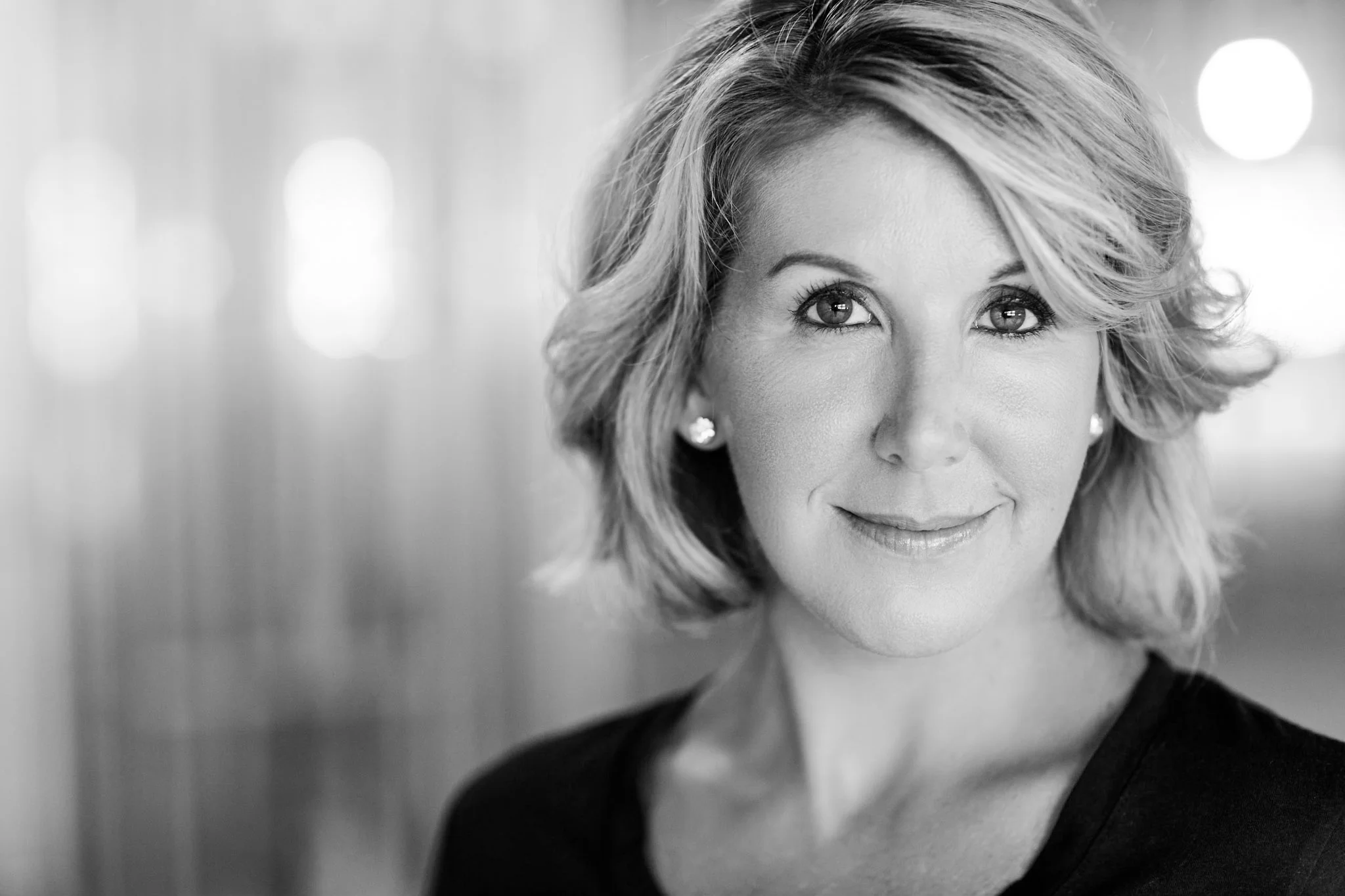
Leslie Liautaud

Leslei says,”The first time I stepped on stage, I was five years old. I might forget my anniversary or what I had for breakfast, but I will never forget the feeling the first time I performed in front of an audience. My role was “Little Girl” in ANNIE GET YOUR GUN. I remember that I had to wait for the lead actor to say, “Get out of here, little girl!” three times before running off stage. I remember being extremely nervous I would lose track of the prompts. I remember my eyes darting out to the audience and finding a sea of strange faces. But mostly, I remember being elated. Suffice it to say, I was hooked. From that performance on, I worked as an actor on stage and TV for the following 20 years.

I hadn’t ever considered becoming a playwright until my early 30s when, at a dinner party, a man recounted the love story behind the Taj Mahal. Immediately, I thought, “Why isn’t this a movie? Or a television series??” It was at that dinner I decided to write a script about Shah Jahan and Mumtaz Mahal. I poured over history books and articles and bled the epic love story onto page after page. When I finished, I held the script delicately in my hands like a newborn baby. It embodied a fresh creative energy that I hadn’t felt in years. Make no mistake, I had written what is quite possibly the worst script ever written in the history of writing. But I had done it! I had written a script. It was abundantly clear I knew nothing about the technicalities of writing a screenplay. However, I knew stage plays—the formatting, the structure, the heartbeat—like the back of my hand.

Time went on and after 15 years of writing for the stage and after the production of several full-length dramas, I decided to challenge myself by writing a novel. Much like screenplays, I was starting at ground zero. But I wasn’t worried, as I was an avid reader. I figured, “I’ll just write the story, expanding on my knowledge of dialogue, add some descriptors, and voila!” But voila, it did not. I found myself in the same predicament of inexperience I had been in with attempting to write a screenplay. While some of the practices and techniques I had honed as a playwright were valuable, there was much to learn.

As creative and curious artists, we are constantly experimenting with new techniques and approaches which keeps art in a constant state of flux. That said, after an ongoing career as a playwright and with my second novel, Butterfly Pinned, set for May publication, I can state with all certainty that there remain distinct and stark differences between writing a novel and writing a play.

Format

Formatting is the most obvious of the differences, but it is the foundation. A novel gives you free reign in chapter length and, in most cases, the only parameter you should abide to is writing in paragraph form. Plays, however, must be formatted into a preexisting, specific script form. There’s no getting around it.

Consider your script as an operating manual for the actors, director, set designer, etc. It needs to be cohesive, so all parties remain on the same page. (Pun intended!) The easiest way to achieve this is by using software designed to format for you, guiding you through dialogue, stage directions, and scene changes.

There are several reliable companies who offer formatting software specifically for playwrights, and which one is best for you comes down to personal taste. Some popular companies include Celtx, WriterDuet, and Trelby. My personal preference is Final Draft, which I’ve been using for over 20 years.

Setting

Again, the novel lends itself to more freedom when dealing with the setting of your story. It can include car crashes, explosions, and may span the globe. With a novel you can take your time describing the details of an expanse of land or the rich history of an ancient city. With a play, what you can convey beyond dialogue is minimal.

The main restriction is physical space. You must contain the setting to a stage. Unless the play is a big budget Broadway extravaganza, pyrotechnics, multiple scenery changes, and ornate sets are unrealistic. Rule of thumb is minimal is best. Most often, a stage production will have a hired set designer, so your sole job is to convey the setting you desire through the dialogue and stage directions.

Content

A novel offers you a wonderful opportunity to tell a multi-layered, in depth look at the world through the lens of one character, many characters, or as an observer. A reader can hear inner monologues and passing thoughts of the characters. A novel allows narration to guide a reader through the story, gently pushing and pulling whichever direction you, the writer, intends.

A play relies solely on dialogue and action to convey the story. Every spoken word must count, and unspoken words carry as much weight. I like to think of plays as deep dives into human psychology. Where a novel can be either plot or character driven, a play is, with few exceptions, character driven.

And your character driven story must be succinct. While a novel has the breadth of 400 pages to express the Hero’s Journey, the psychological voyage in a play must take place in approximately 80 pages. Every line of dialogue and every stage direction must directly correlate to a particular character’s conscious or unconscious motives.

End Result

Whether you finish writing your novel or writing your play, please give yourself a pat on the back. It’s a huge accomplishment!

Naturally, your next step is to share your work of art with friends, family, or the world at large. This, too, differs when speaking of novels vs. plays. In the ever-changing landscape of publishing, there are now several outlets to share your book. Self-publishing is a wonderful option for those who are interested in a small batch of copies or for those brave enough to handle the entire process of selling books themselves. Hybrid publishing is another route for those who still would like to maintain control of the book itself but would like help in the physical publishing and distribution. And for those with perseverance, after obtaining an agent, traditional publishing is an option.

For plays, publishing is possible, but it is not the end game. Production is the goal. As with novels, there are many roads to production. I began my career by lending a script to a local community theatre. They did not have to pay a royalty fee, and I was granted live productions to gauge what worked and what didn’t in my writing. It was a win-win for all. Playwrights can submit to local and regional theaters. You may even put sheets up in the backyard, or apartment basement, corral some willing friends, and stage your own low budget (free!) production.

Whether you choose to write a novel or write a play, I wish you joy in telling your story!

Plagarism: HowBig a Problem?

There is an article on this subject by Joseph Epstein in the July/August of Commentary magazine.

Joseph Epstein has written for Commentary for more than 60 years. His most recent book is Never Say You’ve Had a Lucky Life (Simon & Schuster).

Joseph Epstein

Mr Epstein says,”After writing for publication for nearly 70 years, I ask myself: Have I ever committed the sin of plagiarism? I hope I haven’t, but I shouldn’t be entirely shocked to learn that somewhere along the way I have. Writers much better known than I have been accused of plagiarism. Among them have been Theodore Dreiser, Sinclair Lewis, and Benjamin Franklin. Vladimir Nabokov admitted to “unconscious plagiarism,” as did Helen Keller, Robert Louis Stevenson, and the Beatle George Harrison.

No surprise to learn that the greatest amount of plagiarism occurs in schools, in high schools but chiefly in colleges and universities. I’m pleased to report that over 30 years of university teaching I never caught a student plagiarizing in any of my courses. Was I, though, insufficiently on guard? Should I have been more suspicious of that young woman who sat in the back of the classroom scarcely saying a word all quarter long and yet wrote a quite brilliant paper on Joseph Conrad? Or of the young man who, when he did speak generally revealed his ignorance, then wrote a quite good paper on Portrait of a Lady

I have been told by colleagues that catching a student in plagiarism can be a complicated experience. Suddenly the student’s fate, at least his or her fate as a student, is in your hands, for to report a student for plagiarism could mean expulsion from the university. 

I was, of course, aware of plagiarism but failed to comprehend the extent of the phenomenon. Roger Kreuz, author of Strikingly Similar: Plagiarism and Appropriation from Chaucer to Chatbots, a recent book on the subject, claims to have found so much of it in researching his book that, as he writes, “I must confess that this odyssey has dented my faith in human nature.”

Kreuz, a professor of psychology and dean at the University of Memphis, in scanning the broad fields of plagiarism, reports that he hoped to provide “an exploration of plagiarism’s psychological and cultural aspects [that] can help us make sense of what it is and why it happens so often.” Kreuz’s index, extending from Shakespeare to Martin Luther King Jr., from Martial to Joe Biden, from Jesus (Jesus, for Chrissake!) to H.G. Wells, reads like the table of contents of Who’s Who. The claim against Jesus as a plagiarist was made by a second-century Greek philosopher named Celsus, who argued that Jesus plagiarized Plato. Others, meanwhile, have claimed that Plato himself plagiarized from earlier philosophers. 

In his preface, Kreuz notes, “I’m still surprised by who has engaged in this practice. Yes, this group includes plenty of hacks and students. But they are also joined by the highest elected officials of several countries, as well as Nobel and Pulitzer Prize recipients, bestselling authors and artists, and distinguished faculty at elite universities.” The book’s epigraph is “Plagiarism: it’s not just for mediocrities anymore.”

Plagiarism is the appropriation of the words of another without acknowledgement. While it may be a sin, it is not a crime, though infringement of copyright rights, which constitute real property, can be criminal. How many words are appropriated is crucial in determining true plagiarism. Kreuz quotes the poet Sheenagh Pugh on the point that those who plagiarize generally do not do so only once but are, in effect, repeat offenders. He adds that “the internet has made plagiarism far easier to commit, but it has also made it much easier to recognize.”

Along with standard plagiarism, in which a writer copies another person’s words without acknowledgment and claims them for his own, there is unconscious plagiarism, subconscious plagiarism, self-plagiarism, and what Kreuz calls “Teflon plagiarism,” the last being plagiarism that doesn’t seem in the least to hurt the reputation of the perpetrator. Kreuz’s prime example here is Ronald Reagan. 

Unconscious plagiarism entails committing plagiarism without being aware one is doing so. Mark Twain, Helen Keller, and Vladimir Nabokov serve as notable examples of unconscious plagiarism. In the case of Nabokov, Kreuz adduces a story with the same subject as Lolita, an older man transfixed by a female child, that Nabokov read when a young man in Berlin. He discovers another story the Russian had to have read, this one with the actual title “Lolita,” and still other stories by Salvador Dalí that likely unconsciously influenced the writing of Lolita. Finally, at his death, Nabokov left behind an unfinished novel, translated, edited, and published by his son Dimitri, also about a middle-aged man and a nymphet, which shows among other things Vladimir Nabokov’s obsession with the subject. 

Self-plagiarism exists as well, though it’s an odd charge, since how can one steal from oneself? Kreuz’s first example of it is that of the student who uses the same academic paper for two different courses. Perhaps the most notorious instance of self-plagiarism, noted by Richard Posner in his The Little Book of Plagiarism, was that committed by Laurence Sterne, author of Tristram Shandy,who is said to have sent the same love letters to his wife and his mistress. I offer another example—myself. A few months ago, I sent an opinion piece to the Wall Street Journal, only to be told that it was remarkably similar to a piece of mine they had printed seven years earlier—a case, you might say, of self-plagiarism and unconscious plagiarism combined. The greatest self-plagiarizer, surely, is Donald J. Trump, who seems never to tire of giving the same speech, a speech that might carry the title “America Has Never Been Greater Than Under My Presidency, and It Figures Only to Get Better Yet.” 

Still, unlike other forms of plagiarism, self-plagiarism remains for the most part plagiarism without a victim. Self-plagiarism may kick in especially in old age, one of the less pleasant of whose attributes is the slippage if not serious loss of memory. (I have myself in the past month struggled to recall the name of a high school classmate, the actress Celeste Holm, and the Nixon plumber G. Gordon Liddy.)

Punishments for plagiarism differ in different realms. For scholars, they can be serious. In The Little Book of Plagiarism, Posner cites the case of Julius Kirshner, the University of Chicago historian, who published under his own name a book review written by one of his graduate students and was penalized by the university by not being permitted to teach graduate students for the next five years. 

For politicians, plagiarism tends to be viewed as less serious. Since most politicians use speechwriters, it isn’t always clear that the responsibility for their plagiarisms, when they are discovered, is truly theirs. In any case, for politicians, plagiarism doesn’t compare in seriousness, as Kreuz points out, with philandering or financial finagling. Yet, as he also notes, the accusation can be used against politicians by their enemies. Here he cites Senator Rand Paul, in a campaign speech in support of the Republican candidate for governor of Virginia, comparing pro-choice advocates to eugenicists in the very same language written in a Wikipedia entry on the subject—a plagiarism happily pointed out by Rachel Maddow. 

Joe Biden was found guilty of plagiarism on more than one occasion, once in law school for copying a paper written by someone else and at other times in his campaign speeches. None of this, though widely known, prevented Barack Obama from choosing him as his vice president or kept Biden himself from becoming our 46th president. For those of us who prefer our heroes pure, the discovery of their plagiarisms, as is the case of Martin Luther King Jr.’s on his doctoral dissertation, comes as sad news. 

Another large realm for plagiarism is the commencement speech. Perhaps this is because there is not all that much beyond clichés that can be said on these occasions. Just now, the great subject for commencement speeches is artificial intelligence, but it, too, will doubtless soon be worn out and devolve into elevated platitudes. I have myself given only one commencement address and am unlikely ever to be called upon to give another, for my presence is sure to arouse the ire of the wokesters and bring out protesters. I have also written in mockery of the honorary degree, part of every college commencement ceremony, which is certain to keep me home during the months of May and June, where I am happy to be.

_____________

While plagiarism is not a crime, for those caught at it, it is a disgrace. As Posner writes, “The stigma of plagiarism seems never to fade completely, not because it is an especially heinous offense but because it is embarrassingly second-rate; its practitioners are pathetic, almost ridiculous.”

The disgrace is easily enough avoided by attributing to its true, or original, author the words appropriated, either through quotation marks or, if the material has been paraphrased, through footnotes or endnotes. Merely changing the words slightly through the use of synonyms—known as Rogetting, after the compiler of the famous Thesaurus—won’t do and can bring on its own complications. Like nearly everyone else, I on occasion turn to Google and Wikipedia to check birth and death dates and other facts used in my own writing. In doing so, I generally attempt to change the wording of material I use. Whether this Rogetting frees me from the charge of plagiarism, I am less than certain, though I hope it does. 

Not all plagiarism is literary. Music can be plagiarized and so can painting. Martha Stewart was accused of plagiarizing recipes for her famous cookbook. Of his nearly 18,000 Peanuts cartoons, Charles Schulz, Kreuz reports, was caught out self-plagiarizing one. Some classical music is said to contain “quotations” from other musicians, but since musical notes do not allow for attributions, why this is not a form of plagiarism is less than clear. When one thinks of the scores of paintings of Mary and Jesus, mother and child, one wonders why all but the first are not acts of plagiarism. 

Then there is inadvertent plagiarism, where one forgets that one had read something elsewhere and that what one writes is one’s own. “A bookkeeping mistake made by one’s mental accountant,” Kreuz calls it. “This can result in a genuine belief that an idea, a phrase, or a melody is the product of one’s own mind instead of someone else’s.” 

Perhaps most complicated of all is the plagiarizing of ideas. On some rare occasions two people—one thinks here of Charles Darwin and Alfred Russel Wallace on evolution—will come upon the same or a highly similar idea at roughly the same time. Others are only too pleased to take up the ideas of someone else and claim them as their own.

Some plagiarisms constitute creative improvement. Both Kreuz and Posner cite Shakespeare here. After quoting from the descriptions of Cleopatra on her barge from both Plutarch and Shakespeare, who appropriated it from Plutarch, Posner notes that “if this is plagiarism, we need more plagiarism.” He prefers to call it “creative imitation.” In this category he adds portions of Tristram Shandy and, closer to our day, T.S. Eliot’s “The Waste Land.” Eliot it was, in his The Sacred Wood, who wrote that “immature poets imitate, mature poets steal.” 

As “unrepentant plagiarists,” Roger Kreuz cites Susan Sontag and Bob Dylan. Both, in their different ways, claimed that such appropriations of the words of others—Sontag in her fourth novel, In America, Dylan in his various songs—made possible,à laShakespeare on Plutarch, improvements upon the originals. Dylan’s response to his accusers was “All those evil m——f——s can rot in hell.” Ms. Sontag, more measured (it would be hard not to be), held that on this matter of appropriating other works for one’s own, “there’s a larger argument to be made that all of literature is a series of references and allusions.” She has a point. As style is the man (or woman), as Buffon had it, so for the literary, reading is coterminous with actual experience. 

Posner notes, rightly, that creativity is not the same as originality. One can be the former without being the latter. Looking back upon my own decades of writings, I find little original in them. I believe I have acquired a style, or “voice,” as it is often called in academic writing programs. I choose my own words, I deploy them in sentences of my own fashioning, I have my own point of view. But I have set out no new ideas. Many of the ideas I have acquired derive from my reading of those essayists I admire, among them Michel de Montaigne, Matthew Arnold, Max Beerbohm, George Orwell, Michael Oakeshott. I hope that their influence, if not of course their words, turns up in my own essays. Does the influence of other writers, writers better than oneself, constitute yet another form of plagiarism? If so, then perhaps almost all writing is essentially plagiarism. In which case, I say, don’t evade your eyes, just plagiarize. As Tom Lehrer put it.

Bookstore Boom vs Literary Decline

There is an intriguing article on the Literary Hub website by Ellen O’Connell Whittet, dated 16 June 2026 in which she explores the above contradiction.

Ellen O’Connell Whittet is  an essayist and continuing lecturer who teaches in the Writing Program and College of Creative Studies at UC Santa Barbara. Her debut novel, Book of Hours (Dzanc), is forthcoming in 2026. Her memoir, What You Become in Flight (Melville House, 2020) was named a most-anticipated book by Refinery 29 and Chicago Review. She has an MFA from Sarah Lawrence College. She co-hosts the podcast Good Moms on Paper with writers Annie Hartnett and Tessa Fontaine.

Ellen O’Connell Whittet

She says, “I was standing in line at Chaucer’s Books, my local indie, when it occurred to me that the line was longer than usual. This has been happening regularly enough that I’ve stopped being surprised—Chaucer’s business is downright defiant. But just that afternoon I had read something about declining literacy rates, and the cognitive dissonance was hard to shake. I mentioned to the woman at the register that I was glad to see the place so full. “I keep waiting to read the worst news ever in the local paper,” I said, meaning the store’s closure.

She didn’t hesitate. “Not gonna happen,” she said twice, shaking her head.

I wanted to believe her. I still do. But I’ve been turning that contrast over ever since.

Here are the two facts, sitting in apparent contradiction. Reading scores for American high school seniors recently fell to their lowest point since the National Assessment of Educational Progress (NAEP) first administered the assessment in 1992. Only 35 percent of seniors tested as proficient in reading. Nearly a third scored below basic—meaning they couldn’t reliably locate details in a text to understand its meaning. The decline precedes the pandemic and is steepest among students who were already struggling. Meanwhile, the American Booksellers Association reports that the number of independent bookstores in the United States has grown by 70% since 2020, from roughly 1,900 to more than 3,200. In 2025 alone, 422 new independently owned stores opened nationwide. Barnes & Noble opened more than 50 new locations in 2024 and has plans for 60 more. The line at Chaucer’s, it turns out, is part of a national phenomenon.

One version of the story is about access and class. The bookstore boom is a story about a certain educated, culturally aspirational demographic doing what it has always done, while the literacy crisis unfolds elsewhere, namely in under-resourced schools, rural communities, and households without the discretionary income to browse a charming bookshop on a Saturday afternoon. Jen Lemberger, co-owner of Chaucer’s, makes this point plainly. “Books are a luxury item for many,” she told me. She noted that the bookstore resurgence also reflects demographics—millennials and Gen Z, the highest users of libraries, are now at ages where they have the means and motivation to open small businesses and spend on books. Nicole Vasquez, who works at Books Are Magic in Brooklyn, corroborates the geographic dimension. “Those living in rural parts of the country who don’t have access to bookstores or libraries have lower literacy rates,” she told me. “I would say that is a lot of America—more than people think.”

The numbers bear this out. According to a 2025 Pew Research survey, 88% of college graduates say they’ve read a book in the past year, compared to 60% of those with a high school education or less.

But there’s something else happening too that complicates both the optimistic and the pessimistic readings. Miranda Sanchez, owner of Epilogue Books in Chapel Hill, notes that the boom is heavily concentrated in niche stores—forty-three romance-specialty shops opened last year alone—and in bookstores that function primarily as third spaces, places to be seen and to belong. The nature of what’s selling has shifted too. Sprayed-edge limited editions bought and re-bought for the shelf, not necessarily to read; BookTok-fueled titles that sell out for months on the strength of a viral video.

The boom, Sanchez says, is “often centered around a book as a product, not as literature.” Books carry a cultural prestige that television has never had, according to Sanchez, a cachet that makes them a powerful vehicle for identity-making. It’s why influencers and actors want to become authors even after they’ve already achieved fame. When the aesthetic of literary life becomes the point, something about the relationship between books and the expansion of one’s inner life shifts. The bookstore stays full. The tote bags are beautiful. And it becomes harder to notice what’s changed.

Sarah Arnold, at Parnassus Books in Nashville, offers what I find to be the most humanly persuasive explanation for why people are flooding into bookstores even as reading scores fall: loneliness. “Technology and social media promised to bring us together,” she told me, “but more often it feels like they siphon each of us into a solitary lifestyle, and it’s hurting us.” Bookstores are filling a social void. People can come to Parnassus on almost any given night for an author event or a book club meeting, or simply browse and strike up a conversation. This helps explain how the bookstore boom and the literacy crisis can coexist.

People are coming for community and the experience of being around people who care about the same things they care about. The act of reading, which is slow, solitary, and at times, demanding, is a related but separate transaction. And yet, for all the talk of bookstores as gathering places, only 7% of American adults participated in a book club in the past year, suggesting that what people are seeking may be the feeling of literary community more than its sustained practice.

Mike Gustafson, co-owner of Literati Bookstore in Ann Arbor, frames the phenomenon in explicitly political terms. Gustafson believes people are “desperately trying to support environments of books and literacy” while watching the infrastructure of public reading get dismantled. He’s not wrong. School librarians are being pressured or removed. Library budgets are first to be cut  when municipalities face deficits. California’s adult literacy programs, Lemberger notes, are not guaranteed line items in the state budget. In this reading, people flooding into bookstores may represent something more than lifestyle preference—a kind of cultural self-defense, a community’s attempt to preserve the infrastructure of reading at the precise moment that infrastructure is being defunded elsewhere. The bookstore boom and the literacy crisis may not be the contradictions I originally thought they were, but symptoms of the same underlying pressure.

The optimistic version of this story is that bookstores can do some of the work that schools and libraries are being prevented from doing. Arnold talks about adults who started reading during the pandemic and found, in places like Parnassus, a community that extended and deepened that habit. Vasquez credits TikTok with giving Gen Z a genuine entry point into reading culture. If a twenty-two-year-old comes in for a romantasy and leaves with a staff recommendation that surprises her, that is the system working.

But the less optimistic version is harder to dismiss. If a third of American high school seniors cannot reliably comprehend what they read, then the customers filling bookstores on a Saturday afternoon are largely not the people at risk, and the beautiful new bookstore opening in a walkable urban neighborhood is not reaching the communities where the crisis is worst.

I still believe the line at my local indie represents the desire for community and the experience of being somewhere that takes the written word seriously. Lemberger, for her part, is cautiously hopeful but honest. According to her, “As economics change and political policies are implemented, there is definitely concern about folks adjusting their spending habits and focusing on needs such as housing, food, and health over that new book they may want. We’ll see what the landscape shows in two to three years.” The bookstore boom is happening, but it’s fragile in ways the attendance numbers don’t reveal. Meanwhile, the literacy crisis is not fragile at all. I believe the bookseller when she says Chaucer’s isn’t going anywhere. But the line at a well-stocked bookstore in a prosperous coastal city is not the same thing as a reading culture, and we should be careful not to mistake one for the other.”