Review: Do No Harm

My wife recommended this book to me.  It was written by a neurosurgeon, Henry Marsh, to whom she was referred with back pain.  We both met him in his outpatient clinic, and he impressed us – partly because he said that no surgery would be required.  When Mr Marsh’s book was published and was shortlisted for a 2014 Costa Award, my wife naturally wanted to read it.

thNU4LCIHQ

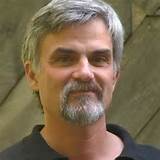
Henry Marsh

The book is subtitled “Stories of Life, Death and Brain Surgery”, and I found it to be a very engaging read.  The subject matter: brain surgery is quite mysterious, but Mr Marsh explains procedures so that the main points are quite understandable without being technically obscure.  His writing flows pleasantly, and sincerely; one never feels that he is the least bit condescending.  In fact, he lays bare the mistakes he has made in surgery, and reveals the anguish he has felt.  Successful, life-saving procedures are dealt with matter-of-factly.  With twenty-five chapters, each dealing with a different condition, one feels well-exposed to brain surgery.  Mr Marsh tells the reader of his development from nursing aide to med school, through the doctors’ hierarchy to consultant, and includes vignettes of the teaching of junior doctors.  The book is not from a doctor’s perspective only; he reveals the thinking and the feelings of patients, too.  The hospital setting is covered: nurses are caring but over-worked; managers are bureaucratic, unsympathetic and stubborn.  Stories from his voluntary practice in Ukraine are included, as well, and these provide a strong contrast to the state of the art and the clinical and management culture in the UK.

One can’t help but feel, as one reads the book: Why in the world would anyone want to be a neurosurgeon, given the complex opportunities for failure?  Mr Marsh doesn’t answer this question directly, but I think his view would be that the euphoria that one can feel from saving a life or advancing the technology more than offsets the anguish one feels from a mistake that leaves a patient paralysed.  Given, therefore, that a neurosurgeon has control over the life and death of his (or her) patients, Isn’t it tempting for a neurosurgeon to feel like a god?  Again, Mr Marsh does not answer directly.  He seems to say that any pretence at being a god is destroyed in the humility of the learning process.

Do No Harm was one of five books shortlisted in the biography category of a Costa Book Award in 2014.  The winning book was H is for Hawk by Helen Macdonald about  her struggle to train a goshawk.  On the face of it, one would think that Marsh’s book would have a leg up: after all, a book about the ramifications of life-saving surgery sounds more important than the difficulty of training a very wild animal.  Perhaps a clue can be found in what the Costa judges said about H is for Hawk: “A unique and beautiful book with a searing emotional honesty, and descriptive language that is unparalleled in modern literature.”  I haven’t read H is for Hawk, but what I think the judges are saying is that Helen Macdonald’s writing is what won the prize for her.  Still, I would recommend putting Do No Harm at the top of your reading list.

Who Defines Quality These Days?

The following article by Jillian Bergsma, a writer and contributing editor for Independent Publisher, appears in the current issue of the Independent Publisher Newsletter.  I think it’s worth repeating in its entirety.

jillian22

Jillian Bergsma

“A few months ago I received an interesting question from an Independent Publisher reader: “Who defines [book] quality these days?” In today’s publishing landscape, we’ve seen a dramatic shift in who owns the power to say a book is good, bad, or just okay. For a long time, a writer had to be vetted by so many people: a literary agent, the editor or publisher, the copyeditor, the proofreader, the reviewer, the bookseller or librarian, and then—finally—the reader.

“But now many self-published authors cut out most or all of those middlemen, going straight to the consumer. . . . So without the horde of literary mavens between an author and a reader, who does define the quality of a book?

“The question has several answers. Let’s start with those aforementioned mavens who are often left out of the equation. Thousands of writers still submit to agents and publishing houses each year. There’s a certain prestige associated with traditional publishing, and for good reason. You get a team of people to get your book into the best shape possible; you don’t have to pay the out-of-pocket costs to get the book on the market; and you have professionals selling your work.

“However, for a lot of aspiring authors, rejections from agents and publishers become the norm. Some folks say it takes scores of queries before you’re likely to find the right match (see Chuck Sambuchino’s article “Don’t Give Up Until You’ve Queried 80 Agents or More”). As harsh as the rejections can sometimes seem, they aren’t usually unfounded. Some rejections are on a taste basis—an agent or publisher just doesn’t connect with the material or think it would be right for their list. To each their own. But sometimes a rejection letter will come back that can give valuable feedback to a writer. Perhaps the level of writing wasn’t strong enough, the characters not fully developed, the plot too similar to a blockbuster book already in the market. In these ways, agents and publishers still serve a vital role in determining the quality of books in the marketplace. They know their stuff, so if you’re lucky enough to get more than a form response back, take the advice they give and put it to use.

“Booksellers and librarians are another group that can fall by the wayside if you’re self-publishing, which may be even more devastating than the loss of agents and publishers. The folks working in your local indie bookshop or at the town library are incredible resources and often have incredible taste. These days especially they must be extremely selective when choosing books for their shelves—books are expensive, shelf space is ever shrinking, and readers may be more likely to download a $0.99 ebook than to spring for the $26.99 hardcover.

“Booksellers and librarians have long been the real touch point for readers—before you could look up the ratings on Amazon, you needed your librarian to give you recommendations on which mystery novel to read next. So if you do have the opportunity to connect with your local library or bookstore, do it. Their responses to a book can be invaluable, even if that response isn’t the one you are looking for.

“The next category of gatekeepers includes bloggers and reviewers—opinions from other readers who aren’t directly in the line of producing or selling books. With the rise in social media, these folks are becoming bigger players in the game. Many of us follow a handful of favorite blogs penned by fellow readers who will tell us if a book is wonderful or a waste of time. For most people, the logo on the spine of the book doesn’t matter nearly as much as the opinion of someone we trust. And of course there are certain established reviewing outlets (think New York Times, etc.) that can turn us on or off a book in a matter of a few sentences. More than ever, these third-party reviews are gaining power in determining the quality of a book.

“And finally: THE READER. I have to say that the reader is the most influential person in determining the quality of a book. And perhaps that is how reading was always meant to be. What does it really matter if your best friend or your boss or a publisher you’ll never meet loves or hates a book? What matters is that you do. In the publishing cycle, the reader is the customer, and how does that age-old adage go? The customer is always right.

“Okay,” you say. “Sure, the reader is the most important. But what power do they really have beyond buying and selling books? How can they influence what gets published in the first place?”

“Having worked in publishing for several years, I can tell you that the reader is more powerful than they know. Editors routinely check Goodreads, Amazon, and blogs to look at what people are responding to in terms of writing style, characters, covers, and genres. Some publishers, like Amazon, are even introducing programs such as Kindle Scout, where readers decide which books are worthy of publication.

“So yes, at the end of the day, the reader holds the best hand. The publishing business wouldn’t be very successful if we didn’t understand how important our end-users really are, but today more than ever we are able to benefit from the thoughts and opinions of readers. Of course, the people I’ve discussed up until now—the agent, the publisher, the bookseller, the librarian, the reviewer, the blogger—are all readers too. And they want you, another reader, to enjoy or despise a book just like they do. At the end of the day, we’re all after the same thing here: a great read. “

Inside the Writing Life

In the Winter 2015 edition of The Exeter Bulletin, the alumni magazine of Phillips Exeter Academy (the boarding school from which I graduated) there is an article Inside the Writing Life.  It is an interview of Roland Merullo (class of ’71, and quite a bit after my time).  Merullo has written 13 novels and four works of non-fiction.  He has been recognised for a Booklist Editors’ Choice, a Maria Thomas Award and was a finalist for the L. L. Winship/PEN New England Prize.  The interviewer is David Weber, who is Emeritus English Instructor at the Academy.

thSWS7R45G

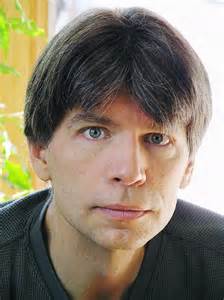
Roland Merullo

Q: Does the act of writing allow you to enter a space where it’s only yourself you need to please?  Or do thoughts of agents, publishers, other writers, or readers enter in?

Merullo: I think you really have to work to keep agents, publishers and especially critics out of the room where you write.  At the same time, in order to improve, especially in the early going, you have to be open to criticism and suggestion, so it can be a tightrope sometimes.  I support my family only from my writing, so I can’t indulge myself and write a 2,000 page essay on the meaning of life, or golf, or learning to swim, or my love for my daughters.  But I’ve gotten pretty good at going into my interior room and mining my own truth, even if its eventually packaged in a way that will please publishers and bookstore owners.  Before I started on In Revere, In Those Days, I was well into another book, hundreds of pages, and it just felt false to me, as if I were writing to please  some outside critic and not from my center.  One night, I just said, “Screw this” out loud, put all that work aside and wrote 30 pages of In Revere in a couple of hours.  That felt right.

My comments: I agree that one needs to exclude external influences when one is writing, but that one has to be open to critiques at other times.  I, too, have scrapped whole sections of a novel that didn’t ‘feel right’.  I started over with what I felt was good and genuine.

Q: Do you think of writing as existing above all in its own realm, called art?  Or do you want your books to act in some way on the worlds of culture, politics, society – or even on the inner lives of readers?

Merullo: There is art to it, and art is essential to any healthy society, but I take a workmanlike approach to writing books.  It bothers me a great deal to hear writers talk about their work as if they have a special line to God or something, or as if it’s “torture” to face a blank page. People who value words should use that one more carefully.  Writing reminds me very much of carpentry, in both its methodical aspects and in the need to think ahead . . . though my body hurts less after writing a novel than it did after building a deck or a garage.  I’m all about the inner lives of readers, and the interior life in general – an area we tend to ignore as a society.  But I feel that for it to matter, the interior dimension should be linked to our outer lives, to things like politics, for example. . . .

My comments: I like the comparison of writing with carpentry, and I agree that both require methodology and planning.  I’m surprised by his comment, below, that he doesn’t outline.  To me an outline is essential to avoid the unnecessary and to include the essential, just as a carpenter’s drawing assures that the project will be completed as envisioned.  I sometimes feel that I have a muse – some external influence – because, occasionally, I will suddenly think, after I’ve written something: “Where did that come from?  That was brilliant!  I could never have thought of that!” I doubt that it was God, but maybe The Presence spoke up.

Q: By this time do you write intuitively, having internalised the skills you needed?  Or does technique remain a conscious focus?

Merullo: I write almost completely intuitively.  Early on, I’d study the work of other writers, but I’m not particularly analytical or scholarly.  I don’t outline, try not to over analyse.  When I taught in college – 10 years at Bennington and Amherst – it wasn’t especially enjoyable for me to analyse the great works of literary art, to break them down into pieces, and try to explain why they were so good.  Some of that is a teacher’s job, of course, necessary and good, but to me it was too often like eating a delicious piece of pie and having to sit there and talk about the ingredients in elaborate detail.  I just wanted to eat the pie.  And now I just want to bake the pie.  My feeling is that if you go down deep into yourself – beyond the purely intellectual level – you can maybe write something that reaches down deep inside the reader; you can connect with them in the most profound way.  I think about technique very little now.

My comments: I write pretty intuitively, but as I review what I’ve written, I think about details: technique.  I think his comment about reaching down deep inside yourself and thereby being able to reach something deep inside the reader is tremendously important.  I just wish I could do it more often!

Icarus as an Artist

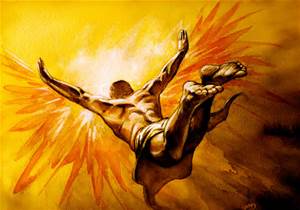
The myth of Icarus, who, with his father, Daedalus, tried to escape from Crete, using wings that his father made from feathers and wax, is subject to interpretation.  Icarus disobeyed his father’s instructions not to fly too high, because the heat of the sun would melt the wax of his wings.  Icarus flew too high, the wax melted and he fell into the sea.

th

The usual interpretation seems to be that it was hubris – over-ambition – which caused Icarus to fall to his death.  The moral being that we should not fly too low in our lives, as that would not do justice to our capabilities, but we should not try to fly higher than or capabilities.

A few days ago, I heard another interpretation: that Icarus is a symbol of the artist, trying always to stretch and improve his art.  This was suggested by Jorg Widman, clarinettist, composer and conductor.  He was conducting the London Chamber Orchestra and introducing his own piece: Icarus’ Lament.  He said that his piece was inspired by Charles Baudelaire’s poem Lament of an Icarus:

Lovers of whores don’t care,
happy, calm and replete:
But my arms are incomplete,
grasping the empty air.
Thanks to stars, incomparable ones,
that blaze in the depths of the skies,
all my destroyed eyes
see, are the memories of suns.
I look, in vain, for beginning and end
of the heavens’ slow revolve:
Under an unknown eye of fire, I ascend
feeling my wings dissolve.
And, scorched by desire for the beautiful,
I will not know the bliss,
of giving my name to that abyss,
that knows my tomb and funeral.

Jorg Widman’s Icarus Lament was an interesting piece – quite unconventional- played only by the string section of the orchestra.  It began with the violins playing a very high note, pausing momentarily and continuing.  One could visualise a winged creature beating its wings laboriously in very high flight.  Then came the cellos, playing a more sombre melody, as a sort of counter-force to the violins.  Finally, the violas joined in playing a more lively melody.  One definitely had the feeling of the creative force (violins) struggling to assert themselves over the force of gravity (cellos), while the world (violas) looked on.

So I suppose that Icarus could stand as a symbol of the artist who is not content with the safe journey, and who yearns to stretch his talents.

For myself, I see it slightly differently: as a learning and development process.  With each novel, I feel well, I’ve done that; what can I do next that’s a little more challenging?  I suppose what I don’t do is to focus on what my readers would like, because that will tend to be ‘more of the same’.  Rather, I think, if I do this new novel well, my readers will probably like it And if they don’t?  I hope that they’ll tell me what they didn’t like.  But, if they do like it, and I feel I’ve met my challenge, I’m ready to move on to the next challenge!

Television on Books

There was an article in yesterdays Daily Telegraph entitled: “BBC must have a show about books”.

The article went on: “The BBC’s lack of books coverage is  ‘an absolute disgrace’ according to Robert Harris, the novelist and chairman of the Costa Book Awards judging panel.


images0I05FC3F

Robert Harris

Announcing Helen Macdonald’s memoir H is for Hawk as the £30,000 Costa Book of the Year, Harris used his speech to criticise the corporation.  He pointed out that in the 1970’s, when the prize was launched, the BBC had two dedicated book programmes on its main channel.  Now it has none.  ‘It is an absolute disgrace that the BBC, a publicly funded organisation shouldn’t do a bit more to help our books business’, he said, to cheers from authors and publishing industry figures.  ‘Come on, Tony Hall, if you’re watching this on BBC news.  Do a little bit more for the books trade, please.’  He added, ‘In the 1970’s there were two book programmes: The Book Programme with Robert Robertson and Read All About It with Melvyn Bragg.  Both were running at the same time when we only had three channels.  We now have 300 channels, but we don’t have any dedicated book programmes.’

The Book Programme was dedicated to ‘books, authors and the literary life’.  From what I can tell it ran on several BBC regional radio stations, as well as on TV.  My search on Google failed to find a reference to Read All About It as a BBC programme or as a reference under Melvyn Bragg.  Perhaps the BBC’s archive does not go back far enough.  The BBC does, however, give full coverage to Robert Harris’ remarks.

As I think about media coverage of books, I tend to agree that more coverage of books and the literary world would be desirable – provided that the coverage is targeted at the right audience, through the right medium.  It seems to me that television is most effective when it presents changing or moving images.  If the programme were to feature books, the images would mostly be of authors talking, presenters commenting or book covers.  Radio could be nearly as effective as TV in presenting literary subjects.  To justify its cost as a medium, television needs to attract a mass audience, but is there a mass audience for literature? Given the many genres, styles, authors, and critics, it seems to me that attracting a large audience to books, in general, would be difficult.

My conclusion is that a weekly radio show of, say half an hour, in the early afternoon, could be quite interesting.  It would feature trends and developments in literature (including writing, publishing, marketing and distribution) as well as brief, stimulating interviews with authors, publishers and critics.  And, of course, the presenter would have to be both knowledgeable and a good entertainer.

What is your view?

Review: Orfeo

I decided to read Richard Powers’ Orfeo (published in January, this year) when it was on the long list of ten novels for the Booker Prize. It has since been omitted from the short list for this year’s prize.

Richard Powers is an American novelist, born in 1957, in Evanston, Illinois. At the age of eleven, he moved with his family to Thailand where he became an avid musician. He began his studies at the University of Illinois at Urbana-Champaign (UIUC) with a major in physics, but he graduated with a BA in English literature, followed by an MA. He worked as a computer programmer in Boston, but he quit that job to devote time to writing. His first novel was published in 1985. In 1992, he returned to the University of Illinois as writer-in-residence. In 2010 and 2013, Powers was a Stein Visiting Writer at Stanford University, during which time he partly assisted in the lab of biochemist Aaron Straight. He was named the Phil and Penny Knight Professor of Creative Writing in the Department of English at Stanford in 2013. He currently teaches a graduate course in multimedia authoring, as well as an undergraduate course on the mechanics of narrative, at UIUC, where he is the Swanlund Professor of English. He has written ten novels and has won a number of literary awards.

th

Orfeo follows much of the fictional life of Peter Els, a composer, music professor, and amateur bio-scientist. He dabbles in genetic experiments on bacteria and viruses in parallel with music composition, seeing similarities between the infinite variety of music and basic organisms. Els is driven not by fame or fortune, but by a compulsion to compose a piece of music which will have a lasting, ethereal effect on the listener. When he composes a piece which, for the first time, elicits critical acclaim, he refuses offers to stage it again.

The focus of the novel is on the sinister net of terror-prevention which tries to capture him when he becomes a bio-terror suspect, and which he tries to elude.

One has to admire Powers’ multiple competencies as a musician, as a poet and as a technologist. Nonetheless, this is not an easy novel to read. There are no chapters, and the shifts in scene and timeframe are sometimes difficult to follow. I say Powers is a poet because there are frequent passages of music description similar to:

“Then the damning glockenspiel, mute for three songs, silent for so long that the ear forgets the forecast from song one. Child’s toy, funeral chime, light in the night. A bell from out of the pitch-black; a shock but no surprise. A sound that makes hope sound primitive.”

If one is musically literate, and if one is familiar with the piece about which Powers is writing, I’m sure this would be lovely. (I was a singer, and I enjoy classical music, but never learned to read music.) Powers also uses unexpected nouns and adjectives in his descriptions. Sometimes, these seem very clever; at other times they are confusing.

The character of Peter Els is, for me, difficult to relate to: not because he is a musician or a bio-chemist, but because he seems, until near the end, to be a self-proclaimed, born loser. There are not sufficient likeable features with which to empathise. One shakes one’s head each time he makes a stupid mistake (mistakes which Els himself confesses), but there isn’t enough redeeming motivation for the mistake for us to understand and respect him, nonetheless.

Perhaps Powers was not aiming at any particular market when he wrote Orfeo. If you are an amateur composer or a competent musician and someone who is concerned about the encroachment of authority on our freedom of expression, Orfeo is a must read.


Review: Favors and Lies

I decided to buy and read a copy of Mark Gilleo’s novel, Favours and Lies, because it received an award at a recent book festival. (One always wants to understand what other successful writers are doing.)

The brief biography at the back of the book says: “Mark Gilleo holds a graduate degree in international business from the University of South Carolina and an undergraduate degree in business form George Mason University. He enjoys traveling, hiking and biking. He speaks Japanese. A fourth-generation Washingtonian, he currently resides in the DC area. His first two novels, Love thy Neighbor and the national best seller Sweat were recognised as finalist and semi-finalist, respectively, in the William Faulkner-Wisdom creative writing competition.”

facephoto-150x150

This photo appears on his website.

Favours and Lies concerns Dan Lord, a private investigator with a law degree and a selected list of clients. He works in the DC area on ‘the blurred line between right and wrong’. When his brother’s widowed sister-in-law, Vicky, and her son, Conner, die under very strange circumstances, Dan takes a particular interest. Vicky dies in an apparent suicide and Conner dies of what seems like a drug overdose. Neither of these deaths make sense to Dan. Then the detective who was investigating the deaths of mother and son is killed, as is the son’s girlfriend. Dan finds that the records of several key phone calls have disappeared, and Dan engages a computer wizard to find out what happened to the phone call on-line records. There is a secretive company, the address and phone number of which are unlisted. There is a high class madam, a Russian intelligence officer, a medical doctor, a barber, a martial arts trainer an assistant district attorney, a night club owner, with whom Dan exchanges favors and lies in order to find the killers of his relatives. Some of these people end up dead; Dan, nearly so on several occasions. Toward the conclusion of the novel, we learn the reason for Conner’s death, and of the illegal conspiracy which lay behind it. The motivation for Conner’s death and those responsible is quite a shocking surprise. Fortunately, the favors given to Dan by those friends who remain alive are repaid.

Favors and Lies is a fast-moving book, which is difficult to put down: one wants to find out what happens next. The characters are distinctive and interesting, but they are ‘on stage’ for such short periods, in many cases, and described in terms of their appearance and history more than in terms of their values. One feels little empathy for many of them, the exceptions being Dan and Detective Wallace. The dialogue is clipped and punchy, fully in keeping with a fast-moving detective thriller. The locations of the various scenes are described is such detail that one senses the author’s pride in his familiarity with the streets of the US capital. There is some technology on which the plot for Favors and Lies depends, but it is pretty much understandable. For me – a very literal-minded person – the difficulty I have with Favors and Lies is the credibility of the plot, taken as a rapid-fire whole. But, in the genre of gripping, no-holds-barred detective stories, there are few better.


More: Amazon vz Hachette

My last post mentioned the dispute between Amazon and Hachette (the fourth largest US publisher) in which Hachette has refused Amazon’s insistence on paying Hachette less for its books, and in which Amazon is delaying the shipment of orders for Hachette’s books.  Now 900 authors have entered the fray, as this article in yesterday’s New York Times states, in part:

Douglas Preston, who summers in this coastal hamlet of Round Pond, Maine, is a best-selling writer — or was, until Amazon decided to discourage readers from buying books from his publisher, Hachette, as a way of pressuring it into giving Amazon a better deal on e-books. So he wrote an open letter to his readers asking them to contact Jeff Bezos, Amazon’s chief executive, demanding that Amazon stop using writers as hostages in its negotiations.

The letter  spread through the literary community. As of earlier this week 909 writers had signed on, including household names like John Grisham and Stephen King. It is scheduled to run as a full-page ad in The New York Times this Sunday.

Amazon, unsettled by the actions of a group that used to be among its biggest fans, is responding by attacking Mr Preston, calling the 58-year-old thriller writer “entitled” and “an opportunist” while simultaneously trying to woo him and his fellow dissenters into silence.

Mr Preston, pictured, right, is un-swayed.

08amazon-web2-superJumbo


“Jeff Bezos used books as the cutting edge to help sell everything from computer cables to lawn mowers, and what a good idea that was,” he said. “Now Amazon has turned its back on us. Don’t they value us more than that? Don’t they feel any loyalty? That’s why authors are mad.”

This latest uproar in Amazon’s three-month public battle with Hachette comes at a vulnerable moment for the Internet giant, which is rapidly transforming itself into an empire that not only sells culture but creates it, too.

Amazon does not want to be seen as hostile to content creators, one of the four groups it says on its investor relations web page it is expressly set up to serve. But it also has to price their creations cheaply enough to draw hordes of consumers, while at the same time making enough of a profit to satisfy investors.

It is a complicated balancing act. Some argue it is impossible. Amazon just surprised Wall Street by saying it may lose more than $800 million this quarter, potentially wiping out its profits for the last three years, partly because creating video content is expensive. The prospect of this unexpected loss has raised questions about whether Amazon’s money-losing ways are finally catching up with it — and whether that is the real reason it is making new demands on publishers like Hachette.

Amazon has been forced by the controversy to shed its long-time practice of refusing to comment on anything. Asked about the writers’ rebellion, it issued a statement that put the focus back on Hachette, bringing up the Justice Department’s antitrust lawsuit against Hachette and other publishers in 2012: “First, Hachette was willing to break the law to get higher e-book prices, and now they’re determined to keep their own authors in the line of fire in order to achieve that same end. Amazon has made three separate proposals to take authors out of the middle, all of which Hachette has quickly dismissed.”

Mr Preston pointed out it was Amazon that put the authors in the line of fire in the first place. Russell Grandinetti, Amazon’s vice president for e-books, has called Mr Preston twice in recent weeks, trying to get him to endorse the company’s proposals to settle the dispute, as well as to pipe down. The most recent proposal would have Amazon selling Hachette books again, but with Hachette and Amazon giving their proceeds to charity.

No thanks, Mr Preston said. A proposal that weakens Hachette by cutting its profits was not in the interests of Hachette’s authors. But he took the opportunity to ask Mr Grandinetti why Amazon was squeezing the writers in the first place.

His response, according to Mr Preston: “This was the only leverage we had.” Amazon declined to comment.

“It’s like talking to a 5-year-old,” Mr Preston said. “ ‘She made me hit her!’ No one is making Amazon do anything.”

No one is making Mr Preston do anything, either. He dismisses Amazon’s suggestions that he is a “human shield” for Hachette, one of the Big 5 publishers in the United States. He and the other writers say they are acting independently. Most, in any case, are not published by Hachette.

Mr Preston is not sure how he has found himself in charge of a group calling itself Authors United. “I don’t like fighting,” he said. “I’m a wimp. When the bullies in seventh grade said they would meet me in the parking lot after school, I made sure I was nowhere near it.”

Other writers who signed the letter include Robert A. Caro, Junot Díaz, Malcolm Gladwell, Lemony Snicket (the pen name of Daniel Handler), Michael Chabon, Michael Lewis, Jon Krakauer, Scott Turow, George Saunders, Sebastian Junger, Philip Pullman and Nora Roberts.

“We feel strongly that no bookseller should block the sale of books or otherwise prevent or discourage customers from ordering or receiving the books they want,” the letter states.

Some writers wholeheartedly supported the letter but were afraid to sign, Mr Preston said. A few signed it and then backed out, citing the same reason. The Times ad, which cost $104,000, was paid for by a handful of the more successful writers.

I’m sure there’ll be more to come!


Summer Reading

There was an interesting article in The Daily Telegraph on July 8th which was subtitled: “‘I couldn’t put it down . . . Holidays are not the time and place to read books that you think you ought to read’, says A N Wilson. So, yes, leave Thomas Piketty at home.”

Wikipedia informs me that “Andrew Norman Wilson (born 27 October 1950) is an English writer and newspaper columnist, known for his critical biographies, novels, works of popular history and religious views. He is an occasional columnist for the Daily Mail and former columnist for the London Evening Standard, and has been an occasional contributor to the Times Literary Supplement, New Statesman, The Spectator and The Observer.”

untitled

Mr Wilson says that “there is a revealing and amusing survey that has been conducted  by a maths professor for the Wall Street Journal.  It is based on the ‘popular highlights’ chosen by users of the Amazon Kindle and comes up with a list of the summer’s ‘most un-read books’.  In the past when we only read books in book form, it was impossible to know, scientifically,  how far the average reader had penetrated into , say, Stephen Hawking’s A Brief History of Time – an impenetrable work, which it is sometimes tempting to believe that no one, except, perhaps, the book’s original copy-editor, has ever read to the end.  But now that so many of us read books on Kindle, it is possible to make an educated guess about how far the average reader has got.

“Each best-selling book’s Kindle page lists the five passages most highlighted by readers.  These extracts, designed to whet the appetite of other Kindle users, would – if they represented a thorough reading of the works considered – surely contain quotations from the whole book, and not just from the first few pages.  Jordan Ellerberg has come up with a playful ‘Hawking Index’ with which to estimate how much of a book most people have read.  The top five ‘highlights’ from Donna Tartt’s novel The Goldfinch, for example, all come from the final 20 pages of the book, which suggests that 98.5 percent of readers made it to the end.  Highlights from Michael Lewis’ page-turning analysis of financial sharp practice, Flash Boys, suggest most people only read the first 21.7 percent of the book.

“And how about the book we of the Chattering Classes are all supposed to be reading and talking about this year – the French economist Thomas Piketty’s Capital in the Twenty-First Century?  Here the quotes do not dig deeper into his 700 pages than a pathetic 2.4 percent – in other words, Piketty, the great economic sage of our time, is as unread as Hawking, our greatest scientific sage.

Wilson goes on to observe that, for most of us, a holiday is a time of relaxation with the distractions of children, sightseeing, family and friends.  He says, “Many is the thick paperback edition of some supposedly ‘great book’ that either gets left behind in the rented villa or hotel, or comes back home with only its first 30 pages smudged with sun-tan lotion.  The idea that this should induce ‘guilt’ is absurd.  Although to be as well-read as possible is a sort of duty of any intelligent person, this does not mean that it is a duty to read Plato’s Republic on a beach, or Proust by the poolside.”

Wilson says that the best sort of holiday reading is short.  In this case, he would probably recommend taking Hemingway’s short stories along, and I would agree.  In my view, the best summer reading is something that keeps inviting us back, all the while keeping us interested.

Of my own works, I would recommend Sin and Contrition (there’s a different sin in every chapter, and a discussion with the sinners at the end).  Or Efraim’s Eye or The Iranian Scorpion (both are unique thrillers).


Review: The Guns at Last Light

I bought this book on the recommendation of a friend who fought (and won a Silver Star) in the Second World War.  It was well worth reading, although the text runs to 641 pages (plus 234 pages of Notes, Sources, Acknowledgements and Index).  There are 16 pages of photographs, as well.

This is volume three of the Liberation Trilogy written by Rick Atkinson, and it covers the war in Western Europe, 1944-1945, beginning with the invasion of Normandy.  It won the Pulitzer Prize.  The other two volumes of the Liberation Trilogy are: An Army at Dawn (covering the war in North Africa, 1942-1943) and Day of Battle (covering the war in Sicily and Italy, 1943-1944).

For me, the most remarkable aspect of The Guns at Last Light is the enormous depth of research that went into it.  In fact, Atkinson says in his Acknowledgements that it took him fourteen years to write the Trilogy.  Every battle is described so that one feels like a well-informed observer, and there are maps aplenty to which to refer.  One is left with a clear understanding of what the objective of the battle was, what went right and what went wrong, and, and what difference in made, ultimately.  The story is largely told from the viewpoint of the relevant commanding officer, but with commentary provided by junior officers and even enlisted men.

The focus is strategic, rather than tactical, and Atkinson reinforces this emphasis with portraits of the officers in command.  These portraits are formed from the comments of colleagues, superiors, subordinates, others and the individual himself.  For example, Eisenhower comes across to me as a man who had an extraordinary ability to motivate, cajole, an occasionally order wayward senior officers to pull together in the same direction.  Montgomery comes across as an egotistical prima donna, who over-rated his own skills as a general.  These portraits come alive through timely, pithy remarks that Atkinson has found and included.

There are statistics on everything from the quantities of ammunition expended to the number and sizes of boots used by the GI’s, but they are inserted at appropriate moments.  Moreover, the battles behind the lines are covered, as well: particularly logistics; but also care for the wounded, injured  and dead; and ‘recreation’.

Perhaps the one thing which is missing is the perspective of the individual soldier in combat, though there are many brief comments on what it was like.  To be fair, I think it is impossible to tell so sweeping a story from the perspective of both the commander and the individual soldier.  What does come across clearly it the enormous physical, mental and spiritual hardships that the soldiers endured.

The story is not told entirely from the allied point of view.  There are passages which cover German activities, from Hitler on down.

For as long as it is, this is not an easy book to put down.  The writing is fresh and innovative.   There is a sense of immediacy.  One knows in general, how things will turn out, but once a particular battle has begun, one wants to find out exactly what happened and why.  When one does put it aside, it is easy (and rewarding) to pick it up again.

Because of my own interest in Italy, I’m planning to ready the second of the Trilogy books.

If you’re interested in military history, they don’t come any better than this.