Plotting Problems

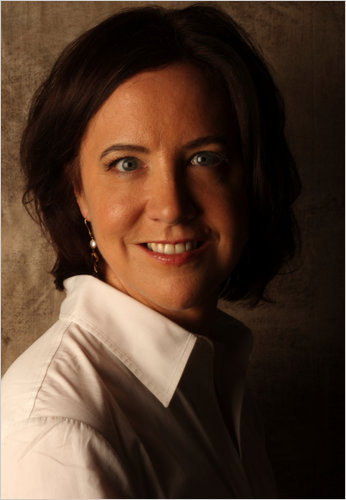
There is an interesting article on the Writer’s Digest website, 11 Plot Pitfalls – And How To Rescue Your Story From Them, by Laura Whitcomb (born December 19, 1958), an American writer and teacher.  Whitcomb grew up in Pasadena, California. She received a degree in English from California State University in 1993.  She is best known for her book A Certain Slant of Light, which has been optioned for a film by Summit Entertainment. Whitcomb has won three Kay Snow awards and was runner-up in the Bulwer-Lytton Writing Contest.

Laura Whitcomb

Ms Whitcomb lists the pitfalls as follows:

1. THE PLOT ISN’T ORIGINAL ENOUGH.  It may be very similar to another story, play or movie.  When I write, I have an issue or two,  the setting, and the characters in mind before I start.  I also define the direction that the novel will take, but my novels tend not to be driven by a pre-conceived plot.

2. READERS ALWAYS KNOW EXACTLY WHAT’S GOING TO HAPPEN.  This can definitely be a problem is one is working with stereotypical characters and a familiar plot.  When I start a novel, I don’t know what’s going to happen.  It depends on how the characters (who have to be pretty unique) react to the issue(s) in their particular setting.  And often, I’ll take pains to shape the story so that the character goes down an unexpected path.

3. THE PLOT IS BORING.  “Often, after thinking of wild ideas to make the story more interesting, you begin to come up with workable ones that are just as stimulating, but better suited to your book.”  I agree.

4. THE PLOT IS ALL ACTION AND THE FRENZIED PACE NUMBS READERS. Ms Whitcomb makes the point that it is important to give the characters an opportunity to reflect on what has happened, consider what might happen, and express their feelings.  Real life isn’t all action.

5. THE PLOT IS TOO COMPLEX.  “Does your protagonist have to visit her father in the hospital twice—once to bring him flowers and talk about Mom, and then again to find he has taken a turn for the worse? Couldn’t he take a turn for the worse while she’s still there the first time? Does your villain need to have three motives for revenge? Would one or two be interesting enough?”

6. THE PLOT IS TOO SHALLOW.  “Ask yourself these questions: Why am I bothering to write this story? Why does the outcome matter to the characters? How do the characters change? How did my favorite book affect me the first time I read it?”

7. SUSPENSION OF DISBELIEF IS DESTROYED.  “Readers need to buy into the reality put forward by what they’re reading. You may go too far with a plot point or not far enough with preparing your audience for that plot point.”  I think this is a very good point.  As a writer, one constantly has to ask, ‘is this believable?’  If not, something has to change.

8. TOO MANY SUBPLOTS MAKE THE PLOT OVERLY COMPLEX.  Only Agatha Christie could get away with this.

9. THE SEQUENCE IS ILLOGICAL. “If you feel the order of scenes or events in your story is off, list each scene on a separate index card and, in red ink, write a question mark on every card that doesn’t feel right where it is in the story. Shuffle the cards. I’m not kidding. Mix them up completely. Lay them out again in the order you think they might work best, giving special attention to those with red question marks.”  It’s important to feel the reaction of the reader at every point in the story.

10. THE PREMISE ISN’T COMPELLING.  “See where you might make the stakes higher, the characters more emotional, the setting more a part of the overall plot. Remember: The premise should make your readers curious.”

11. THE CONCLUSION IS UNSATISFYING.  “Do you have to create more suspense before you give the readers what they’ve been craving? Do you need to make the answer to the mystery clearer? Does the villain need to be angrier, or perhaps show remorse?”

I would add one more point: keep the suspense coming in waves.  This solves several of the problems mentioned above.

Writing Advice

On their website, The Writer’s Workshop say: “When you send your stuff off to an agent, 9 times out of 10 your work won’t actually be read. It’ll be ‘looked at’.  What does that mean? It means that an agent (or junior reader) will simply glance at the first page or two of your submission. In a large majority of cases, authors will give themselves away as amateurish in the opening chapter.  If you’re one of them, then the agent will read no further. Sure, the agent doesn’t know about your story, your characters, or your brilliant ideas. The fact is that if your writing style is poor, then those things are irrelevant.”  The website goes on to give lots of advice about writing style and techniques.  This makes sense: after all The Writer’ Workshop is selling their editorial services.  Their message is, ‘use our service and agents will read your manuscript’.

On the iUniverse website, there are tips from fiction authors, and I found it somewhat surprising that there were only two tips that mentioned writing style or technique.  These are:

“Interesting verbs are seldom very interesting.” — Jonathan Franzen, and

“Keep your exclamation points under control. You are allowed no more than two or three per 100,000 words of prose. If you have the knack of playing with exclaimers the way Tom Wolfe does, you can throw them in by the handful.” — Elmore Leonard

I wonder what Franzen means by ‘interesting verbs’.   If he means ‘unusual verbs’, why not say “Unusual verbs are seldom very effective”.  In which case, I agree.  I’m not sure Leonard’s advice is actually helpful.  What is ‘the knack of playing with exclaimers’?  And if there is a knack, why have a quota?

iUniverse is a self-publishing company, so maybe they want to be associated with important authors.  Anyway, here are some of the tips that caught my eye:

“In the planning stage of a book, don’t plan the ending. It has to be earned by all that will go before it.” — Rose Tremain  I agree!

“Always carry a note-book. And I mean always. The short-term memory only retains information for three minutes; unless it is committed to paper you can lose an idea for ever.” — Will Self   Maybe I should start carrying a notebook, but I doubt I would use it.

“It’s doubtful that anyone with an internet connection at his workplace is writing good fiction.” — Jonathan Franzen; and “Work on a computer that is disconnected from the internet.” — Zadie Smith  I disagree.  If one is writing fiction that is intended to be’real’ in time and space, how can you do it without Google?  Unless, of course, ‘good fiction’ is not real in time and space.

“Read it aloud to yourself because that’s the only way to be sure the rhythms of the sentences are OK (prose rhythms are too complex and subtle to be thought out—they can be got right only by ear).” — Diana Athill  I’ve got to do more of this.

“Don’t tell me the moon is shining; show me the glint of light on broken glass.” – Anton Chekhov  Beautiful.

“The writing life is essentially one of solitary confinement – if you can’t deal with this you needn’t apply.” — Will Self   Very true.

“Be your own editor/critic. Sympathetic but merciless!” — Joyce Carol Oates   A necessity.

“Remember: when people tell you something’s wrong or doesn’t work for them, they are almost always right. When they tell you exactly what they think is wrong and how to fix it, they are almost always wrong.” — Neil Gaiman   True, except for publishers’ editors.

“The main rule of writing is that if you do it with enough assurance and confidence, you’re allowed to do whatever you like. (That may be a rule for life as well as for writing. But it’s definitely true for writing.) So write your story as it needs to be written. Write it honestly, and tell it as best you can. I’m not sure that there are any other rules. Not ones that matter.” — Neil Gaiman  This sums it up.


Author’s Mood

In several posts, I have mentioned writer’s block.  I have said that when I have it (which is occasionally) it is usually an indication that my writing has slipped off the track, and that I should rethink my recent work, or ask myself searching questions about the direction that the novel is taking.

I will say that another important blockage for me is either being tired or in a strong mood.  If I’m tired, I can’t focus properly, and my creativity is numbed.  I don’t write when I’m tired.  If I’m in a negative mood or preoccupied with a personal  issue, I have difficulty getting  myself into the mood that the character(s) is feeling.  If I’m angry about something, I find it more difficult to feel the joy that a female character is feeling.  If I’m worried about someone, how can I fully empathize with a protagonist who is experiencing a different relationship problem?  For me, forcing myself into the mood of a character is possible only when I’m not preoccupied.

images

In fact, I find it difficult to write well about a character who is depressed if I’m in a low mood.  The empathy is there, but, if I’m in a low mood, it’s difficult to find just the right words to fully express the feelings of the character.  For me, it seems to work best if I’m in a ‘neutral mood’, empathize with the character, and then find to words to express what the character is feeling.

Let me give you an example from Sable Shadow & The Presence.  The central character is on a business trip to a Mexican oil refinery when his wife calls and tells him that his much-loved son – a military officer – has just been killed in the Somali area.

I was numb and senseless, but the pain was inescapable.  I could not really function.  I could walk, but my destination was unclear.  I could hear voices, but I had to turn toward the voice I heard and try to understand if it was addressing me.  My mind had great difficulty processing.  It was as if a powerful ray had struck my head and turned my brain to mush.  I knew David.  He helped me pack, and he rounded up the pilots.  He fastened my seat belt.  He gave me a glass of something cold, and sometimes he would reach across and hold my hand.

I had no sense of time.  I was drifting in a remote, timeless space.  Then I recognised the front door of my house.  Inside, there was Suzanne.  She was pale, years older, in that familiar blue quilted bathrobe.  We sat on the living room sofa, and she talked to me.  I don’t remember what she said.  She was very sad.  She led me to the bedroom and took off my clothes.  She removed her bathrobe.  In bed, she pulled the covers over us, and we wrapped our arms around each other.  We lay like that, weeping and dozing through the night.

There were dreams: of William trying to master a skateboard, of William holding up a small trout, of William wearing a muddied jersey number 24.

There was no mistaking the voice:  You loved William and he loved you.  Remember this.

What did you say?

But I knew what was said, and I knew the voice even though I had not heard it often for ten years or more.

Interview with Norm Goldman

I have had an e-interview with Norm Goldman, Publisher and Editor of Bookpleasures,com.

download

Norm Goldman

Norm: How did you get started in writing? What keeps you going?

William:  I had taken a writing course at university, and I always enjoyed writing reports in business, but I had never considered myself a writer of fiction.  About eight years ago, I was on holiday in Sicily and I had a series of romantic dreams in which I was involved as a bystander.  I thought: it would be fun to write these down.  I began writing and by the time I got to page 70, I decided to finish it.  That was my first novel.  Since then, I’ve derived an increasing satisfaction from completing novels which are better and better.

Norm:  What do you think most characterizes your writing?

William: There is always at least one character who is facing ethical/moral dilemmas.  I try also to give the reader a strong sense that what she is reading is true and real.

Norm: What did you find most useful in learning to write? What was least useful or most destructive?

William:  What has been most useful is the feedback I have had on my writing.  I am also a fairly avid reader, and I always publish a review of the books I read.  This sharpens my critical skills which are important when I’m writing.  I really can’t think of an experience which has been destructive.

Norm: How many times in your career have you experienced rejection? How did they shape you?

William:  Countless times.  I received several dozen rejections for my first novel, and I was ready to give up on getting it published when Eloquent Books (the predecessor of my current publisher) came to me with a co-op publishing offer.  Since then I have approached about twenty literary agents and publishers for every novel I’ve written; my approaches have been universally rejected (usually politely) or ignored.  I’ve stayed with Strategic Book Publishing.  My impression is that to get a contract with a traditional, main-stream publisher, one must have a third-party intervention or recommendation.  This is an understandable symptom of risk avoidance in the publishing industry, but it also suggests a lack of independent, creative thinking in the industry.  My lack of acceptance by main stream publishers has not deterred me.  I will carry on writing better and better novels.  Someone will almost certainly notice.

Norm:  In your bio you indicated that the spiritual/religious genre is your preferred choice. Could you explain to our readers, why?

William:  I am a religious person, but not evangelical.  The romance and the three thrillers all have religious aspects.  I started writing Sable Shadow & The Presence as a kind of experiment, and I had to re-write large portions of it, but, at the end, I felt particularly good about it.  Several excellent reviews and being awarded seven minor prizes convinced me that I had found my venue.

Norm: How did you become involved with the subject or theme of Seeking Father Khaliq? As a follow up, have you ever lived in Egypt?

William:  Before I started Seeking Father Khaliq, I decided to write about one character’s search for God, but I didn’t want a typically evangelical book. It had to involve a faith other than Christianity and a venue outside the West.  Also, the book had to have more issues than a singular focus on spirituality.  I’ve never lived in Egypt, but I’ve visited the country several times.  In creating Seeking Father Khaliq, I spent as much time on research as I did on writing.

Norm: What were your goals and intentions in this book, and how well do you feel you achieved them?

William: My intention was to leave a gentle message that if one wants to find God, He can be found, and that sometimes He is revealed in the midst of adversity.  I think the message is there and perhaps made a bit more interesting by Egypt, philosophy, Islam (good and bad), and the will-of-the-wisp Princess Basheera.

Norm: Do you worry about the human race?

William:  Not in the long term.  The short term can be a horrendous mess, but somehow we will muddle through.

Norm: How did you go about creating the character of Professor Kareem al-Busiri? (As a passing note,  I am married to someone born in Egypt and who lived there until the age of 18, I am familiar with the male Egyptian mindset and you seemed to have vividly captured it).

William:  My specifications for Kareem were:

  • A respected professor of philosophy at a prominent Egyptian university (I wanted to include philosophy to add richness)
  • He should be a secular Muslim: a sort of agnostic
  • He should be single to introduce a romantic element
  • He should be open-minded and a bit naïve (to believe Princess Basheera)
  • He should have adult children to add complexity

Norm:  What are some of the references that you used while researching this book? As a follow up, can you share some stories about people you met while researching this book?

William:  My principal reference was Classical Arabic Philosophy, an Anthology of Sources, by Jon McGinnis (Translation), David C. Reisman (Editor).  I spent countless hours on the internet to gather facts, opinions and experiences.  I don’t remember their names, but I enjoyed vivid personal accounts by pilgrims on the Hajj and Arba’een.

Norm: What was the most difficult part of writing this book and what did you enjoy most about writing this book?

William: The most difficult part was staying factual in detail, down to the specifications of the Russian-made weapon which killed Kalifa.  Most satisfying and enjoyable was integrating all the pieces of a complex story.

Norm:  Did you learn anything from writing the book and what was it?

William:  While I have read quite a lot about Islam, and I’ve read the Qur’an, I gained a perspective of Islamic culture, and its effect of the values of people.

Norm: Where can our readers find out more about you and Seeking Father Khaliq?

William: I have blog (https://williampeaceblog.com/) which has been going for six years, and which includes my opinions and experiences as a writer.  I’ll let Father Khaliq speak for himself.

Norm: What is next for William Peace?

William:  I’m writing another novel, set in East Africa, with three main young adult characters: a penniless man of traditional tribal faith; a middle class, Christian woman; and a Muslim man from a wealthy, prominent family.  All are black: there is plenty of interaction and clashes in values and beliefs.

Norm: As this interview draws to a close what one question would you have liked me to ask you? Please share your answer.

William:  What else does your ‘day job’ consist of?  Because I write with intensity only three or four hours a day, I need ‘alternative occupations’.  These include pro bono consulting work for London charities, treasurer of a charity which provides psychotherapy, and involvement with two of our daughters and their families who live nearby.


Joan Wickersham

There is an interview called “Inside the Writing Life” in my high school alumni magazine.  A prominent English instructor is interviewing Joan Wickersham who graduated nearly two decades after me.  Ms Wickersham has been writing most of the time since graduation; her work includes her memoir and 2008 National Book Award finalist, The Suicide Index; a book of short fiction, The News from Spain; and The Paper Anniversary, a novel.  She writes a regular op-ed column for The  Boston Globe; her writing has been published in prominent literary journals; and she has read her work on National Public Radio.

maeda_writers_g1

Joan Wickersham

Two questions and answers in this interview caught my eye.

Q: (David Weber) “You’ve sustained your output over many years.  Does the problem of writer’s block seem remote to you, or have you struggled at times to give your work the priority required?”

Wickersham: “There’s a very funny little moment in a movie I once saw, where a bored, impatient woman is trying to figure out where a piece fits in a jigsaw puzzle and she finally just puts in somewhere and smacks it in with her fist.  Writer’s block is a sign that what I’m doing isn’t working, and I can’t fix it by trying to ram something into a place where it doesn’t belong. It can take months to figure out that what I thought was a piece of the sky is actually a piece of the ocean, or that its a part of a different puzzle altogether.  I hate writer’s block, but I’m always grateful to it in hindsight.  It usually means that what I’ve been writing is somehow false, which is just as bad in fiction as nonfiction.  Writer’s block slows me down and makes me throw out pages and drafts – after I’d been working on the book about my father’s suicide for nine years, I threw out a 400 page manuscript and started over – but getting stuck can be an important investment in finding the right way to tell a story.”

I like this way of thinking about writer’s block: it’s not you that are the problem; it’s the story.  Sometimes, when I sit down to write, I feel cornered.  I’ll look back over what  I’ve written, and ask myself ‘what’s not working?’  Other times, particularly when I’m lying awake at night, I’ll start feeling uneasy about the direction of a particular novel.  That feeling generally leads to surgery.  When I was writing Sable Shadow & The Presence, I threw out and re-wrote whole chapters of the book, which has gone on to win eight awards.

Q: “Does a fully realized piece require its own new form, not just descriptive skill and the authority of honesty?”

Wickersham: “A lot of what I’m doing when I write is trying to figure out the inherent rules of a particular piece – the form or structure which will be most true to the story.  My husband, Jay, is trained as an architect.  A long time ago, when I was struggling to write about my father’s suicide, he told me that the students at the École des Beaux-Arts begin each design with a parti – an organizing principle.  I found this idea of the parti exciting and liberating.  I’d been wresting for years with how to organize the messy and painful story of my father’s death, and part of the problem was that the story defied any attempt at a conventional linear narrative.  When I stumbled in the parti of organizing the book as an index, suddenly I had this cool, numb structure that simultaneously imposed order and ridiculed the idea of imposing order on an inherently chaotic experience”.

I never heard of the term parti before, but it makes sense.  The novel I’m currently working on has an unusual organizing principle: two increasingly hostile narrators, whose identity is obscure at first, tell alternating chapters about three, very different, young protagonists over whom they have influence, but no control.  The setting is present day East Africa.

Review: The Last Confession of Thomas Hawkins

I bought this book – an historic novel – in a Waterstones bookstore because I had nothing to read at that moment and it looked interesting.  Its author is Antonia Hodgson who grew up in Derby and studied English at the University of Leeds.  Her first novel, The Devil in Marshalsea, won the 2014 Historical Dagger Award.  Ms Hodgson lives in London, where she is an editor.

download

Antonia Hodgson

The Last Confession of Thomas Hawkins is set in a rather down-market section of Georgian London.  Its principal character, Thomas Hawkins is a ‘gentleman’ who killed a man in self-defense in prison, and throughout the story is under threat of being hung for murder.  There are several intertwining plots.  One involves a rather loathsome neighbour who is a member of the Society for the Reformation of Manners (a pathological moralist) and whose own morals permit him to consort with prostitutes and to beat his children.  The neighbour is suddenly dead.  Who killed him?  Thomas, one of the children, the apprentice, the son of a notorious gang?  Another plot involves King George’ mistress who is also a lady in waiting to Queen Charlotte.  This Henrietta Howard (who was a real person) is a pawn in the struggle of her very evil, estranged husband to extort money from the king.  The queen, also a real person, is caught in the middle and manages to capture Thomas as her rook to defeat the black knight, Charles Howard.  To keep things going, there is Kitty, the pretty and libidinous girlfriend of Thomas.

There is plenty of action in this rather engaging tale which moves along at a frenetic pace with many twists and turns along the way.  The characters are well-developed and likable or despicable; the dialogue is terse and credible.  The Covent Garden area of London is well described in physical and moral terms, but it was difficult to picture oneself in the setting.  It is not just a familiarity with the Covent Garden of today that blocked – to some extent – the credibility of the scene; it was more that at a feeling level one is somewhat remote. Having said this, one has to admire the depth of Ms Hodgson’s research into the times, the issues and the characters.  There are plenty of surprises in The Last Confession of Thomas Hawkins – they certainly keep the reader engaged – but sometimes the events seemed a little too contrived.  For example, the events around the ambush of Henrietta’s carriage by her husband, and the conclusion where Thomas is sent on a new mission by the queen.  The cockfight and the duel of the female gladiators, while authentic and interesting, added little to the story line.

For those who like a historical novel with an anchor in truth, one with many fascinating twists and turns, with important, stand-out characters, and a good helping of mystery, The Last Confession of Thomas Hawkins is the novel for you!

Composition: Music and Prose

Last night, I heard, for the first time, evidence of the shared skills of composers and authors.  My wife and I went to a Royal Philharmonic Orchestra concert which featured Wagner’s Tannháuser Overture, Chopin’s Piano Concerto No. 2, and Beethoven’s Symphony No. 4.  Pierre Vallet was the conductor and Elizabeth Sombart was the pianist.  For me the music got better as the evening progressed.  I should explain that I am no music critic; I never played an instrument, and I can’t really read music, although I sang first tenor and then baritone in two different small singing groups in high school and college.

The Wagner piece was enjoyable, but it didn’t really engage me.  I kept thinking of Nietzsche’s criticism of Wagner: that he became an insufferable egotist.  Elizabeth Sombart’s recital of Chopin was very impressive.   I sat there and thought: ‘How wonderful it must be to be able to play like that!’  And Chopin’s music was lovely.  But it was Beethoven’s Fourth that really caught my attention.  I’ve heard it played at least a dozen times before, but, until last night, never by a live orchestra.

download

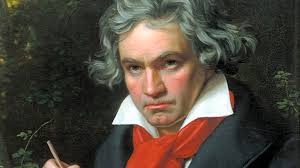
Composer of the Fourth Symphony

The music was captivating, and I watched the musicians play with what seemed like gusto.  I began to think about the composition of the music to which I was listening  This was a very clever composer: he keeps his audience fully engaged.  And I began to identify aspects of the music that I felt bore similarities to the composition of good prose.

  • The piece has a unity to it.  It was clearly the work of one composer: it was telling one musical story in four movements.  Each movement shared musical themes and techniques with the others, but one felt a progression in the movements.  At times, I have felt that a particular piece of classical music could have been serially composed by two or more people.
  • There was plenty of emotion.  Sometimes a flute and first violins would pick out a sweet and gentle theme.  At other times the timpani, brass and eight basses would thunder out in rage.  There was love, there was anger, there was joy and wonder.
  • There was plenty of suspense.  The first movement begins with a dark, gloomy section: What is this about?  But gradually it gives way to a bright, cheerful theme: Will this continue?  Whenever a new theme was introduced, it would begin to tease, and one would wonder what is coming?  The techniques for generating suspense varied: Pianissimo building to Forte, or the other way ’round, or themes evolving in variations; or sudden shifts in the instruments; or instruments playing ascending scales.
  • There was a lot of conversation.  For, example the violins would start a theme which would be picked up and changed by the cellos; the violins would respond with the changed theme and change it further.
  • There were changes in pace.  Sometimes the music was slowly deliberate: in no hurry; at other times, it was in a sensational rush, particularly in the fourth movement.

With this insight, perhaps I will enjoy classical music more than I have in the past.  And I have always enjoyed going to concerts.

First Amendment Problems

As you may know the first amendment to the US Constitution covers free speech.  There is an article in my alumni magazine which addresses the ‘First Amendment Problem’.  You will know that freedom of speech is, to me as an author, a key issue.  The article says that hate speech isn’t the issue; politics isn’t the issue; the problem, says the dean of Yale Law School, is that nobody knows how to think about free speech.

The article says,” Take Sorrell v. IMS Health.  In 2007, Vermont passed a law restricting the sale of doctors’ prescriptions to drug companies, which were using the records in their marketing.  The drug companies, along with data mining companies sued, saying that the law violated their First Amendment rights. Vermont argued that the law regulated commerce, not speech.  The case reached the US Supreme Court, where Justice Anthony Kennedy delivered the majority opinion in 2011.  Marketing, he reasoned, consists of speech.  Therefore, singling out marketers amounts to government censorship.

Sorrell wasn’t treated like a blockbuster in the press, but it caused a sensation in the legal world.  It’s hard to argue with Kennedy’s declaration that ‘the state cannot engage in content based discrimination to advance its own side of the debate’.  But if that’s true for pharmaceutical marketers, what else does it apply to?  All kinds of commercial and professional regulations restrict speech based on its content.  Under Sorrell, can states still require psychologists to be licensed, considering that therapy is speech?  Can a public school teacher be fired for telling students that the earth is flat?”

images-1

Robert Post

Robert Post, the dean of Yale Law School and an expert on the First Amendment, has been following Supreme Court rulings on freedom of speech for about 30 years.  He has been trying to deduce the criteria that the court uses in making its decisions.  For example, the Supreme Court recently ruled that a newspaper couldn’t publish confidential information it had obtained through the discovery process in a civil lawsuit.  At first, Post disagreed, but he came to the conclusion that the court had made the right decision.  “The legal system, Post realised, isn’t an open forum for public debate; it’s a government institution designed for a specific purpose.  For the courts to function, judges have to have the power to regulate speech in a trial setting’”

Post’s insight is that “the amendment applies differently is different contexts or ‘constitutional domains’.  The most important domain is what he calls ‘public discourse’, because the goal of free speech is self-government.  Only speech relevant to that goal should get the highest level of protection.  Because public opinion shapes laws in a democracy, people need a chance to affect it: otherwise they won’t experience self-government.”

An interesting example is that some dentists believe that the mercury contained in some dental fillings can leach into the body, but they are punished by their professional regulators for malpractice if they advise their patients to remove the fillings.  The same dentists can, without censure, write op-ed pieces setting out their views.  This latter case is ‘public discourse’ and has First Amendment protection, while advice to a patient is not ‘public discourse’.

The question for an author, whose work is clearly ‘public discourse’, is: how far can you go?  If I were to write a piece belittling or making fun of the Prophet Muhammad (which I have no reason to consider), that would probably be OK, based on the Charlie Hebdo cartoons and The Satanic Verses.  But if I were to write a treatise recommending that the readers go and join ISIL, I might well end up in jail (like Anjem Choudary, the UK hate preacher).  What’s the difference, legally?  Professor Post doesn’t say, but I guess the legal differences arise from two subjective factors:

  • Public opinion, and
  • The perceived threat to a democratic form of government

J K Rowling’s Writing Tips

Recently, I accompanied my grandchildren on a trip to the Harry Potter exhibition at Warner Brothers Studios near Watford.  I have to confess that I am not a Harry Potter fan, but I certainly enjoyed the outing to the exhibition.  I found it astonishing the detail that goes into creating the real visual effects that appear on the screen.

Certainly J K Rowling is a brilliant author to have created the seven Harry Potter books which are so popular, worldwide.  Yesterday, I ran across her top five writing tips on the Now Novel blog.  I thought I would republish and comment on them.

download

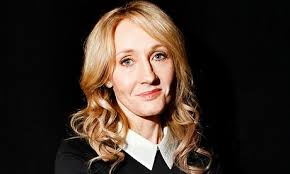
J K Rowling

1.    Write in whatever time you have

One of J.K. Rowling’s most famous quotes is: “Sometimes you have to get your writing done in spare moments here and there.” This is crucial advice on writing a book. It’s easy for us to imagine successful writers spending all day penning beautiful paragraphs, but everybody had to start somewhere. For Rowling, that somewhere included full-time work and finding stolen pockets of time to write. Much as it might be a dream to take six months out to write your book, odds are you’re going to have to fit it into your everyday life.

I agree that it is unwise – even couterproductive – to establish an overall deadline (unless you publisher insists on it).  For me, the minimum size of a ‘stolen pocket’ is an hour.  In less than an hour, I can’t get into a fully creative mode.

2.    Planning is essential

Instead of diving right into line 1, J.K. Rowling advises taking the time to plan out the world your books will live in. She took five years to create and develop every last detail of the Harry Potter world. Every part of Rowling’s books was planned and worked out, right down to how the Wizards and Muggles interacted (and the word Muggles, to begin with!) what the education was like, how magic helped in every day life and how the wizarding world of government worked. She also plotted out all the events of the seven books before she started writing the first.

Great if you can do it!  I write a two page outline of a novel before I start it, but for me, this is just a framework.  I find that characters want to behave differently and therefor events change, or I get an ‘inspiration’ that causes me to deviate from the original plan.  I depend a lot on these inspirations!

3.    Rewriting is just as essential

You would think after five years, J.K. Rowling would just be able to dive right in and write the whole of the first Harry Potter book, Harry Potter and the Philosopher’s Stone, without much rewriting. She rewrote the opening chapter of her first book a total of fifteen times, however. It’s easy to imagine published authors writing with the greatest of ease, but actually the process is just as difficult for them.

I agree!  I don’t think I’ve ever reached fifteen re-writes, but four of five is not uncommon.  For me, the scope of a rewrite tends to decrease over time: after a major rewrite, what follows tends to be less and less radical.

4.    Be aware of plot and pacing

Even when you’ve plotted out all seven of the books you want to write in a series, you can trip yourself up. In fact, that’s one of the big things to be aware of when you’ve done the necessary planning: even though you know what’s going to happen next, your readers shouldn’t. They need to have a sense of excitement and uncertainty as the plot and pacing unfolds because this is where magic lies. After J.K. Rowling finished the first book in the Harry Potter series, she realised she’d given away the whole plot of the series. So she had to rewrite it, and hold back a number of integral plot points.

I tend to make changes to the plot once I’ve started writing a novel.  These changes make the novel more interesting, more exciting, or better convey the overall message of the work.  But I agree that one has to be careful that the revised plot flows seamlessly with no inconsistencies.

5.    Write your passion

Perhaps a favourite J.K. Rowling quote is: “What you write becomes who you are… So make sure you love what you write!” One of the reasons the Harry Potter books are so infectious is because you can tell she really loves the world she created – and all the characters in them. If you’re going to approach your book in a half-hearted manner, there’s no point even beginning it. Make sure you’re passionate about what you write and you’ll draw your readers along with you.

This is very true!  Occasionally, I find that the work is starting to lose interest for me.  Then I know that something is wrong and significant changes are required.  For example, I gave a literary friend a draft of Sable Shadow & The Presence before it was finished.  His comment: “It’s boring.”  I agreed, and I put it aside while I wrote Hidden Battlefields.  When I came back to the manuscript it was with new ideas and new enthusiasm.  When I finished, my friend (like many others) gave it a very good review.

Review: Whiskey Tango Foxtrot

My wife and I saw this film last weekend.  It was a disappointment.  The film, which is military code for ‘what the f**k’, is based on the memoir, The Taliban Shuffle, written by Kim Barker, about her assignments as a war correspondent in Pakistan and Afghanistan.  I haven’t read the book; I read an article about Ms Barker and the book that appeared in The Telegraph.  The book sounded interesting and thoughtful, with a black sense of humour.  In fact, the New York Times book review confirmed this.

jp-book-popup

Kim Barker

The film, which has Tina Fey playing Ms Barker, begins with her volunteering for an assignment in Afghanistan to escape her humdrum assignment of covering minor stories; besides: she is single with no children.  She is thrown into cheap accommodation in the green zone with a lot of other expatriates, some of whom are competing for the same stories.  A US Marine general regards her as an inexperienced liability, but she achieves credibility by gaining candid interviews with US soldiers, putting herself in harms way to capture video footage, and by gaining the respect of some Afghans.  Eventually, she realises that being a war correspondent is not in her best long term interest, and she returns to the States.

Tina_Fey_Muppets_Most_Wanted_Premiere_(cropped)

                                                                                                                                   Tina Fey

I had three problems with WTF.  First of all there was too much emphasis on the partying going on among the correspondents and other expats.  The film left me with the impression that every night was an Animal House blow-out.  While I’m sure there was uninhibited drinking and casual sex, the emphasis on that aspect of life as a war correspondent made it difficult to position the film as a serious commentary, which Ms Barker’s book clearly is.

Secondly, the dialogue was difficult to follow.  Actors were speaking at a frantic pace and using lots of slang.  Eventually, I realised I could understand what was going on by just watching the video.  If the audience can’t follow the dialogue, why include it?

Third, and most important, the film was a series of events, some funny, some sad, some thought provoking, some totally forgettable, without a unifying theme or message, except that the danger involved in covering a war can be addicting.  Ms Barker, in her book draws several sobering conclusions about the ‘Af-Pak’ region, and why the West was doomed to fail in its strategy of involvement.

I will say that Tina Fey is engaging in the lead role, Christopher Abbott is credible as her Afghan fixer, and Martin Freeman does a fine job as the lustful, flippant Scottish correspondent.  Some of the video footage is worth seeing, and there are some examples which illustrate the huge culture gap, but these opportunities are largely lost.