There is an article on the HuffPost website by Lorraine Devon Wilke, dated 22 October 2017, with the title “Are White Authors Not Allowed To Tell Stories Involving Black Characters?” This interested me as I have recently written a novel in which a black billionaire is a principal character.
Author, artist, and cultural commentator, Lorraine Devon Wilke, shares her unique take on everything from the inflamed landscape of politics and evolving social mores, to the ever-changing influence of media, entertainment, and art.
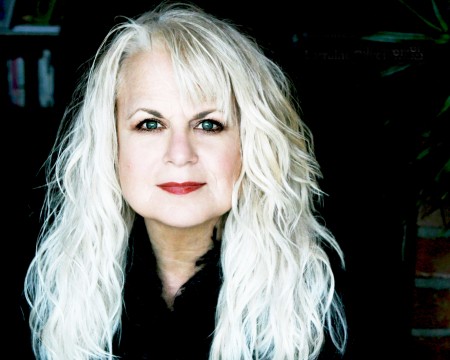
Ms Wilke said, in part: “Storytellers are the chroniclers of our life and times. They memorialize history, dissect our complex and evolving world; they entertain and provoke and captivate. They are as diverse and eclectic as the characters they create and the stories they tell. It is their job to reflect who we are, what we experience, and what we can imagine. That’s a big canvas. It’s huge. And there’s no end to the variety of colors and hues that can be drawn upon it. Just as there is no end to the variety of artists weaving the tales drawn there.
Yet some believe there are rules to who gets to use which colors, who gets to draw outside the lines to tell stories that involve characters from different cultures. Some believe issues of race can only be voiced from within limited perspectives. Who gets to decide that? Who determines the answer to the title question?
I am a white author telling a story that involves black characters. This, as Anthony Horowitz, who’d been dissuaded from including a black character in one of his ten novels: was warned, is not considered “appropriate.” It’s seen as “patronizing.” Though, in following that paradigm, who, then, would be able to tell the story of an interracial relationship if neither race can write about the other? Personally, I find that to be madness, but I’ve now had agents from three different high-profile literary agencies specifically cite “appropriation” as their reasons for rejection:
- The first felt my “whiteness is kind of a problem,” she wrote: “This is a well written and serious novel; an issue-oriented novel that could not be more current… but there may be an issue of whose voice gets to represent race.”
2. The second asserted she couldn’t take it on because of “all the concerns about ‘cultural appropriation’ these days.”
3. The third felt the black male protagonist “didn’t sound black enough.” I won’t even parse that implication.
But the message was clear, at least from the point of view of these particular gatekeepers: white authors writing black characters are unmarketable. Beyond “inappropriate,” “these are brutal times in fiction and we’re not comfortable representing a book, no matter how good or worthy, in which that issue is present.”
How do we feel about that? As readers, writers, and consumers of cultural content?
I find it dangerous. I find it censuring. I find it condescending and discriminatory. I find any limitation to writers of any race to be the antithesis of art.
Industries, like the publishing industry, pendulate wildly as they attempt to transcend and reinvent, often without clarity about what’s next or what new turn culture might take while they’re trying to survive. So I get it. I get a literary agent telling me she “doesn’t have the courage” to take on a book that might stir controversy, that might garner commensurate cowardice from the publishers she’s trying to sell it to. It’s a business; she’s gotta make a living,
But if a book with black characters written by a white author is a “well written and serious novel; an issue-oriented novel that could not be more current,” and if that book — presented with fully-fleshed characters, with depth, sensitivity, and authentic reflections of all ethnicities involve — is rejected simply because it might trigger discomfort about “cultural appropriation,” what is the underlying message?
Literary discrimination. Artistic cowardice. Market segregation.
Is that really what we want from our artistic gatekeepers? Fear of controversy? Cultural timidity? The negation of an entire demographic of voices who dare to include diversity outside their own? Have we really come to a time of such hair-trigger sensitivity that we require our storytellers to limit their imaginations to only the race, creed and color they are?
Tell that to Harper Lee.
 William Peace Blog
I am not a fiction writer, and this trend bothers me as well. Yes, characters should feel authentic and realistic (and that applies to all characters, regardless of race), but to say that authors are limited in the types of characters they can create because of their race feels dangerous
Hi!
I think a huge aspect of why readers that are Black and authors that are Black have issue with a white author writing Black characters stems in part from the general feel of misrepresentation of Black people. No, I don’t think that there is a limitation around who can write what, but there is a real impact to how that lands and affects those that read it. If a bad representation of a Black person persists, and adds to the pain already socially felt by Black people, wouldn’t you as a white author want to be conscious of your impact? Of how other white people may view Black people by the way you’re portraying them, in your writing?
How might a white author be able to write a story of an interracial relationship? They write it from the white person’s perspective. They can interweave the aspects of racism they face as a white person in relationship with a Black person from their perspective into their writing. They can utilize the experience they may have on their own interracial dating circumstances to bring life to the story they’re writing without encroaching on the real perspectives of the Black person they’re in relationship with. I think that white authors are doing a disservice to themselves as well as other Black authors in the community by not offering co-authorship to Black authors in their genre counterparts. If the concern is that the white author isn’t knowledgeable about the Black perspective, why not validate that concern by having the Black author writing that experience, that perspective?
Its fairly telling, too, that you want to write about a Black billionaire but in this post you’ve not once capitalized the B in Black, which has been a standard stylistically for years. For that simple fact, would you be surprised that Black readership has hesitancy trusting a white author to do justice in the way they portray a Black character’s experience? Even with consideration that not every Black person lives a monolithic experience, its a valid concern for Black people to not want white authors perspectives to be the viewpoint in which we get Black stories. We see this over and over again where there is a white creator writing a Black story and there is a misrepresentation of the Black person that stems from microaggressions blatant bigotry– look to art history, magazine covers, the way news media labels article titles about various groups exhibiting criminal behavior (boys vs men, children vs women).
There isn’t a shortage of Black authors, fiction or non fiction, but there is a scarcity in Black authors getting the platform to share their Black stories. When white authors take up those spaces, who gets to remove the censure of Black people’s accessibility to share their own stories?
Crying of censorship while actively not promoting Black authors and even minimizing their availability and access in publication to share their own perspective of stories is Nasty Work.
“I find it dangerous. I find it censuring. I find it condescending and discriminatory. I find any limitation to writers of any race to be the antithesis of art.” and for decades, Black authors and creators have lived experiences of exclusion in so many spaces. That too is problematic, and for everyone as a whole that their isn’t representation for most marginalized groups.
So a different question: why as a white author do you feel entitled to share Black stories from your lens? Why as a white author is it important that you share from that perspective rather than your own as an observer of the dynamics Black people face? Even asking the question of “why shouldn’t I do this as a white person” reveals the work that needs to be done in anti-racism and personal positions of anti-blackness. A racially conscious individual doesn’t ask if it’s “okay” to do something racist; they already know it’s racist and actively don’t do it.