There is an article (quite long, but I have abbreviated it below) on Rebecca Makkai’s substack dated 2 June 2026 with the title “Book Prizes Don’t Work How You Think”.
.Rebecca Makkai is an American novelist and short story writer. She is best known for writing The Great Believers and I Have Some Questions for You, which have been positively received by critics and won awards such as the Los Angeles Times Book Prize for Fiction, the Andrew Carnegie Medal for Excellence in Fiction, and the Libby Book Award.
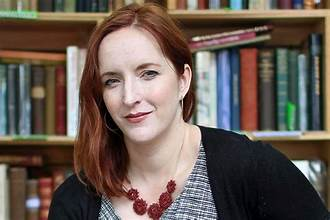
Rebecca Makkia
She says, “I want to start by preventing some heart attacks and assuring the administrators of every book prize I’ve ever judged that I am NOT about to disclose any secrets of the judging room.
But authors and readers (and even editors) tend to have enormous, if understandable, misconceptions of how the prize-judging process works, and I’m happy to clear some of them up.
If I’m counting right, I’ve judged six book prizes in the past eight years, which is RIDICULOUS and no one in their right mind would ever do this. By “book prize,” I mean the kind where a panel of judges reads many, many published and eligible books and then comes up sometimes with a longlist, usually with a shortlist, and (almost) always with a winner. These would be prizes like the Pulitzer, the National Book Award, Canada’s Giller Prize, the PEN/Faulkner Award—all of which, for confoundingly masochistic reasons, I’ve judged. (I was absolutely thrilled to be the chair of the Pulitzer fiction jury this year, and I’ll say more about that below.)
There are other kinds of prizes, too. There are ones where one single judge is sent three published books and picks a winner for, say, a state book of the year. There are others where a single judge reads a bunch of finalist manuscripts and picks one to get published by a small press. There’s the kind of prize you get when you’re a kid and you read twenty-five books in one summer and the library lets you pick out any book and they’ll order it for you, and of course this is the best possible prize in the entire literary world.
Every year, speculation articles appear with people guessing winners (for the Pulitzer and National Book Award and Booker in particular) based on absolutely irrelevant factors like whether an entirely different jury liked this author’s last book five years ago, or whether this book was on other juries’ lists for other prizes. Any article that gets people talking about books is a great thing, but the speculation part is, I hate to say it, useless.
Here are the things I’ve learned by judging.
There’s no “they”
Book prizes are nearly always judged not by the organizations that administer them but by small groups (usually 3 or 5) of authors and, occasionally, critics or booksellers. The organization itself (usually a small, underfunded but valiant nonprofit—yes, even the very famous organizations) is usually responsible only for screening submissions for eligibility: Was the book published this year, does the author live in the US, is the author indeed under 35 or Jewish or a debut short story writer?
In every prize I’ve ever judged or heard firsthand reports of, everything else is up to the judges and their idiosyncrasies. There’s no input from anyone else. The heads of these organizations often learn the winner at the same moment the rest of the world does.
So what the NBA* judges liked LAST time is completely irrelevant. The same five authors could just as easily be picked to judge the NBA as to judge the Pulitzer or the Story Prize, and what organization they’re attached to would have little bearing on the results. (Which makes it funny that there are vastly different levels of prestige associated with different prizes, right?)
I think this is healthy for authors to understand. Not being a finalist for something doesn’t mean that a whole organization found you lacking. It means that three or five individual human judges with idiosyncratic tastes didn’t mutually judge yours to be one of the very, very top books in the pile.
*I’m just going to say NBA throughout this article and trust that you aren’t picturing LeBron.
There’s an 11th place
Every time a longlist of ten books comes out, there was an 11th place book that almost, almost made the list. Three Pulitzer finalists are made public, but of course there’s always a fourth choice, and fifth, and sixth. And (unless an unscrupulous judge gets drunk and spills the beans at a party) those authors will never know it.
As a judge, this kills me. Someone’s life would have been changed, but just barely wasn’t. Someone out there is wondering if it’s all worth it, never knowing that judges fell madly in love with their work and were gutted not to be able to highlight it.
There are so, so many books
For a small ($0 to $500 to $5000) honorarium, you’re expected to get to hundreds of books within about a six-month period. Some prizes just ask you to read twenty books, or read what appeals to you, but the biggest book prizes can receive up to 600 valid submissions. This means two things, and I don’t think I’m revealing state secrets here: 1) Not every judge can look at every single book; and 2) When a judge realizes they don’t love a book, they can put it down.
I’ll touch more on the first point below. If the second point sounds unfair to you, I’ll explain below the breadth of what gets sent in… But also, listen, if the first paragraph of a novel is very bad (and so that I don’t hurt your feelings, let’s suppose it’s awkward, ungrammatical, sexist, opaque, and full of conspiracy theories)—why on earth would I continue reading in the hopes that somehow this book will become magically brilliant, brilliant enough to make up for that paragraph and be the winner of this major award? I have 100 other books to get to. I am not a fast reader. (In my experience, most writers aren’t.) Any good reason to put a book down is a blessing.
In most cases, judges split up the first round of reading, weeding out things they don’t want to consider and passing along to the group the ones they like. There are different ways of splitting the list—alphabetically, by interest, at random—but usually the best practice is to divide and conquer. Even so, depending on the number of submissions and the number of judges, each person might be personally responsible for 200 books. This means reading nonstop, screening things on audio when you shower, picking up your e-reader at red lights, bringing ten Advance Reader Copies for a weekend at your in-laws’.
While I do know one judge who claims to have read at least 20 pages into every single one of the 500 submissions for a major prize, he took a sabbatical to do it. Poetry judges have it the easiest; one poem can tell you a lot about whether to continue reading. YA judges at least have shorter books. Judges of adult fiction and nonfiction have by far the most work.
This means your book is always going to be a victim of fate
Not every book can be read under the ideal circumstances (hammock, margarita), and it’s also entirely possible that while four of the five judges would have loved your book, your first reader happens to be the one judge who really doesn’t connect with it and won’t pass it on.
Each panel of judges has its own ethos
While some prizes stipulate specific criteria (the Pulitzer fiction guidelines, for instance, state that the prize will preferably go to a book “dealing with American life”), most panels of judges are simply told to pick the best book of the year. That’s regardless of the author’s track record or fame or reputation. Simply the best book.
But what does that mean?
Judges usually communicate (on Zoom, and/or via spreadsheets and emails) throughout the process, and often at some point define their own criteria. Are they simply looking for the best-executed book in their genre? Or the most innovative? The book that everyone should still be reading in fifty years? The book that affected them the most?
And then there’s just the alchemy of the group itself. On one panel, we all discovered we’d grown up on farms* and so we were particularly drawn, as a group, to agriculturally-themed books.**
*absolutely not, this is a stand-in for the truth
**nope
The process is purer than you’d guess
Authors and readers love to assume some cronyism in the process, and while I can’t guarantee it’s never happened, I can say I’ve never seen it happen, and I’ve only ever heard of one instance anecdotally years ago, and that guy was publicly shamed.
A writer who has reached the level of prominence at which they’d be asked to judge a major prize has many writer friends; so being friends with a judge is not going to get anyone ahead. If 400 books are submitted, it’s likely that 75 are from people I know well, 50 are online buddies, 10 are from my press, three are from my agent, and one is that fun debut author who started the conga line at Bread Loaf. Judges scrupulously recuse themselves from reading or voting on authors about whom they don’t think they can be neutral, and they disclose personal or professional relationships. People will hand books off to other judges because the authors are former students, or close friends, or because they just can’t stand the guy. Recusals and disclosures continue up to the end.
I’ll also hand off a book because I suspect I might not be the right reader for it, but that the right judge might love it and really champion it. One such book eventually made it onto the shortlist for something I judged.
It’s also far more random than you’d guess
Because the very first round of reading often involves just one set of eyes on a book, whether a book makes it to the next round can depend entirely on the tastes of one person. One person! A person who also might not care for chocolate, or who loves ketchup on their eggs. A person who just was not up for this particular book at this particular moment. Or (see seven zillion books in six months) might not have had the luxury of putting a book down on a bad day and picking it up again in the right mood.
Conversely: It helps if the book sounds promising to a particular judge. (Literary sci-fi set in Paraguay? I was just in Paraguay! Give it here!) And yes, that “promise” could, even subconsciously, have to do with the author’s strong reputation or with a lot of praise around the book. (Some judges actively seek out book reviews to help them prioritize; others avoid them completely.) Of course, that huge reputation or excessive praise could backfire, too. And there’s a thrill to discovering someone new or overlooked. We were all new once. We’ve all felt overlooked. We’d all love to be the ones to find the best new thing.
It helps if the book came out early enough in the year that the judge might have picked it up before the judging period even began. (Although in the long run, it can help if a judge reads a book late in the process and is freshly in its thrall when the judging conversations happen.)
And then in the assessment itself, there’s a bewildering amount of randomness. Think of all the books you read in the past year, and pick your top five. Then think about it an hour later, and see if you’ve changed your mind or if you’re second-guessing yourself. Have a good nap and see how you feel about it then. What about a week from now?
I’m going to share an anonymous story from a friend who was judging a big prize several years ago: “We got on the phone to discuss our longlist. To fill one remaining spot, I consulted my reading notebook and named a book I was happy with. A day later, I realized I’d neglected to enter one of my favorites of the year into my notebook, and had forgotten it during our discussion. I might have named that work instead. But I didn’t.”
I’ve also heard about committees in which one judge didn’t pull their weight and the other judges weren’t able to pick up all the slack—meaning some submitted books barely got looked at.
You’d be amazed what isn’t submitted
Those last two details might have thrown you into panic mode, but I hope you saved some rage.
Some prizes require a submission fee, and some don’t. Some allow submissions directly from authors, and some require the submissions to come from publicists or editors. In either case, publicists and editors make decisions about which titles from their list to send in to which prizes. Even when submission is free, they want their nominations to mean something. If Random House sent in literally every one of its 2026 novels for a certain prize, it would overwhelm and probably annoy the judges.
The submission fee can be an obstacle for small presses, unfortunately. But why a major press would not submit a book from an established prize winner—a book that’s making all kinds of best-of-the-year lists—for a major prize, is absolutely beyond me. But those balls get dropped all the time.
Several years ago, I was judging a prize for which we split our initial reading by alphabet section. Let’s say I had A-G. Late in the game, a friend asked what I thought of the new Jane Doe. I texted back: “Jane Doe has a new book????” Jane Doe was a Pulitzer winner at the top of her career.
A friend was judging nonfiction for a major prize and the whole group agreed, over email, that there was a clear frontrunner, a book they’d all read and loved. Only then did they realize it hadn’t been submitted before the deadline.
Another friend judging one of the biggest fiction prizes tells me the book that won—a win that made the author’s career—was initially not submitted. One of the judges had read a great review of it, and reached out right before the deadline asking that the book be sent in. I’ve also heard of judges reaching out, asking for a book to be submitted, and the book still not being sent.
Perhaps the tedious task of filling prize entry forms gets delegated to interns. Perhaps there are gremlins in the system. But if I were an editor, I’d be breathing down the neck of whoever was responsible for submissions.
You’d also be amazed what is submitted
And then there are the times you have to ask yourself why on earth a press or an individual bothered submitting a certain title. I’m talking about, for example, book #3 in a children’s trilogy about dragons being submitted for a major adult literary prize.
When the book is wildly inappropriate to the prize (a steamy, formula bodice ripper sent in for the Booker), there are three possibilities I can think of: 1) The press is obligated to send the book in for all major prizes because the author, who sells a lot of books, got it in their contract. 2) An author sent it in not having researched what the prize is, the past winners, etc. or just having great confidence that THIS educational comic book about Christian frogs is going to win over all those cold, hard literary hearts. 3) The author knows damn well that this isn’t going to work, but wants to say the book “was nominated for the Pulitzer” in the hopes that people think this means it was a finalist. (This happens often enough that the Pulitzer website now states, “We discourage someone saying he or she was “nominated” for a Pulitzer simply because an entry was sent to us.”)
Panels aren’t gunning for forced diversity
Every couple of years, someone who doesn’t know what they’re talking about complains publicly that judging panels are picking books based on wokeness or diversity quotas or some other nonsense.
Every panel I’ve been part of has paused for a second after we’ve chosen our list for a little after-the-fact audit, checking that unconscious biases didn’t make us notably uneven on things like gender balance, ethnicity, genre (Did we pick ten novels and no short story collections? Are we cool with that?), press size, and even topic. And not once have we ever needed to make an adjustment.
It’s true that longlists don’t look like they used to. This might have to do with prize committees themselves finally diversifying, which means a broader variety of opinions and tastes. And it might have to do with all of us preferring books that, you know, do not sound like every other book we’ve read.
It turns out that when we read broadly and fairly, it’s no longer true that 95% of prizes go to straight white men, go figure.
The Pulitzers are different
It’s worth noting that the Pulitzers have an unusual setup. For each category, a jury of five authors and critics nominates three finalists, and then sends them on to the Pulitzer Board at Columbia University—a board composed largely of journalists, with one resident poet, one novelist, etc. People tend to serve on this board for multiple years. The Pulitzer Board meets for two days on campus at Columbia, after having read all finalists, to make the final decisions on everything from fiction to photojournalism to regional news coverage.
Then there’s this, from the Pulitzer website (bolding is mine): “Awards are made by majority vote, but the Board is also empowered to vote ‘no award,’ or by three-fourths vote to select an entry that has not been nominated or to switch nominations among the categories. If the Board is dissatisfied with the nominations of any jury, it can ask the Administrator to consult with the chair to ascertain if there are other worthy entries. Meanwhile, the deliberations continue.” Among other things, this means the jury needs to have a secret fourth choice lying in wait. And it’s a fourth choice that will likely never be revealed. And it means that as a jurist, you don’t actually know if they’ll pick one of your books or go with something completely different. It also means that when you see three finalists plus a winner announced (rather than two finalists plus a winner) something interesting has happened.
Another difference: For most prizes, the identity of the judges is public. The Pulitzer jury for each category must remain secret until the prizes are announced. Many awards are announced and bestowed at a black tie event. The Pulitzers are announced in a livestream online, and then awarded at a lunch in a library on the Columbia campus. Finalists (I was a finalist in 2019) don’t get to attend, but are sent a nifty snail mail letter that’s framable.
Our reading as a jury ended in December, when we sent in our three finalists. We didn’t know the winner until the moment it was announced publicly last month. (Fortunately, I loved all three finalists equally, so I had the fun of sitting at my laptop with the StoryStudio staff, to whom I’d revealed my judging about five minutes earlier, waiting to whoop for joy regardless of the outcome. Indeed I whoopt.)
If you’re ever a finalist at a live ceremony, here’s what to do
That Pulitzer livestream is lovely, but it’s extremely fun to dress up and go to some ballroom where everything is announced live and you can pretend people care about this as much as the Oscars.
If you are ever in the position of needing to dress up for a live awards ceremony where the winner will be announced and suddenly have to take the stage and say something, you need to do two things. 1) Actually write out a speech and practice it, even if you think you have no chance, and no, it’s not bad luck, what’s bad luck is getting up there and saying something you’ll regret. 2) Make separate afterparty plans with friends, in the likely event that you don’t win. Meaning: Get out of there pretty fast, go to the restaurant where you have reservations, and relax with people who love you. Because if you stay at the party, you’ll have people coming up to you all night with tragic pity on their faces, saying, “I am so sorry you didn’t win.” And you might have been feeling great, happy for the winner, so thrilled to have been a finalist, but these people are going to bum you out. Get out of there.”
There is more on Rebercca Makkai’s substack if you’re interested: https://rebeccamakkai.substack.com/p/book-prizes-dont-work-how-you-think

