Review: Before We Were Yours

I bought a copy of this historical novel written by Lisa Wingate.  Ms Wingate’s long bio reads, in part: “Lisa Wingate is the author of the #1 New York Times bestseller Before We Were Yours, which remained on the bestseller list for fifty-four weeks in hardcover and has sold over 2 million copies. She has penned over thirty novels and coauthored a nonfiction book, Before and After with Judy Christie. Her award-winning works have been selected for state and community One Book reads throughout the country, have been published in over forty languages, and have appeared on bestseller lists worldwide.  Booklist summed up her work by saying, “Lisa Wingate is, quite simply, a master storyteller.”
Lisa Wingate

Before We Were Yours is a historical novel written in two parts.  One part is set along the Mississippi River, near Memphis, in the late 1930’s and early ’40’s.  The second part, in Georgia,  is more contemporary.  The first part centers on a family of ‘river gypsies’ who live in a shanty boat on the river.  The parents are Briny and Queenie Foss; their five children are Rill, the narrator, a girl of twelve and the oldest, Camilla, Lark, Fern and Gabion, a male toddler.  The story begins with Queenie in the throes of giving a difficult birth to twins.  Briny takes her to the hospital in Memphis, leaving the children on the boat in Rill’s care.  All five children are abducted and taken into care by the Tennessee Children’s Home Society, a real abduction and orphanage mill which made an estimated $10 million for it’s real owner, Georgia Tann, and was active from the 1920’s until it was shut down in 1950.  It made a habit of taking children into custody on false premises and placing them in wealthy, childless families.  Most of the first part deals with the hardships faced by the Foss children as they wait for a family to take them away: first Gabion, then Camilla is separated and disappears, then Lark.  Rill and Fern escape from the family that took them in, only to find that Queenie is dead in the childbirth and Briny is mortally crippled with drink.  Rill and Fern return voluntarily to their assigned parents.

The second part is told by Avery, single in her 30’s, who turns out to be the granddaughter of one of Queenie’s twins, who survived, and was also taken in by the Tennessee Children’s Home Society and adopted.  The grandmother, Judy, now in her 70’s and suffering from dementia, is the widow of a Stafford, who are a dynasty of Georgia senators.  Avery is being prepped to run for the Senate, replacing her father, who is ill.  She meets May Crandall, who is in her 90’s and in a nursing home, during a pre-campaign visit to the nursing home.  May, we discover later, is Rill.  Much of the second part is taken up with Avery, being assisted by the grandson of a friend of Judy’s, trying to piece together her family history.

Ms Wingate is clearly a talented writer.  She describes her characters and the life on a shanty boat so clearly that they are real.  She is also a master at keeping the reader turning pages, a one suffers anxiety about what happens next.  The story itself is heart-rendingly captivating.

In my view, though, the novel has its flaws.  In the first part, there are too many chapters, with too much detail, about the hardships the Foss children endured, while they were awaiting adoption.  I think the story would be stronger if it were edited down,  In the second part, there are secondary issues that aren’t well enough developed to stand alongside the children’s story: the effect that disclosure of their real heritage would have on the Stafford name, and Avery’s decision about whom to marry.  There are also too many family events that do not really contribute to character development or the plot.  More rigorous editing would have made this a memorable novel.

Publishing Proverbs

A post by Paula Munier on the Career Authors website two days ago caught my attention.  It begins, “Publishing is rife with conventional wisdom but some of it is actually useful.”

Ms Munier’s website says, “My professional evolution mirrors that of publishing itself.  From my early days as a reporter to my latest incarnation as all-around content queen and bottle washer, I’ve reinvented myself as the publishing industry has changed—and keeps on changing. The only constant: My love of the written word. Over my 20-plus years in the business, I’ve conceived, created, produced, and marketed exceptional content in all formats across all markets for such media giants as WGBH, Fidelity, Disney, Gannett, F+W Media, Quarto, Greenspun Media Group, among others. ”

Paula Munier

Some of the publishing proverbs she mentions are as follows:

“1. The first page sells the book, the last page sells the next book.

I repeated this recently at a Zoom event and like an old dog full of old tricks I was surprised that so many writers there had not heard it. But it’s as true today as it was when I got my first job in book publishing some 25 years ago. The first page must grab the reader, the last page must satisfy the reader.

2. If there’s a gun on the wall in act one, it better fire in act two.

I’m paraphrasing Anton Chekhov here, whose classic advice on foreshadowing has become so beloved a dramatic principle that it’s now known as Chekhov’s Gun.

3. Don’t get it right, get it written.

I used to tell my reporters this when they were running late with their stories back in my newspaper days. I wasn’t the first to say it, but I do say it a lot, not only to those reporters but to authors when I was an acquisitions editor and to clients now that I’m an agent and ultimately to myself whenever I get stuck in my own writing. All you need is a first draft —and then you can fix it.

4. Writing is rewriting.

I repeat, writing is rewriting. Embrace the revision process and the advice of smart editors. Rewriting what separates the wannabes from the pros.

5. When in doubt, delete.

This is every editor’s mantra. So the next time you find yourself struggling to make some aspect of your story work, delete it instead. I learned this lesson again while revising A Hiding Place. . . . My editor suggested I lose one of my favorite clues, and I balked. I’d done all that research! But eventually I caved and the book is far better for it.

6. You can’t start the fire, but you can fuel it.

This is what the sales and PR and marketing people always tell you when you complain to your publisher that they’re not doing enough to promote your book. Which means that if the book doesn’t catch fire when it debuts, they’re not going to spend what they see as bad money after good trying to light up sales.

7. Hook, book, cook.

I heard an editor quote this just recently; apparently my swell fellow agent and author Eric Smith uses this phrase to describe the best way to pitch a project: 1) hook, as in high-concept premise; 2) book, as in what happens in the story; and 3) cook, as in you the author and what about you personally and/or professionally informs your work. A good formula for a pitch.

8. It takes a million words to make a writer.

When I was in my twenties, I joined my first writer’s group. The grande dame of the group was an erudite professor who was a far more experienced and successful writer than the rest of us. She regarded me as the neophyte I was and told me severely, “It takes a million words to make a writer.” She was correct, of course. A million words or 10,000 hours or just a hell of lot of writing and rewriting.

9. You can’t make a living but you can make a killing.

I first heard this attributed to James Michener, but many people have said it. And why not, since this is the unfortunate lot of artists, especially in America. Most artists can’t make a lavish living doing their art, but a lucky few find fame and fortune. Here’s hoping it’s you and me.

10. There’s no crying in publishing.

. . . I say There’s no crying in publishing. And then I quote the inimitable and prolific Jane C, Cleland, Agatha-winning author of nonfiction and fiction, who never complains about the vagaries of the publishing business. Rather, she says that she just tries to write a better book.”

I agree with all of the above, except for number 3.  I find that when I force myself to write at pace, as I did when I started writing, I produce too much cliché and uninteresting text.  This is particularly true when you’re trying to write a literary novel.  For me, it’s better to spend time trying to get it nearly right, an then go back and do some polishing.

A Ghostwriter Talks

An article, The Ghostwriting Experience, written by Melanie Votaw, appeared in the JanFeb, 2020 issue of the IBPA independent.  I found it interesting and quote from it below.

Melanie Votaw has been a full-time professional book author, ghostwriter, editor, and book coach for nearly 20 years. She specializes in self-help books and book proposals as a coach, ghostwriter, and developmental editor, although she has also written memoirs.

Melanie Votaw

Ms Votaw says, “As a ghostwriter, I’ve heard a lot of misconceptions about my profession. “What? You mean the person whose name is on the cover didn’t write the book?”

Or: “Oh, I couldn’t possibly use a ghostwriter; then, it wouldn’t be my book.”

I usually respond this way: Doesn’t it seem like a lot to expect someone to be an expert in their field and also an expert in constructing a book? After all, ghostwriter/editors like me have spent years honing our craft.

Of course, one of the reasons for these misconceptions about ghostwriting stems from another common misconception: that if you can write a good sentence, you can also write a book. Many authors are soon relieved of that notion, discovering that a lot more goes into writing a book than proper grammar and punctuation.

That’s what happened with one of my recent ghostwriting clients (I’ll call her Lucinda). “When I was starting to write my book, and I heard other people were using a ghostwriter,” she told me, “my impression was ‘Oh, then you’re not writing the book.’ So while I felt a little funny at first, you took my words, you found my voice, and you wrote it better than I would have written it. But it isn’t filled with your ideas; it’s filled with my ideas. At the end of the day, I feel comfortable it’s my book.”

Besides those who don’t feel equipped to write a book without help, there are authors who simply don’t have the time to do all the work. They still have to convey the information to the ghostwriter, but that’s less time-consuming than writing every word themselves.

Lucinda discovered, however, that it was more economical in the long run to work with a ghostwriter. “I have a girlfriend who’s written two books now. She does all of her own writing, but she has spent way more than I have on edit after edit after edit,” she says. Lucinda had one other editor review the manuscript after the ghostwriting was complete. “When I finally gave it to my publisher, she said she’d never seen such a clean manuscript,” she adds.

As Lucinda found out, a ghostwriter is more than “just” someone who organizes the information into chapters. They can help an author 1) determine if their book idea is viable, 2) devise an outline, 3) decide whether to self-publish or try for a traditional publishing contract, 4) create a book proposal, if desired, and 5) navigate publisher options, book covers, and marketing, among other services. They can also help an author stay sane during the exceptionally vulnerable process of putting their work on the line.

So, how do you choose a ghostwriter and ensure a successful collaboration? Here are some tips:

1. It’s important to thoroughly vet the ghostwriter’s background and testimonials, of course, but it’s also important to feel that your ghostwriter “gets you.” Do they understand your subject matter and what you’re trying to communicate? Are you simpatico? You can discern this through your initial discussions, but, more often than not, it’s a gut feeling.

2. Once you’ve made your choice, trust your ghostwriter’s advice. Be wary of defensiveness. You certainly don’t have to agree with every one of your ghostwriter’s opinions, but you’ve hired this person for their industry expertise. So, if you decide to go against their advice, make sure it’s for a good reason.

3. Don’t expect your ghostwriter to nail your voice right away. Give them some time to “sound” like you on the page, and allow them to provide rough, unpolished drafts in the beginning.

4. Be careful of the opinions you receive from people outside of the publishing industry. They know what they like, and they know if something they’ve read isn’t clear. But they don’t usually know how a book should be constructed or how to diagnose issues in a viable way.

. . .

5. Most of the time, the ghostwriter remains “ghostly” with perhaps only a mention within the acknowledgments (often described as an editor). Other times, a ghostwriter’s name appears on the cover as a coauthor, such as “By Dr. So-and-So and [or with] Ghostwriter’s name.”

Ultimately, the ghostwriting process is an opportunity for you to marry your expertise with the expertise of a publishing industry professional. There’s no shame in doing so, whether the reason is due to lack of skill or time. What’s most important is that you get an excellent book that represents you well in the marketplace and provides you with the ultimate outcome you’re after.”

A Letter on Justice and Open Debate

On July 7, 2020, Harper’s Magazine has published a letter with the above title signed by over 150 writers and academics.  I would also have signed it, if I had been invited.

The full text of the letter and the list of signatories is below.  Harper’s says, “The below letter will be appearing in the Letters section of the magazine’s October issue. We welcome responses at letters@harpers.org.”

“Our cultural institutions are facing a moment of trial. Powerful protests for racial and social justice are leading to overdue demands for police reform, along with wider calls for greater equality and inclusion across our society, not least in higher education, journalism, philanthropy, and the arts. But this needed reckoning has also intensified a new set of moral attitudes and political commitments that tend to weaken our norms of open debate and toleration of differences in favor of ideological conformity. As we applaud the first development, we also raise our voices against the second. The forces of illiberalism are gaining strength throughout the world and have a powerful ally in Donald Trump, who represents a real threat to democracy. But resistance must not be allowed to harden into its own brand of dogma or coercion—which right-wing demagogues are already exploiting. The democratic inclusion we want can be achieved only if we speak out against the intolerant climate that has set in on all sides.

The free exchange of information and ideas, the lifeblood of a liberal society, is daily becoming more constricted. While we have come to expect this on the radical right, censoriousness is also spreading more widely in our culture: an intolerance of opposing views, a vogue for public shaming and ostracism, and the tendency to dissolve complex policy issues in a blinding moral certainty. We uphold the value of robust and even caustic counter-speech from all quarters. But it is now all too common to hear calls for swift and severe retribution in response to perceived transgressions of speech and thought. More troubling still, institutional leaders, in a spirit of panicked damage control, are delivering hasty and disproportionate punishments instead of considered reforms. Editors are fired for running controversial pieces; books are withdrawn for alleged inauthenticity; journalists are barred from writing on certain topics; professors are investigated for quoting works of literature in class; a researcher is fired for circulating a peer-reviewed academic study; and the heads of organizations are ousted for what are sometimes just clumsy mistakes. Whatever the arguments around each particular incident, the result has been to steadily narrow the boundaries of what can be said without the threat of reprisal. We are already paying the price in greater risk aversion among writers, artists, and journalists who fear for their livelihoods if they depart from the consensus, or even lack sufficient zeal in agreement.

This stifling atmosphere will ultimately harm the most vital causes of our time. The restriction of debate, whether by a repressive government or an intolerant society, invariably hurts those who lack power and makes everyone less capable of democratic participation. The way to defeat bad ideas is by exposure, argument, and persuasion, not by trying to silence or wish them away. We refuse any false choice between justice and freedom, which cannot exist without each other. As writers we need a culture that leaves us room for experimentation, risk taking, and even mistakes. We need to preserve the possibility of good-faith disagreement without dire professional consequences. If we won’t defend the very thing on which our work depends, we shouldn’t expect the public or the state to defend it for us.”

Elliot Ackerman
Saladin Ambar, Rutgers University
Martin Amis
Anne Applebaum
Marie Arana, author
Margaret Atwood
John Banville
Mia Bay, historian
Louis Begley, writer
Roger Berkowitz, Bard College
Paul Berman, writer
Sheri Berman, Barnard College
Reginald Dwayne Betts, poet
Neil Blair, agent
David W. Blight, Yale University
Jennifer Finney Boylan, author
David Bromwich
David Brooks, columnist
Ian Buruma, Bard College
Lea Carpenter
Noam Chomsky, MIT (emeritus)
Nicholas A. Christakis, Yale University
Roger Cohen, writer
Ambassador Frances D. Cook, ret.
Drucilla Cornell, Founder, uBuntu Project
Kamel Daoud
Meghan Daum, writer
Gerald Early, Washington University-St. Louis
Jeffrey Eugenides, writer
Dexter Filkins
Federico Finchelstein, The New School
Caitlin Flanagan
Richard T. Ford, Stanford Law School
Kmele Foster
David Frum, journalist
Francis Fukuyama, Stanford University
Atul Gawande, Harvard University
Todd Gitlin, Columbia University
Kim Ghattas
Malcolm Gladwell
Michelle Goldberg, columnist
Rebecca Goldstein, writer
Anthony Grafton, Princeton University
David Greenberg, Rutgers University
Linda Greenhouse
Rinne B. Groff, playwright
Sarah Haider, activist
Jonathan Haidt, NYU-Stern
Roya Hakakian, writer
Shadi Hamid, Brookings Institution
Jeet Heer, The Nation
Katie Herzog, podcast host
Susannah Heschel, Dartmouth College
Adam Hochschild, author
Arlie Russell Hochschild, author
Eva Hoffman, writer
Coleman Hughes, writer/Manhattan Institute
Hussein Ibish, Arab Gulf States Institute
Michael Ignatieff
Zaid Jilani, journalist
Bill T. Jones, New York Live Arts
Wendy Kaminer, writer
Matthew Karp, Princeton University
Garry Kasparov, Renew Democracy Initiative
Daniel Kehlmann, writer
Randall Kennedy
Khaled Khalifa, writer
Parag Khanna, author
Laura Kipnis, Northwestern University
Frances Kissling, Center for Health, Ethics, Social Policy
Enrique Krauze, historian
Anthony Kronman, Yale University
Joy Ladin, Yeshiva University
Nicholas Lemann, Columbia University
Mark Lilla, Columbia University
Susie Linfield, New York University
Damon Linker, writer
Dahlia Lithwick, Slate
Steven Lukes, New York University
John R. MacArthur, publisher, writer
Susan Madrak, writer
Phoebe Maltz Bovy
, writer
Greil Marcus
Wynton Marsalis, Jazz at Lincoln Center
Kati Marton, author
Debra Mashek, scholar
Deirdre McCloskey, University of Illinois at Chicago
John McWhorter, Columbia University
Uday Mehta, City University of New York
Andrew Moravcsik, Princeton University
Yascha Mounk, Persuasion
Samuel Moyn, Yale University
Meera Nanda, writer and teacher
Cary Nelson, University of Illinois at Urbana-Champaign
Olivia Nuzzi, New York Magazine
Mark Oppenheimer, Yale University
Dael Orlandersmith, writer/performer
George Packer
Nell Irvin Painter, Princeton University (emerita)
Greg Pardlo, Rutgers University – Camden
Orlando Patterson, Harvard University
Steven Pinker, Harvard University
Letty Cottin Pogrebin
Katha Pollitt
, writer
Claire Bond Potter, The New School
Taufiq Rahim
Zia Haider Rahman, writer
Jennifer Ratner-Rosenhagen, University of Wisconsin
Jonathan Rauch, Brookings Institution/The Atlantic
Neil Roberts, political theorist
Melvin Rogers, Brown University
Kat Rosenfield, writer
Loretta J. Ross, Smith College
J.K. Rowling
Salman Rushdie, New York University
Karim Sadjadpour, Carnegie Endowment
Daryl Michael Scott, Howard University
Diana Senechal, teacher and writer
Jennifer Senior, columnist
Judith Shulevitz, writer
Jesse Singal, journalist
Anne-Marie Slaughter
Andrew Solomon, writer
Deborah Solomon, critic and biographer
Allison Stanger, Middlebury College
Paul Starr, American Prospect/Princeton University
Wendell Steavenson, writer
Gloria Steinem, writer and activist
Nadine Strossen, New York Law School
Ronald S. Sullivan Jr., Harvard Law School
Kian Tajbakhsh, Columbia University
Zephyr Teachout, Fordham University
Cynthia Tucker, University of South Alabama
Adaner Usmani, Harvard University
Chloe Valdary
Helen Vendler, Harvard University
Judy B. Walzer
Michael Walzer
Eric K. Washington, historian
Caroline Weber, historian
Randi Weingarten, American Federation of Teachers
Bari Weiss
Sean Wilentz, Princeton University
Garry Wills
Thomas Chatterton Williams, writer
Robert F. Worth, journalist and author
Molly Worthen, University of North Carolina at Chapel Hill
Matthew Yglesias
Emily Yoffe, journalist
Cathy Young, journalist
Fareed Zakaria

Institutions are listed for identification purposes only.

Male and Female Writers’ Coverage Bias

There is an article by Alison Flood in The Guardian on March 18, 2019 in which she analyses the Emilia Report.

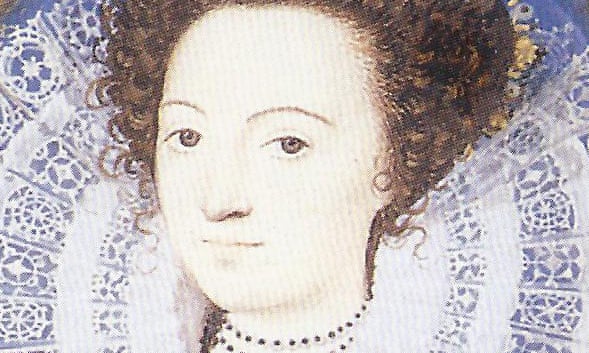
Emilia Bassano (portrait circa 1590 by Nicholas Hilliard)


Excerpts from the article are quoted below:

“Emilia Bassano became England’s first published female poet in 1611 and – according to some – could be the “Dark Lady” of Shakespeare’s sonnets. But Bassano has largely been forgotten by posterity, with her reputation eclipsed by male contemporaries. Four hundred years later, research commissioned by the producers of Emilia, a play about Bassano’s struggle for recognition as an artist, has found that women writers continue to be judged by the “pram in the hallway”, and pigeonholed as domestic rather than taken seriously as authors.

“The Emilia Report compared broadsheet coverage of 10 male and female writers in the same market. It found a “marked bias” towards male writers, who received 56% of review coverage. Looking at comparable authors Neil Gaiman and Joanne Harris, who had both written new works of fantasy – Gaiman’s Norse Mythology and Harris’s A Pocket Full of Crows – researchers found that while Gaiman’s received widespread coverage, Harris’s did not receive any coverage at all. A similar story emerged for commercial fiction authors Matt Haig and Rowan Coleman; his How to Stop Time was mentioned 12 times by newspapers, in a mix of reviews, interviews and news, while her The Summer of Impossible Things got just three mentions.

“References to women writers’ ages were “ubiquitous”, even in reviews, the researchers found, with women twice as likely to have their age referenced as part of their coverage. In the case of Sally Rooney, only five pieces out of 16 failed to mention her age, three of which were reviews.

“Coleman, one of 27 female authors interviewed for the report on her experience of being published, said she had never been reviewed by a broadsheet, despite writing a string of bestselling novels. “For a man writing is a career,” she said. “For a woman, so often her writing is treated like it’s a hobby, it is a nice thing to do on the side. That attitude is deeply embedded in our culture.”

“Harris reported similar experiences: “In general, when you compare the coverage of my work to that of men writing in similar areas, the emphasis in my case has been on the domestic, and in theirs on the academic,” she said. “Women are still viewed as a niche group, dealing solely with women’s issues, whereas men (even in the same area) are thought of as dealing with important, universal themes.”

“Danuta Kean, the report’s author, said that just as it was for Bassano, “women still aren’t provided with an equal platform to men upon which their work can be judged.”

“The Emilia report recommends challenging publishers over gender stereotypes on covers, which “undermine the credibility of fiction by women and their ability to be taken seriously”, and asking literary editors to examine any gender bias in their review coverage.

“Playwright Morgan Lloyd Malcolm, whose play Emilia is transferring to London’s West End, said that the research showed that Bassano’s struggles for recognition “sadly still chime with those of her fellow women writers 400 years later”.

“Bassano managed to publish a book, Salve Deus Rex Judaeorum, getting around censorship that limited women to writing only religious texts. Yet she is scarcely known outside academic circles.”

What was it the Virginia Slims cigarette advertisement used to say?  “You’ve come a long way, baby.”  (From 1590 to 2020, but there’s a long way still to go.)

Would Be Authors Bombard Publishers with Manuscripts

There is an article by Yohannes Lowe in The Daily Telegraph of June 1st with the above title.

Yohannes Lowe works as an apprentice for The Telegraph and won the National Council for the Training of Journalists apprentice of the year award in 2019.   He says, “I have always enjoyed talking to people and finding out about their personal stories.  That interest combined with a hunger for current affairs, made journalism a natural fit. But with no formal writing experience, I took up a teaching assistant role after graduating from university in 2017.  It did not last more than six weeks.  I then looked for reporting jobs. An NCTJ apprenticeship was vital for training me in the basic skills of the profession, allowing me to be competent in a national newsroom with little formal experience.  The apprenticeship, which included regular teaching sessions at PA Training was great as it taught me to write shorthand quickly and the basics of media law and court reporting.”

Yohannes Lowe

The article says, “Budding authors have been inundating publishers with manuscripts during lockdown, with dystopian novels being among the most commonly offered.  The time freed up by working hours from home has given many aspiring authors more hours in the day to finish off their book proposals.

Avon, a commercial fiction division of HarperCollins, has seen ‘unagented submissions’ increase threefold between March and May compared with the same time last year.  They have received a large number of crime and thriller novels from writers who are drawing their inspiration from their pandemic-induced social surroundings.  Literary agents, which represents writers and help send their scripts to publishers, have also seen a growing trend for dystopian themes.

Sarah Revivis-Smith, a fiction reader at the Eve WhiteLiterary Agency, said, “I would say we’re seeing lots of people working out their fears of the current situation through dystopias, with submissions that either explore Covid-19 overtly or have an unknown virus or disease spreading through humanity.”

The UK’s publishing industry reached record sales of £5.7 billion in 2018, consolidating its position as the  globe’s top book exporter.

Literary agencies are expecting even more manuscripts to flood in by autumn from those who started in late March.

Sam Copeland, director of RCW literary Agency, which boasts Zadie Smith and Kazuo Ishiguro among its published authors, added: “Submissions have continued to be relentless during lockdown, increasing from around 80 a week to 100 . . . I am expecting that number to rise again still further, though, with all the people who have been writing their novel in lockdown.  ‘I have had the odd Covid quick book in, funny books, that sort of thing, and some canny authors have tried  twisting their pitch to reflect the lockdown.  But I think the main rush of Covid books is still to come.'”

Do Introverts Make the Best Writers?

On the Introvert, Dear website there is an post from last July which caught my attention.  The title is ‘6 Reasons Why Introverts Make the Best Writers’.  It was written by Christine Bernard who is a novelist, freelance writer, and illustrator.

Christine Bernard

“I’m not saying you have to be an introvert to be a writer. In fact, some of the best writers I know are also incredible socialites and fantastic public speakers. However, if you are an introvert and a writer (like me), you can use it to your advantage. It’s a trait you should be proud of.

Why Introverts Make the Best Writers

1. Introvert writers are aware of emotions in others.

It’s true, we introverts spend a lot of time in introspection, but we also spend a great deal of time aware of the emotions of other people. Many of us “quiet ones” — especially if we’re also highly sensitive — pick up on small nuances and subtleties that other people aren’t aware of. Some might call it a curse, but if used correctly, it can be a huge benefit in a creative capacity.

For example, some introverts can hear what someone is telling them but know right away whether it’s truthful in its meaning based on eye contact, hand movements, voice tone, and other little physical clues. These are all things that can be used within their writing to make their story more authentic and to appeal to a larger audience. Because of this, they can write characters who are multi-faceted rather than static.

2. Introvert writers look within themselves.

Because we spend so much time alone, reflecting on our experiences, we introverts tend to know ourselves deeply. Knowing ourselves so well will have a big impact on creating real characters that others can relate to. Have you ever read a story where you’ve thought, “I know that feeling,” or “That happened to me”? That’s because the writer is creating characters with real depth and emotion.

4. Introvert writers like being alone.

Writing means sitting alone for long stretches at a time, which can be a daunting task for a lot of people. It’s why some people prefer to work in an office environment where they can have maximum contact with other people. For us introverts, writing is a way of being creative without having to interact with anyone else but the characters we’ve created. This means sitting in front of our computer to write can be an exciting task, rather than a daunting one. Just this alone can have a profound impact on how much work an introvert writer gets done on a daily basis, compared to someone who strongly craves the company of others.

5. Introvert writers enjoy meaningful conversation.

Introverts are usually not a fan of small talk. It’s a situation we may feel uncomfortable in and something we generally try to avoid. That doesn’t, however, mean that we don’t enjoy talking at all. We do. However, unlike extroverts, we can be selective about who we talk to and what we’re talking about. Deep, meaningful conversations with the right person can make an introvert seem like an extrovert to the person on the other end of the exchange. These meaningful conversations can be used in our stories to create an exchange that is long lasting on the reader’s mind — and make sure that it’s never too succinct and robotic, but rather interesting and memorable.

Again, I’m not saying that all introverts are creative, but there is definitely a large community of people who benefit from putting all their pent up inner thoughts to good use. We introvert writers can use this creative space as an outlet because we already have such an enigmatic inner world just desperate for the opportunity to be released. We’re creative, and our written stories become a way to showcase this.

Introvert writers can be natural storytellers, because we spend most of our time creating stories and worlds in our own mind. While many introverts see themselves as being stunted in a world built for extroverts, this doesn’t have to be the case. There is a place for everyone on Earth. It’s not a case of one being better than another, but rather a case of using what you have to your best potential. As Susan Cain wrote in Quiet, “Everyone shines, given the right lighting.””

I, too, am an introvert writer, and, in my experience, what Ms Bernard says is correct.


Review: A Delicate Truth

I was on holiday recently and I had finished reading The Grapes of Wrath.  Hoping to find a new book, I noticed that the hotel shop had a shelf of books – all in English, which I thought was a bit unusual as it was a Mexican resort.  I asked the shop keeper whether they were for sale.

“No,” she said, “but you can borrow one.”

That wouldn’t do, because we were going to leave that hotel soon and I wanted to finish a book at leisure.  So, I asked, “Is it possible to trade a book?”

“Yes, that would be fine.”  So I left them The Grapes of Wrath and I selected A Delicate Truth by John Le Carré.  I have to say that the hotel got the better part of that deal, but I bought another copy of The Grapes of Wrath when I got home.

John le Carré is the pen name of David John Moore Cornwell who was born in 1931 in Poole, Dorset, England.  He is a British author of espionage novels. During the 1950s and 1960s, he worked for both the Security Service (MI5) and the Secret Intelligence Service (MI6). His third novel, The Spy Who Came in from the Cold (1963), became an international best-seller and remains one of his best-known works. Following the success of this novel, he left MI6 to become a full-time author. Several of his books have been adapted for film and television, including The Constant Gardener, Tinker Tailor Soldier Spy and The Night Manager. 

He studied foreign languages at the University of Bern in Switzerland. In 1950, he joined the Intelligence Corp of the British Army garrisoned in Allied-occupied Austria, working as a German language interrogator of people who crossed the Iron Curtain to the West.  In 1952, he returned to England to study at Lincoln College,Oxford, where he worked covertly for the British Security Service, spying on far-left groups for information about possible Soviet agents.  When his father was declared bankrupt in 1954, Cornwell left Oxford to teach at Millfield Preparatory School.  In 1955, he returned to Oxford, and graduated in 1956 with a first class degree in modern languages. He then taught French and German at Eton College for two years, becoming an MI5 officer in 1958. He ran agents, conducted interrogations, tapped telephone lines and effected break-ins.  In 2011, he was awarded the Goethe Medal, and official award of the Federal Republic of Germany, given annually by the Goethe-Institut to “non-Germans who have performed outstanding service for the German language and for international cultural relations”.

John le Carré

This novel, published in 2013, concerns a failed plot by the British and Americans to capture a jihadist who was, reportedly, about to buy arms in Gibraltar.  The plot was conceived by a shadowy American private intelligence firm and endorsed by a British minister.  It involved British special forces who would flush the jihadist from a meeting with a notorious Middle Eastern arms dealer into the hands of the Americans who had their special forces in a boat on the water.   A middle ranking British Foreign Officer, who was observing events in Gibraltar was to advise the minister whether the situation was ‘go’.  When events turned sour, the officer advised ‘no’, but the minister with American backing decided ‘yes’.   The result was a failed operation which resulted in the deaths of an innocent civilian and her child.  In the aftermath of the operation, there was a cover-up, the minister was reassigned, and the observing officer was given a knighthood and a plum assignment in the Caribbean.  The bulk of the story concerns Toby Bell, a rising star in the Foreign Office, who was not involved, but who was suspicious at the time.  Bell gradually uncovers the whole story, its participants, and has to decide whether to risk his career to blow the whistle.

This novel is not on a par with John le Carré’s typical craftsmanship. It seems contrived and hastily put together.  For me, the author did not get the balance right between the credibility of the story, which would have been enhanced by more detail and a more deliberate pace, and the aura of secrecy surrounding the story.  The sensational aspects of the story contribute to a believe-ability problem in the sense that how likely is (or was) it that all these features would coincide in real life: a stubborn, wilful, isolated minister, an incompetent, headstrong group of Americans, a secret arms transfer being made on the streets of Gibraltar, a notorious, super-rich arms dealer on his yacht in Gibraltar harbour, a middle grade officer being given a knighthood for his meaningless participation, two murders in Gibraltar that go unnoticed and so on?  The characters are real; the suspense and the intrigue are vintage le Carré, but the editor was asleep.

Give it a pass.  There are much better le Carré novels.

The Popularity of Poetry

There is an article, “Poetry Sales Soar as Political Millennials Search for Clarity”, in the January 21 issue of The Guardian by Donna Ferguson, which I found interesting.   Donna Ferguson is an award winning freelance journalist specialising in finance.  (Perhaps she knows something about literature, as well.)

Donna Ferguson

“A passion for politics, particularly among teenagers and young millennials, is fuelling a dramatic growth in the popularity of poetry, with sales of poetry books hitting an all-time high in 2018.  Statistics from UK book sales monitor Nielsen BookScan show that sales grew by just over 12% last year, for the second year in a row. In total, 1.3m volumes of poetry were sold in 2018, adding up to £12.3m in sales, a rise of £1.3m on 2017. Two-thirds of buyers were younger than 34 and 41% were aged 13 to 22, with teenage girls and young women identified as the biggest consumers last year.

“Rupi Kaur, a 26-year-old Canadian poet with 3.4 million followers on Instagram, leads the bestsellers list and was responsible for almost £1m of sales. “You tell me to quiet down / cause my opinions make me less beautiful,” she writes in Milk and Honey, the No 1 bestselling collection of 2018, “but I was not made with a fire in my belly / so I could be put out.”  (It’s interesting that at least one poet is able to make a decent living.)

“Andre Breedt, for Nielsen, said that sales were booming because in times of political upheaval and uncertainty, people turn to poems to make sense of the world: “Poetry is resonating with people who are looking for understanding. It is a really good way to explore complex, difficult emotions and uncertainty.”  He added that the form’s brevity also meant it could be easily consumed on phones and shared on social media.

“In the immediate aftermath of the Manchester bombing, Tony Walsh’s reading of his poem, This is the Place, at Manchester town hall was shared thousands of times online and became instantly famous worldwide. Ben Okri’s poem, Grenfell Tower, June 2017, written in the aftermath of the fire, followed a similar trajectory.

“At these moments of national crisis, the words that spread and the words that were heard were not the words of politicians, they were the words of poets,” said Susannah Herbert, director of the Forward Arts Foundation, which runs the Forward prizes for poetry and National Poetry Day. “Almost everything a politician says is incredibly forgettable. There is a hunger out there for more nuanced and memorable forms of language.”  People wanted to cut through the verbiage of Brexit to see the bigger picture in 2018, she said: “Language gets stale in politics. Words begin to lose their meaning. Poetry occupies a different space to the humdrum. It is a way of renewing what words actually mean. It offers you a different way of looking at the world.”

“Poetry as a form can capture the immediate responses of people to divisive and controversial current events. It questions who has the authority to put their narrative forward, when it is written by people who don’t otherwise hold this power,” she said. “Writing poetry and sharing it in this context is a radical event, an act of resistance to encourage other people to come round to your perspective.”  Social media and technology have made poetry much easier to access and pass along, magnifying its impact, Shaw said.

Could this mean that millennials want existential emotion in their novels?


Truth Is Stranger Than Fiction

There’s an article by Lawrence Block republished in yesterday’s issue of the Writer’s Digest which was originally in the same magazine twenty years ago.  Lawrence Block, born 1938, is an American crime writer who is best known for a series set in New York about the recovering alcoholic and private investigator, Matthew Scudder and the gentleman burglar, Bernie Rhodenbarr.

Lawrence Block

I quote from Mr Block’s article as follows: “A couple of years ago, two friends of mine, a man and woman I’d known for most of a decade, made the papers. They did so in a rather spectacular fashion when the husband, a Wall Street stock analyst, murdered the wife, drove around for a while with her in the trunk of the car, dumped her at the side of the road, and was in very short order apprehended and charged with homicide. At the time of his arrest, he was wearing women’s underwear.

“Eventually the case came to trial, but not before he had been released on bail, married someone else, beat up the new wife, and had his bail revoked. He stood trial, was convicted, and was in jail awaiting sentencing when he rather abruptly died, evidently of AIDS. The new wife attended his funeral service in the company of a woman who’d been in the news a while back when a former Miss America stood trial on a charge of using unlawful influence to get a judge to lower her lover’s alimony payments to a former wife. The new wife’s companion at the funeral was the daughter of the judge in question, and achieved some local notoriety by testifying against the former Miss America. What she’s doing in this story is beyond me, but I guess everybody has to be someplace.

“After the funeral, the wife and her friend hurried back to the deceased’s house and stole everything they could carry.”

Mr Block, discussing this with a friend, said that it was a lot like a soap opera.

“’No,’ the friend said. ‘No, soap opera has a certain internal logic to it. That’s how you can distinguish between it and Real Life.’

“Fiction has to make sense. Life does not, and I suppose it’s just as well, or vast chunks of life would bounce back from the Big Editor in the Sky with form rejection slips attached to them. When we want to praise fiction, we say that it’s true to life, but it’s not that often the case. Life, unlike fiction, gives every indication of operating utterly at random, with no underlying structure, no unifying principles, no rules of drama. I think it was Chekhov who pointed out that it was dramatically essential that any cannon that appeared onstage in Act 1 had damn well better be fired before the final curtain. Life doesn’t work that way. In life, onstage cannons are forever silent, while others never seen go off in the wings, with spectacular results. Characters play major roles in the opening scenes, then wander off and are never heard from again. Perhaps it all balances out, perhaps there’s some sort of cosmic justice visited in another lifetime or another world, but all that is hard to prove and not too satisfying dramatically.

“What I’m really getting at, though, is not so much that life is a tale told by an idiot as that fiction had better be otherwise. And, simply because fiction has to make sense, we take for granted certain things that hardly ever happen in real life.

“Consider premonitions. Now, everybody has premonitions from time to time—the sudden illogical hunches that lead us to stay off an airplane, bet a number, or cross a street. Every once in a while a premonition actually turns out to be warranted—the number comes up, the plane comes down, whatever.  But in the vast majority of instances the premonition is a bum steer or a false alarm. The warning that came to us in a dream, and that we did or didn’t act upon, winds up amounting to nothing at all. The lottery ticket’s a loser. The plane lands safely.  Not so in fiction. Every premonition means something, though not necessarily what it seems to mean; in fiction, we ignore omens and hunches at our peril, and to our chagrin.

“Just look at the supermarket tabloids. They usually run extensive predictions around the first of the year, with famous psychics telling us what to expect over the next 12 months. Except for the can’t-miss shotgun predictions (“I foresee that somewhere in the world there will be a disaster, with great loss of life. Washington will be rocked with charges of political corruption and financial mismanagement. And, on the Hollywood scene, I see a marriage breaking up.”), the predictors hardly ever get anything right.

“In fiction, they almost always get almost everything right, and it never occurs to us to regard this as unrealistic.  ‘Oh, this is silly,’ a character says. ‘I’m not superstitious. I’m going to walk under this ladder.’ Or break this mirror, or forbear to throw this spilled salt over my shoulder, or whatever. And he does, and we know something’s going to happen to him before his story’s over. We may not be superstitious ourselves. We may detour around ladders, just on the general principle that it couldn’t hurt, but we don’t take the whole thing seriously.  Not in real life we don’t. In fiction, we know better.

“And what does all this mean?   Because I’m not sure just what it all means, or precisely what implications it has for us as writers of fiction. It could probably be argued that one of the reasons fiction exists, a reason it is written and a reason it is read, is that it is orderly and logical, that it makes sense in a way that life does not. Frustrated with the apparent random nature of the universe, we take refuge in a made-up world in which actions have consequences.

“Truth, as we’ve been told enough, is stranger than fiction. Of course it is—because it can get away with it. It flat-out happens, and it’s undeniable, so it doesn’t have to make sense. If my friend’s story, replete with uxoricide and transvestism and the remarriage and the beating of the new wife and the trial and the death, if all of that were placed without apology between book covers and presented as fiction, I’m sure I’d have tossed the book aside unfinished; if I made it all the way through, I’d surely be infuriated by the virus ex machina ending. The loose ends would annoy me and the inconsistencies would drive me nuts.

“But it’s fact. It happened. I can’t dispute it on dramatic grounds. I can’t say it’s improbable, or illogical. It happened. It’s what is. I may not like it, I may be saddened or horrified by it, but I can’t lay the book aside because it’s not a book. It’s real.

“I’ve seen writers react to criticism that their stories were implausible, that they relied too greatly on coincidence, that they were unresolved dramatically, by arguing that their fiction had been faithful to actual circumstance. ‘How can you say that?’ they demand. ‘That’s how it happened in real life! That’s exactly how it happened!’

“Indeed, and that’s the trouble. If real life were fiction, you couldn’t get the damn thing published.”