Male and Female Writers’ Coverage Bias

There is an article by Alison Flood in The Guardian on March 18, 2019 in which she analyses the Emilia Report.

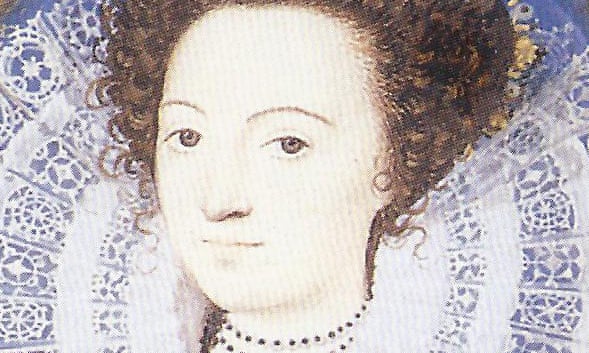
Emilia Bassano (portrait circa 1590 by Nicholas Hilliard)


Excerpts from the article are quoted below:

“Emilia Bassano became England’s first published female poet in 1611 and – according to some – could be the “Dark Lady” of Shakespeare’s sonnets. But Bassano has largely been forgotten by posterity, with her reputation eclipsed by male contemporaries. Four hundred years later, research commissioned by the producers of Emilia, a play about Bassano’s struggle for recognition as an artist, has found that women writers continue to be judged by the “pram in the hallway”, and pigeonholed as domestic rather than taken seriously as authors.

“The Emilia Report compared broadsheet coverage of 10 male and female writers in the same market. It found a “marked bias” towards male writers, who received 56% of review coverage. Looking at comparable authors Neil Gaiman and Joanne Harris, who had both written new works of fantasy – Gaiman’s Norse Mythology and Harris’s A Pocket Full of Crows – researchers found that while Gaiman’s received widespread coverage, Harris’s did not receive any coverage at all. A similar story emerged for commercial fiction authors Matt Haig and Rowan Coleman; his How to Stop Time was mentioned 12 times by newspapers, in a mix of reviews, interviews and news, while her The Summer of Impossible Things got just three mentions.

“References to women writers’ ages were “ubiquitous”, even in reviews, the researchers found, with women twice as likely to have their age referenced as part of their coverage. In the case of Sally Rooney, only five pieces out of 16 failed to mention her age, three of which were reviews.

“Coleman, one of 27 female authors interviewed for the report on her experience of being published, said she had never been reviewed by a broadsheet, despite writing a string of bestselling novels. “For a man writing is a career,” she said. “For a woman, so often her writing is treated like it’s a hobby, it is a nice thing to do on the side. That attitude is deeply embedded in our culture.”

“Harris reported similar experiences: “In general, when you compare the coverage of my work to that of men writing in similar areas, the emphasis in my case has been on the domestic, and in theirs on the academic,” she said. “Women are still viewed as a niche group, dealing solely with women’s issues, whereas men (even in the same area) are thought of as dealing with important, universal themes.”

“Danuta Kean, the report’s author, said that just as it was for Bassano, “women still aren’t provided with an equal platform to men upon which their work can be judged.”

“The Emilia report recommends challenging publishers over gender stereotypes on covers, which “undermine the credibility of fiction by women and their ability to be taken seriously”, and asking literary editors to examine any gender bias in their review coverage.

“Playwright Morgan Lloyd Malcolm, whose play Emilia is transferring to London’s West End, said that the research showed that Bassano’s struggles for recognition “sadly still chime with those of her fellow women writers 400 years later”.

“Bassano managed to publish a book, Salve Deus Rex Judaeorum, getting around censorship that limited women to writing only religious texts. Yet she is scarcely known outside academic circles.”

What was it the Virginia Slims cigarette advertisement used to say?  “You’ve come a long way, baby.”  (From 1590 to 2020, but there’s a long way still to go.)

Would Be Authors Bombard Publishers with Manuscripts

There is an article by Yohannes Lowe in The Daily Telegraph of June 1st with the above title.

Yohannes Lowe works as an apprentice for The Telegraph and won the National Council for the Training of Journalists apprentice of the year award in 2019.   He says, “I have always enjoyed talking to people and finding out about their personal stories.  That interest combined with a hunger for current affairs, made journalism a natural fit. But with no formal writing experience, I took up a teaching assistant role after graduating from university in 2017.  It did not last more than six weeks.  I then looked for reporting jobs. An NCTJ apprenticeship was vital for training me in the basic skills of the profession, allowing me to be competent in a national newsroom with little formal experience.  The apprenticeship, which included regular teaching sessions at PA Training was great as it taught me to write shorthand quickly and the basics of media law and court reporting.”

Yohannes Lowe

The article says, “Budding authors have been inundating publishers with manuscripts during lockdown, with dystopian novels being among the most commonly offered.  The time freed up by working hours from home has given many aspiring authors more hours in the day to finish off their book proposals.

Avon, a commercial fiction division of HarperCollins, has seen ‘unagented submissions’ increase threefold between March and May compared with the same time last year.  They have received a large number of crime and thriller novels from writers who are drawing their inspiration from their pandemic-induced social surroundings.  Literary agents, which represents writers and help send their scripts to publishers, have also seen a growing trend for dystopian themes.

Sarah Revivis-Smith, a fiction reader at the Eve WhiteLiterary Agency, said, “I would say we’re seeing lots of people working out their fears of the current situation through dystopias, with submissions that either explore Covid-19 overtly or have an unknown virus or disease spreading through humanity.”

The UK’s publishing industry reached record sales of £5.7 billion in 2018, consolidating its position as the  globe’s top book exporter.

Literary agencies are expecting even more manuscripts to flood in by autumn from those who started in late March.

Sam Copeland, director of RCW literary Agency, which boasts Zadie Smith and Kazuo Ishiguro among its published authors, added: “Submissions have continued to be relentless during lockdown, increasing from around 80 a week to 100 . . . I am expecting that number to rise again still further, though, with all the people who have been writing their novel in lockdown.  ‘I have had the odd Covid quick book in, funny books, that sort of thing, and some canny authors have tried  twisting their pitch to reflect the lockdown.  But I think the main rush of Covid books is still to come.'”

Small Publishers Fear Closure

There is an article by Alison Flood in the May 7th issue of The Guardian which is timely.  Te headline is “Majority of Small Publishers Fear Closure in the Wake of Coronavirus.   Alison Flood is the Guardian’s books reporter and the former news editor of the Bookseller.

Alison Flood

The article says, “More than half of the UK’s small publishers fear they could be out of business by the autumn as a result of the coronavirus pandemic, according to research by the Bookseller, which warns of a “whole tranche of writers that either will not write, or will be unable to see their work published”.

With author events cancelled, titles delayed and bookshop sales severely hit by lockdown, the survey of 672 small publishers reveals almost 60% fear closure by the autumn. The Bookseller said that 57% reported they had no cashflow to support their business, and 85% had seen sales drop by more than half.

According to the Bookseller’s editor Philip Jones, the survey shows that the outbreak threatens many small presses, including some of the UK’s best-known independents.

“These are not big publishers, or even the bigger indies, but the very smallest, many of them Arts Council-funded, publishing into areas often overlooked by other publishers, with a particular emphasis on debut writers, and those from BAME or working-class backgrounds,” said Jones. “There’s a whole tranche of writers that either will not write, or will be unable to see their work published, if these fears come true, and it is incumbent on the publishing sector, arts funders and governments to look at how the situation can be resolved.”

Independents often take risks on authors that mainstream publishers shy away from: Norwich-based indie Galley Beggar Press published Eimear McBride’s award-winning A Girl Is a Half-formed Thing after it was rejected by a string of major presses, while independents dominated the longlist for this year’s International Booker prize.

After winning the London category of the small press of the year award at the 2020 British Book Awards, the founder of Jacaranda Books, Valerie Brandes, had been looking at her “strongest, most ambitious year of publishing”, including a commitment to publish 20 black British writers.

“The pandemic and the resultant crisis has not only decimated our plans for these new authors, but has also impacted our publishing programme in every aspect overall, from future acquisitions to sales and distribution,” said Brandes. “We have had to adapt, as small presses have to, turning to our website to sell directly, making changes to our publishing schedule and connecting more with our community. This is all compounded by the industry-wide uncertainty; we have no idea how far we will fall or for how long.”

Jacaranda has teamed up with Knights Of, another publisher specialising in diverse authors, to launch a crowdfunding campaign, administered by independent writing charity Spread the Word. It is looking to raise £100,000, 80% of which will be split between the two presses, with 20% to go to other diversity-focused independents. The money raised will be “vital to ensuring that our shared work can survive this crisis and come out strong and together at the other end”, said Knights Of publisher Aimée Felone.

England’s literature development agencies warned in a joint statement that small and independent presses are “at the forefront of discovering new writers and opening up reading choices through publishing titles often ignored by mainstream publishers” and “if we want to continue to open up writing as a career choice, particularly for under-represented writers, and to develop new audiences for books, we need a healthy independent sector”.”


Do Introverts Make the Best Writers?

On the Introvert, Dear website there is an post from last July which caught my attention.  The title is ‘6 Reasons Why Introverts Make the Best Writers’.  It was written by Christine Bernard who is a novelist, freelance writer, and illustrator.

Christine Bernard

“I’m not saying you have to be an introvert to be a writer. In fact, some of the best writers I know are also incredible socialites and fantastic public speakers. However, if you are an introvert and a writer (like me), you can use it to your advantage. It’s a trait you should be proud of.

Why Introverts Make the Best Writers

1. Introvert writers are aware of emotions in others.

It’s true, we introverts spend a lot of time in introspection, but we also spend a great deal of time aware of the emotions of other people. Many of us “quiet ones” — especially if we’re also highly sensitive — pick up on small nuances and subtleties that other people aren’t aware of. Some might call it a curse, but if used correctly, it can be a huge benefit in a creative capacity.

For example, some introverts can hear what someone is telling them but know right away whether it’s truthful in its meaning based on eye contact, hand movements, voice tone, and other little physical clues. These are all things that can be used within their writing to make their story more authentic and to appeal to a larger audience. Because of this, they can write characters who are multi-faceted rather than static.

2. Introvert writers look within themselves.

Because we spend so much time alone, reflecting on our experiences, we introverts tend to know ourselves deeply. Knowing ourselves so well will have a big impact on creating real characters that others can relate to. Have you ever read a story where you’ve thought, “I know that feeling,” or “That happened to me”? That’s because the writer is creating characters with real depth and emotion.

4. Introvert writers like being alone.

Writing means sitting alone for long stretches at a time, which can be a daunting task for a lot of people. It’s why some people prefer to work in an office environment where they can have maximum contact with other people. For us introverts, writing is a way of being creative without having to interact with anyone else but the characters we’ve created. This means sitting in front of our computer to write can be an exciting task, rather than a daunting one. Just this alone can have a profound impact on how much work an introvert writer gets done on a daily basis, compared to someone who strongly craves the company of others.

5. Introvert writers enjoy meaningful conversation.

Introverts are usually not a fan of small talk. It’s a situation we may feel uncomfortable in and something we generally try to avoid. That doesn’t, however, mean that we don’t enjoy talking at all. We do. However, unlike extroverts, we can be selective about who we talk to and what we’re talking about. Deep, meaningful conversations with the right person can make an introvert seem like an extrovert to the person on the other end of the exchange. These meaningful conversations can be used in our stories to create an exchange that is long lasting on the reader’s mind — and make sure that it’s never too succinct and robotic, but rather interesting and memorable.

Again, I’m not saying that all introverts are creative, but there is definitely a large community of people who benefit from putting all their pent up inner thoughts to good use. We introvert writers can use this creative space as an outlet because we already have such an enigmatic inner world just desperate for the opportunity to be released. We’re creative, and our written stories become a way to showcase this.

Introvert writers can be natural storytellers, because we spend most of our time creating stories and worlds in our own mind. While many introverts see themselves as being stunted in a world built for extroverts, this doesn’t have to be the case. There is a place for everyone on Earth. It’s not a case of one being better than another, but rather a case of using what you have to your best potential. As Susan Cain wrote in Quiet, “Everyone shines, given the right lighting.””

I, too, am an introvert writer, and, in my experience, what Ms Bernard says is correct.


Personalities of Successful Authors

There is a two-year old article in Inc. magazine by Kaleigh Moore titled ‘6 Characteristics Every Great Write Has in Common’, which I found interesting.  Ms Moore’s website says, “I write blog content for eCommerce platforms and the SaaS tools that integrate with them.  I’ve been hired by top companies on the Fortune 500 as well as growing SaaS companies. Some of my past and present clients include AT&T, ReCharge Payments, Shopify, and IBM.  I also write about retail for major publications like Forbes, Vogue Business, and Adweek.”

Kaleigh Moore

While it is unclear where Ms Moore gets the expertise to write about writers, perhaps she is self-taught.  Here is what she said:

“It’s hard to know if you’re a good writer–especially if no one has ever torn apart a piece you’ve written or “ooohed” and “ahhhed” over your work. But one of the easiest ways to spot a great writer is through the qualities he/she exhibits on a daily basis.

These qualities are essential for an effective writer because they spotlight a certain devotion and openness–both of which are necessary to achieve writing greatness. Read through this list and see if you line up with the 6 most important qualities of an effective writer.

1. Attention to Detail

Great writers are observers, always taking mental notes and noting subtle changes around them. This attention to detail not only makes them fantastic editors who can spot the smallest grammatical error during a read-through, but it adds a special touch to their writing, too. No descriptive detail gets left behind.

2. Discipline

Writers who excel are familiar with frustration because re-writes, edits, and improvements all come by maintaining a disciplined approach to writing. Great writers are devoted to constantly re-evaluating their work, no matter how small the task may be. They focus on their craft and are constantly working to get better through intense discipline.

3. Clarity

An effective writer is able to distil complex thoughts and ideas into simple, clear language that’s quickly and easily understood by others. This valuable quality helps them tackle even the densest subject matter by breaking it down into uncomplicated pieces.

4. Strong Vocabulary

No one likes to read the same words over and over again, so a strong, robust vocabulary is an asset to any good writer. Incorporating interesting and unusual words into their writing, this skill helps them maintain a reader’s interest and allows them to communicate more effectively by accessing the perfect word for any situation.

5. Open to Changes

Being open to external edits and suggestions is key for exceptional writers because it enables them to improve their writing, even though it might damage their ego in the meantime. Open-mindedness allows them to see their work through the eyes of others and improve weak points.

6. Passion for Reading

Voracious readers often make great writers, because being immersed in a world of words helps one better understand the nuts and bolts of writing (like syntax, tone, framing, etc.) The more one reads, the more learned he/she becomes on all of the different writing tools and stylistic angles that exist.”


The Self-Publishing School website lists these five characteristics of authors: Exercise Patience, Apply Consistency, Practise Optimism, Value Criticism and Be Empathetic.

It seems to me that Discipline and Apply Consistency and both Discipline; and Open to Changes and Value Criticism are both Value Criticism.  For me, both characteristics are important.

Attention to Detail is important in the text one produces, but being observant of what goes on around you is less important than Being Empathetic; after all, novels are ’empathy machines’.

Clarity is definitely important, and rather than Strong Vocabulary, I would say Excellent Command of English, as being a general skill.

Passion for reading, as Ms Moore says, is important.

Patience can be a useful trait, but I think that if one is Disciplined, one must necessarily also be patient

Practise Optimism doesn’t feel right for me.  While I am an optimist, I think the valuable trait is Be Motivated.  In other words, I think it’s OK to be a pessimist as long as you’re motivated.

For me there is one essential ingredient, particularly if one is a novelist, that is left off both lists:  Creativity

My list of the top 8 characteristics is therefore:

  • Be Empathetic
  • Be Disciplined
  • Be Motivated
  • Be Creative
  • Clarity
  • Excellent Command of English
  • Open to Changes
  • Passion for Reading


Top Ten Publishing Industry Trends

Written Word Media has an article dated January 9, 2020 which sets out their top ten trends for 2020.

Excerpts are as follows:

1. Audiobooks will continue to gain popularity, and more indie authors will invest

It seems like almost everyone you meet is talking about audio these days. Whether it’s podcasts or audiobooks, people are consuming more spoken word audio than ever, and the stats back it up.  A 2019 survey from Edison Research revealed that half of all Americans over the age of 12 have listened to an audiobook in the past year. Additionally, audiobook listeners trended younger. Fifty-five percent of listeners were below the age of 45. The survey stats showed an increase from 2018, and the expectation is that audio will continue to grow. “For audiobooks, 2019 was really the year of the library. We saw incredible library sales growth for authors in 2019.   With better access to audiobook creation and distribution, we expect to see more audiobooks in the marketplace in 2020. Marketing audiobooks remains a challenge for authors but effective marketing will become more important as the space gets more crowded.

2. More indie authors will collaborate on marketing

Authors have long seen success with collaborative marketing techniques like email list swaps and group giveaways. In 2020, we expect to see more cooperative marketing as competition grows and indie authors find creative ways to gain an edge.  Michael Anderle of Kurtherian News sees indies aggressively pooling resources in 2020, saying that “many teams will pool resources to get a minimum of one million emails in their email co-op group.”  Of course, authors will need to be strategic to see success here. Oversaturating readers or marketing to the wrong audience can damage an email list. But, as many authors know, getting it right will pay off.

3. We’ll see more published works from author groups

As we learned from our author survey this year, successful authors tend to have large backlists. In 2020, we expect to see more authors collaborate on series and universes to speed up the process of building their backlists.  Bryan Cohen of the Sell More Books Show broke down how he sees this trend. “2020 will bring more author-publishers. It started with romance but sci-fi and fantasy authors are creating giant interconnected universes with a stable of co-writers and ghostwriters. They’re taking the James Patterson model to the nth degree.”

Granted, sharing a backlist will require sharing income in some fashion, but with tools like Abacus from PublishDrive, revenue sharing is getting easier. We expect more authors to join together and make more money faster from this shared model than they could on their own.

4. Organic reach will decline

This publishing trend is a reality across every online industry. As the big players, like Amazon, Google, and Facebook rely more and more on advertising money, they lose incentive to provide a broad reach for free.  This means that blog posts, Facebook posts, and Amazon book listings will see fewer views for free (also known as organic reach). Facebook CEO Mark Zuckerberg announced in 2018 that organic reach of branded pages would decline, and that has played out as expected over the past two years.  Mark Dawson observed a similar trend on Amazon, “Organic visibility is being reduced on Amazon, with authors – including me – reporting big dips in income when also-boughts disappeared from book detail pages. What replaced them? Carousels of ads.”

5. Running ads will become a requirement

As mentioned in the preceding trend, getting your book in front of readers for free is going to get even more difficult. No one is thrilled about this, but it is the reality of a maturing marketplace.  “Advertising is no longer going to be something that you could do, or even should do – it’s going to become something that you must do, at least if you want to pursue writing as a viable full-time career,” says Mark Dawson. Online advertising is widespread to the point where in many industries, you MUST run ads to compete. As self-publishing grows and organic reach declines, we expect to see the same in publishing.

6. Big five publishers will start using KDP Select

This trend comes to us from the great mind of Michael Anderle. He anticipates that Hachette, HarperCollins, Macmillan, Penguin Random House and Simon & Schuster will look to capitalize on Amazon’s reach by using Kindle Unlimited.   According to Anderle, “We will see big five publishers using KDP (Amazon Kindle Unlimited) in 2020 as they seek to acquire income with their enormous backlists.”  Logically, this makes sense, and some major titles (Harry Potter series) are already available within Kindle Unlimited. Getting readers going on a series is a proven way to make some serious cash, and no one has as many series as the big five.

7. Scam services will continue to pop up

Unfortunately, this trend will continue in 2020. With self-publishing continuing to grow, more shady characters will be attracted to the money in the market.  The good news? There are some tremendous people who regularly expose and spread the word about bad actors. We recommend following Victoria Strauss and David Gaughran on Twitter as they both regularly identify and publicize scams aimed at indie authors.

8. The eBook market will grow even more in 2020

There’s been some buzz about younger readers not buying eBooks, but Nate Hoffelder debunked these rumors in a recent post. Hoffelder includes data from Pew and eBooks.com that show that younger readers are buying eBooks and reading eBooks as much, if not more, than older readers.  As more young readers enter the market, it stands to reason that eBook sales will only increase. Because almost all young people use a digital device every day, moving to eBooks will be a much more seamless transition than the one made by older readers who grew up reading print.

9. Email lists will increase in value

With organic reach declining, spending money on ads becoming a requirement, and collaboration increasing in popularity, an author’s email list becomes an incredibly valuable asset.  Your email list is a marketing channel that you actually own. Once you have a reader’s email, you have a direct, inexpensive line to them. Readers who give you their email addresses are also opting in. They WANT you to email them. Otherwise, they wouldn’t sign up.  An author’s email list is also a valuable way to attract partner authors. The bigger your list, the more authors will want to partner with you to get in front of your audience.  Email isn’t without its challenges. Gmail and other inbox providers will continue to work to declutter their user’s inboxes, so getting eyes on your content may get more difficult. It is increasingly important to maintain clean lists and to educate your subscribers to expect your emails.

10. Creative indies will experiment with new ways to make money

In 2020, more indie authors will experiment with other ways to make money and try new models for selling books.   Jane Freidman aptly noted, “I expect more writers to charge for content that’s been free in the past, although not every writer will be successful at it. I’m seeing more people adeptly use Patreon to secure donations and early sales for all types of work, and Substack to solicit donations and subscriptions for newsletter content.”


Four Tips from Shakespeare

There is an article by Karin Abarbanel in the February 12, 2020 issue of The Writer’s Dig in which she reports on a challenge from a friend to spend an hour a day for a month on something that would improve her writing skills.  She decided to spend an hour each day revisiting and analysing Shakespeare’s plays.

Ms Abaranel has an M.A. in Renaissance English Literature from Columbia University. She recently completed the manuscript for her first novel, Britomar and the Forest of No Return, a middle-grade fantasy adventure, which she is currently submitting to agents. As a nonfiction author, she has been published by Penguin Random House, Henry Holt, and McGraw-Hill.

Karin Abarbanel

Excerpts from the article are as follows:

Getting Started:

Search the internet for advice on how to start a novel and you’re likely to see the words in media res pop up. The message: parachute your readers into the middle of your story. Would Shakespeare agree? Not necessarily—he’s far more versatile and audience-friendly.

Yes, he begins Macbeth with thunder, lightning, and three witches just itching to stir up trouble—his version of an action opening. In Romeo and Juliet, however, Shakespeare makes a different choice. He might have cut to the chase and dropped us into the middle of the action with, say, a love-struck Romeo wooing Juliet while she swoons on her balcony. But he doesn’t. Instead, he uses a prologue to bring the audience up to speed about the two warring families his “star-crossed lovers” spring from. Romeo and Juliet don’t even meet until the end of Act I. The balcony scene? Act II.

Generally, Shakespeare wants those viewing his plays to be curious, not confused; led not lost. So he opts for slow builds in place of flashy gateways that can be exciting but disorienting. By choosing to anchor his audiences—not set them adrift—he provides a framework for the events and actions of his characters that propel his dramas forward.

Among the gateway strategies Shakespeare artfully employs to ease his way into a story: 1) stage-setting prologues that frame and clarify the action about to take place; 2) minor characters who serve as “stand-ins” for viewers and discuss recent disturbing or puzzling developments; 3) brief “history” lessons recapping past occurrences so viewers have a context for understanding present events; 4) monologues by major characters revealing fatal decisions that trigger ensuing action.

Tell Well

Popular thriller novelist Lee Child once told a room of writers, “Forget ‘Show, don’t tell.’ Writers are storytellers—and that’s what readers depend on us to do. They don’t care about telling or showing. They just want to be carried through a book. There is nothing wrong with just telling the story. So liberate yourself from that rule.”

Lee and Will are on the same page. “Show, don’t tell”—this is one widely cited “rule” that Shakespeare would have ignored if he’d ever come across it in his day. Yes, he loves to “show” dramatic moments: those three witches stirring their black, bubbling cauldron on the heath, the ghost of Hamlet’s murdered father haunting his castle ramparts, Brutus stabbing Julius Caesar. But Shakespeare also woos his audience with words through targeted telling—deft descriptions that fire the imagination.

We don’t just see Juliet in that famous balcony scene, we also eavesdrop on her rhapsodizing about Romeo. Hamlet’s riveting “To be or not to be” speech is a master class in telling: Hamlet reveals his paralyzing indecisiveness as he tries to rouse himself to action by describing the steps he could take to avenge his murdered father. And in Antony and Cleopatra, the Egyptian queen’s luxurious “love boat” is nowhere in sight; instead, Shakespeare has an observer conjure up a vivid word picture, and scores an impressive feat: simultaneously telling and showing.

Time and again, Shakespeare captures a character’s essence by piling on colorful adjectives and descriptive phrases—telling us in no uncertain terms, who or what a person is—or is perceived to be.

Make Minor Characters Count

Who knows better than Shakespeare how to make minor characters come alive? Not only are they lusty and full-blooded, they’re also hardworking. Shakespeare consistently gives them high-impact jobs to do, from dropping important clues to making fateful mistakes that advance his plots.

Read his plays back to back and you can’t help but admire his inventiveness: He uses his bit players in a stunning variety of ways, depending again, on the needs of the story he’s dramatizing. Sometimes they set the stage, so to speak, so we know what’s going on before the main characters hit the boards. Sometimes “lowly” characters offer wry observations about the high-born masters they serve. Some minor characters provide moments of great drama and insight; and others, humorous interludes.

In fact, he’s so artful that he can breathe life into even the most fleeting of characters with a few deft strokes of his pen, much the way an artist creates a clever caricature with a few bold slashes of ink. In Romeo and Juliet, for example, Juliet’s nurse makes just the slightest mention of “Susan,” her own daughter:

“Susan and she [Juliet]—God rest all Christian souls!—were of an age.

Well, Susan is with God; she was too good for me.”

In two stark lines, we learn that Juliet’s nurse had a daughter who would have been exactly Juliet’s age if she hadn’t died years before as an infant. We feel the fresh pain of the nurse’s loss, but even more important, we instantly grasp the reason for her deep, motherly devotion to Juliet. We never hear another word about Susan, but her life echoes through the play in the tragic steps the nurse takes to help her beloved Juliet.

Create Anticipation

Setting readers or viewers up for what happens next in a story keeps them hungry, curious, and engaged. The more often and skillfully we fuel anticipation, the more we heighten the drama of major events. Not surprisingly, Shakespeare excels at releasing just enough information to keep viewers on the edge of their seats, waiting anxiously for what happens next.

At the end of Act III of Macbeth, for example, the ruthless, besieged Macbeth reveals to the audience that he plans to kill the family of his enemy, Lord Macduff. In the next scene, Macduff’s wife and her precocious son enact a warm, winsome scene that is painful to watch because viewers know what the characters on stage don’t—that they are about to be murdered.

To ratchet up the drama—and viewer anxiety—Shakespeare has a stranger burst in and warn Macduff’s wife to leave. As helpless onlookers, we yearn for her to escape but know it’s too late—she has mere minutes to live. When Macbeth’s henchmen burst in and murder her and her son, it’s a terrible moment—made far more devastating because Shakespeare so cleverly and economically sets us up for it.

I agree with Ms Abarbanel’s conclusions except on telling well, and I think that Lee Child is wrong when he says that readers don’t care about showing or telling.  If the reader can be shown rather than told what a character is feeling, s/he has to interpret what s/he has been shown.  In the process of interpreting, s/he is drawn closer to the character.   So, I would say if there is an effective way to show the character’s feelings, chose that rather than telling what the feelings are.


Good Editing

I have had quite a lot of experience with editors – mostly copy editors, who were looking for errors in spelling, grammar and punctuation.  But three times now I have used substantive editors to look at structure, plot, characters, and organisation, as well.  The first two of those experiences were pretty horrible in the sense that their major comment was ‘cut’.  This was demoralising in that the editor gave no indication of understanding what the book was about and thought that a significant portion of my writing was worthless.


The third experience with a senior writing instructor in London has been altogether different.  The only time he used ‘cut’ was when I had used unnecessary commas.   When he thought that my writing had gone astray, he would say, ‘please think about the contribution this section is making to your novel.  Is it moving things forward?’  And I would think about it in terms of the three C’s: Character, Cause and Concern.  Is it developing the character, is it establishing an important cause of subsequent plot action, or is it heightening the reader’s concern for a character?  As a result of this review on my part, I rewrote some sections and eliminated others.

But his help went far beyond the value of portions of the writing.  Initially, I had some concerns about tension in the novel.  Was it keeping the reader fully engaged?  He assured me that I was producing literary quality writing, but my choice of narration in the first person by the central character was limiting the tension level.  He suggested that I use two narrators, who are related, but of different ages, genders and personality.  Rather than telling the story in chronological order, why not tell it by major events, so that intensity of each character’s involvement would be increased?  This change, while it ramps up the tension, tends to cause the reader to lose her sense of time, and I had to add time markers to indicate the sequence of events.

The editor made helpful comments about some of the language or actions of characters if they seemed out of character or threatened to reduce the reader’s interest in them.  Then there is the issue of emotion.  The editor says that novels are ’empathy machines’.  Often, I needed reminding to make a character’s feelings clearer.   This action should be as show rather than tell, where body language, tone, expression and setting are used evocatively.

As a resident in the UK for thirty-three years, I think I’m pretty familiar with the Queen’s English as opposed to American English, which is my native tongue.  The novel is set in today’s lower middle class London, and there were subtleties which I missed in my writing and which the editor caught.  Since the novel will hopefully go to a British publisher, it’s important to get the QE right.

Sometimes I was accused of using orthographic language which I understand to mean unnecessarily correct language which falls short of expressing a point.  Frequently this involved the construction of long sentences separated by semicolons.  (I admire William Faulkner’s ability to construct sentences that are half a page or longer.)  Finally, I learned that I use too many commas and semicolons.

For me, the bottom line, before you go to an agent, is to hire a substantive editor, based on seeing samples of his work or comprehensive testimonials.

Censorship

There is an article form the November 1965 issue of the Writer’s Digest by Alma Boice Holland that was re-published in the March 16, 2020 issue.  In their lead-in to the article, WD says: “Today is Freedom of Information day and while censorship isn’t necessarily the same as withholding information, they are, to some degree, related. Here’s a piece from the November 1965 issue of WD by Alma Boice Holland with her thoughts about censors and the arts.”

WD says, “Alma Boice Holland’s published works range from a book of philosophical essays, to short plays, articles, short stories in a wide list of magazines from Family Circle to Saturday Evening Post.”  Below is the cover of a magazine which features one of her articles:


In the WD article, Ms Holland says. “Approximately one billion dollars a year is spent in the United States to decide what the public should be allowed to look at, hear, and to read. The output of obscenity in books, magazines, movies, television, and pornographic records has become Big Business. The United States Post Office believes the yearly output may reach five hundred million dollars. An equal amount is spent by the government and private censoring organizations to police the arts, and deny lewdness the protection of the Bill of Rights.

The battle rages continually and it is not occupied with sex alone. It can even be political and result in open book-banning. As early as 35 A.D. the Roman, Emperor Caligula, tried to suppress Homer’s Odyssey because it did not agree with his own thinking about individual freedoms.

Boston’s Superior Court condemned Theodore Dreiser’s novel, An American Tragedy, in 1930. While the publisher was paying a fine of $300, the book was listed as required reading in a Harvard English course. The next year, a certain bestselling book was banned in China. Want to guess? It was Lewis Carroll’s Alice in Wonderland. Want to know why? The objection was to the idea that animals could talk.

Practically anybody can be a censor. No license or other permit is necessary. There are two varieties, preventative and punitive. The first tries to stop material from reaching the market. He reads gallery proof, sees movies and television plays ahead of release, passes on magazine pictures, etcetera. He is not popular among the producers and publishers who often disagree with him.

The punitive censor arouses criticism after the book or play or other medium has already reached the public. It is then that he takes action. He is helped in this effort by the statues which are the laws in every state in the union. In addition, more than 150 cities have passed ordinances against obscenity. All of these laws can be used by the self-appointed censor. So why should his job be a problem?

It has become a problem because of the ever-changing moral climate. The general public is more lenient and the courts less biased. Movies and television plays are being shown today which most certainly would have been banned a mere decade ago. Books that were once sold from under the counter are now openly displayed. Inhibitions are fading away and, so far, there seems to be nothing to take their place. The censor is almost out of a job. He has been thrown so many curves that he has become bewildered. Is this good?

Over the years, and all over the world, there have always been these self-appointed guardians of the public morals. Some of the manifestations have been both strange and explainable. At the same moment that Gilbert and Sullivan’s The Mikado was being barred in London, for fear it would displease the Japanese, these same Japanese were applauding the score aboard their warships.

Do American readers need to depend on censors? Or can the censors depend on support from American readers? The subject is open to debate and the argument seems to be self-perpetuating. Each might consider the words of Lord Thomas Robert Dewar: “Minds are like parachutes; they only function when they are open.””

While Ms Holland’s name may not be immediately recognisable in the literary world – Wikipedia has no listing for her, Amazon has her 80 page book of essays published in 1969, Google seems quite uncertain – it is difficult to disagree with her conclusion.

Books and Marijuana

Here are excerpts from an article by Wendy Paris dated 31 March 2020 in the Los Angeles Times.

“Why should it be easier to buy marijuana than a good book at a store in Los Angeles during the coronavirus shutdown?

“Mayor Eric Garcetti and Gov. Gavin Newsom’s stay-at-home edicts let dispensaries stay open but force bookshops to shutter indefinitely.  Chavalier’s in Larchmont will take phone orders. Skylight Books in Los Feliz, Book Soup in West Hollywood and Vroman’s in Pasadena are “closed temporarily” but forwarding online orders to Ingram, a wholesaler that will ship direct to buyers. The Last Bookstore, downtown, is seeing customers by appointment.

“Powell’s Books, one of the nation’s largest independent bookstores, with five Oregon locations, laid off more than 300 staff members, although many were rehired as a surge of online orders came in. This legendary institution is still shipping books from its warehouse, but you can’t go in and browse, even in small numbers, separated by plenty of open space.

“And it could get worse. “These are unprecedented and grievous times,” Emily Powell wrote in her initial letter to employees, calling the path ahead “dark and scary.” When she announced that as of Saturday, she’d been able to rehire 100 staffers, she was grateful to her customers but only marginally more optimistic: “We don’t know what the future holds — none of us does. We’re going to keep the doors of Powells.com open as long as we can….”

“Diesel in Brentwood has opted for an ad hoc form of curbside pickup, leaving books in bags with customers’ names on them on a table just inside the store’s door for a few hours each day. Though they’re still recommending books by phone, Diesel’s employees are uncertain about the future. “We consider ourselves essential, like newspapers, media, magazines. That is our mindset,” said bookseller Lynn Aime.

“Aime is right. Books are essential goods and that ought to mean bookstores are exempt from shutting down during the coronavirus pandemic. As are bread and milk, gas and aspirin, alcohol and marijuana, books should be available, with safety precautions in place, at the usual places we buy them in our neighborhoods.

“States are largely left to make their own decisions about public health shutdowns. Newsom could put California in the vanguard by expressly adding bookstores to the list of essential businesses. Surely with people maintaining six feet of social distance, hand sanitizer everywhere, a strict limit on the number of customers let inside and the by-appointment option — in-person book buying can be made at least as safe as shopping for dry pasta.

“In the meantime, some bookstore owners are trying to pay their staffs even while books aren’t going out at the usual rate and most of their employees are staying home. As Linda McLoughlin Figel of Pages in Manhattan Beach put it, dryly: “It’s a bit tricky.” Bookstores will get some sort of help from the emergency stimulus bill Congress has teed up, but bricks-and-mortar bookshops are already fragile enterprises, so who knows how many will survive the shutdown?

“We readers can help. Until bookshops fully reopen, we can use our discretionary income to order books directly from independent booksellers. We can buy gift cards to help the bottom line too. While it’s true we can also get deliveries from the likes of behemoth Amazon, or download ebooks and audiobooks, those shopping choices are already part of independent bookstores’ economic woes. Besides, there are many customers with lower incomes who don’t have access to iPads or Kindles. With libraries also out of the picture, these readers are left without words.

“Finally, we can also let our city, county and state leaders know how much we need bookshops and their staffs as the shutdown goes on, and once it’s over.

“Books provide spiritual nourishment, education, enlightenment, role models, diversion. As Lori Gottlieb, therapist and author puts it, “One way to feel understood and part of something bigger, less alone, is to immerse ourselves in stories. They help us see ourselves.”

“Journalist and novelist Michael Scott Moore, who was held hostage in Somalia for more than two years, had scraps of newspapers but no books when he was trapped with nowhere to go. As Moore says, “I don’t wish a coronavirus lockdown on anyone without books.”

“The health of a nation’s literature depends on its availability to the people, and “if a nation’s literature declines,” wrote Ezra Pound, “the nation atrophies and decays.” Bookstores are essential because books are essential.”