Real Editing

Many of you may like to know what it’s like to work with a real editor.  Until very recently, I never have.  Of course, I’ve had my manuscripts checked by a professional editor before publication, but that was copy editing: editing of grammar, spelling, punctuation and consistency in presentation.  With my latest novel, I decided it was time to ignore – for the time being – my grammar, spelling and punctuation, and focus on my presentation skills as a writer.   The editor I worked with is a published author, and she took two months to review my 529 page, double spaced manuscript.  What I got back from her was my edited manuscript with one or two comments on nearly every page (none of them related to grammar, spelling or punctuation) and a one-page summary of areas where I could improve the manuscript.

This isn’t mine, but you get the idea

For me, the experience was very good: I learned a lot.  It also meant that I have a major re-write underway.  The current re-write is in addition to the revisions I undertook after completing the manuscript and having some reservations of my own about it.  The areas for attention she mentioned included:

  • Character development: she noted that, while they were all well-defined, there is much that happens to the three main characters, and one of them changes his identity.  What about identify changes for the other two characters?
  • The novel would benefit from more tension for the characters in some of the events
  • I am too kind to some of the characters
  • Some of the dialogue and description does not really add to the story
  • More attention to the time line; there are gaps in the time line
  • The ending needs to be punchier
  • The point of the novel needs to be defined earlier and often
  • Point of view is an issue

Regarding point of view, with three main characters, I decided to use an omniscient point of view, rather that the point of view of one of the characters.  The editor pointed out that the omniscient point of view is not ‘fashionable’.  Perhaps she writes from a singular point of view.  In any case, I complicated things by permitting God and Satan to interrupt the story occasionally, to reveal their views and their covert involvement.  This, she found very confusing.  I think I have now eliminated any confusion.

For me, one problem was that she apparently didn’t read the manuscript through before beginning her editing; this could have clarified what seemed to me to be her early misunderstandings.  Having said that, her comments were generally very helpful and thorough, and as I went through the manuscript, I tried to eliminate opportunities for misunderstanding

In my current re-write, I have cut out about ten percent of the manuscript which, while mildly interesting, is not essential to the advancement of the plot.  I have also focused on how the characters are feeling about the events and the changes in their values.  Tension is also increased, and I’m planning changes to address her other comments.

The real test of all this will be when I submit it to literary agents/publishers.

Lessons from a 20-Year Career

In the IBPA Independent magazine, December 2017, there is an article by Ron W Mumford about the lessons he has learned on his 20-year path through the industry.  He certainly has a sense of humour and some good advice to offer, so I’ve quoted excerpts below.  Ron has written a non-fiction book, Finding Your Soulmate, God’s Way, a thriller, Gray Justice, and a fantasy trilogy: Wayne’s Angel, Betwixt, and Z-Gen.  As a businessman, before his started writing books,  he had taken a company public on NASDAQ, become a licensed financial consultant with two of the largest brokerage firms in the US.

Ron W Mumford

He says, ” During the 1990’s I wrote my first novel: 800 pages double spaced, 200,000 words.  I was so proud of myself.  The work was sure to win the Pulitzer Prize!  Sound familiar?  After my first edit by a professional editor, the work was cut in half with a notation from the editor, ‘Ron, you have written two books in one and you ramble.’

As regards the publishing industry, he says, “What a new and different industry full of well-wishers, scammers and instant-success gurus, all looking to take your money while promising the bestseller list and delivering nothing.  I queried literary agents for two years, finally found a couple, and, again, got nothing.  Finally I decided I would become a literary agent and go to New York and Hollywood to learn first hand how this crazy industry worked. I picked up several writer clients and headed to New York City with client manuscripts in hand.  All the Big Five publishing companies rolled out the red carpet to a new literary agent from Texas.  I spent half a day at Simon & Schuster and even met Stephen King’s editor.  I asked each editor, ‘What are yo looking for?’  They all replied, ‘Great writing.’  I asked, ‘Define ‘great writing.’  Again, each editor replied similarly, ‘We’ll know it when we see it’.

‘”What a cop out!  What they should have said in complete honesty was, ‘We are looking for well-known authors and celebrities with a huge following so we can sell hundreds of thousands of books.  Your chance of being published by us are about 100,000 to one.’

“My last stop in lower Manhattan was at Warner Books, where I was granted an appointment with a vice president/editor.  When I entered his office and gave him my card, he snapped, ‘What gives you the audacity to think you can be a literary agent?’  This guy did not know Texas audacity.  I took a deep breath, leaned on his desk and replied, ‘The same audacity that told me I could swim with the sharks on Wall Street.  Do you want to talk books or what?’  Needless to say, Warner and my literary agency didn’t do any business.”

Ron says that he sent out 100 client manuscripts a month to small and medium sized publishers and he managed to get 12 books published.  He mentions that he got one client a seven-book deal, and that the client later got a five-book deal with HarperCollins.  “After my money and my passion hit new levels of low, I passed her (the client) on to a great literary agency.  There are good lit agents out there.

“I sent emails to every IT/social media guru that I personally knew, asking them, ‘How do you mass market books?’  I got no replies.  I talked to one guy that guaranteed a best seller.   I asked him how he does his marketing and how much he charges.  Answer, ‘For 30 days, I send out tweets on Twitter, I charge $3000.’  I passed on that offer, even for a ‘guaranteed bestseller.”

Unfortunately, Ron does not offer any sure-fire solutions to the achievement of mass book marketing at an affordable price.


What Is a Novel?

When I first started writing, and someone asked me the question, “What is a novel?”, I would have replied, “A good story.”  But frequently, brief replies don’t really enlighten the questioner, and the more I write, the more I understand that a ‘good story’ is actually very complicated indeed – at least when it is written down, printed, publicised, sold to the general public, and liked by its readers well enough to earn its writer more than a trivial income.

So what does a ‘good story’ consist of?  There are a number of qualities of a ‘good story’, and while some may not be directly measurable, they are all, at least scrutinisable and subject to opinion:

  • The Plot:  A plan of what happens in the story.  Is it interesting?  Is it predictable or unpredictable?
  • The Characters:  The fictional people who populate the story.  Do they come alive?  Do we care about (like or despise) them?  Are they active or passive? Are their relationships to one another interesting?  Do the characters’ beginnings and end points support the Message?
  • The Setting:  The time(s) and place(s) in which the story takes place.  Is the particular setting of interest to the particular reader?  Is it easy to place oneself as the reader comfortably into the setting?
  • The Message:  What, in an overall sense, is the author trying to say to the reader? If nothing, do we care?  If something, is it clear?  Does it make us think?
  • The Tone:  The kind of emotion which is inherent in the language the author uses.  Is it sad? angry? melancholy?  matter-of fact?  Does the tone seem to support the Message?
  • The Narrator;  Who’s telling the story?  Is the choice of narrator supportive of the above five characteristics?
  • The Tense:  Is the story told in the present or the past tense?  Is the story supported by the choice of tense?
  • The Action:  Exactly what happens.  Is it credible?  Is it attention grabbing?  Is there too much or too little action?  Is the action relevant to the Message?

And then, there are the variables which define how the story is told:

  • The Language:  At what educational level is the story pitched (toddler vs college grad)?
  • The Words:  Do the words convey an exact (vs approximate) meaning?  Are there cliches?  Are there too many or too few words?  Do they convey appropriate feelings as well as facts.
  • The Sentences:  Does the author use correct grammar and punctuaton?  Do the sentence structures facilitate understanding?   Are they readable without difficulty: not too complex; not too simple?
  • Realism vs Fantasy:  Is the author’s choice of realism vs fantasy supportive of the story overall.  If there are elements of fantasy, does the reader automatically suspend disbelief?
  • Dialogue vs Backstory vs Narrative:  Is there a balanced use of these techniques?  Does their use support the story?
  • Tension:  How much tension does the author build into the story?  Does it support the plot? is there too much or too little tension?

Perhaps there are some variables I’ve overlooked.  Please don’t hesitate to mention them.

Revising

‘Revise’ has a number of synonyms, including: improve, reconsider, update, rewrite, amend and modify.  With my current novel, having finished writing it, I am doing all this and perhaps a bit more.  It is a tedious process, but, to my surprise, I’m enjoying it, because, as I get closer to the end – I’m now about half way through – I’m feeling an increasing sense of pride in the output.

You may recall that in an earlier post, I said that I would print each chapter out in an unusual font and read it aloud, marking anything that jarred on my senses for later correction.  I have done that, and I would recommend it for any author before submitting his/her manuscript for final editing.  Before I started my reading aloud process, I had made a list of ‘lingering concerns’: issues which I felt had to be addressed.  For example, I thought that I had left the characters’ feelings to much to the reader to interpret: they needed to be clearer.

So, here is what my revising process included:

  • Restructuring:  My draft manuscript was 16 chapters long, each about 17 pages.  I thought it would be better to shorten the chapters, particularly because there is a lot that happens in the book.  I’m in the process of reducing the chapter length to about 10 pages, so there will be over 25 chapters.  I also wanted to have a title alluding to the content of each chapter, believing that this would add to reader interest and attention.  The hard part was deciding where to separate the chapters, because previously, I didn’t worry much about that.  As a compromise, I have some material which relates to the topic of a preceding or a following chapter an the beginning or the end of some chapters, but I decided that this was a better solution than having some chapters as short as 6 or 7 pages.
  • Voices: Apart from the narrator, there are two other anonymous, contrarian voices.  I did not want their identity to be obvious, so I have reduced their roles.  But, at the same time, I wanted to reinforce the relevance of these voices to the characters, because they are part of the theme.  I’ve been doing this by having the characters make oblique references to the voices.
  • Characters: I have sharpened the characters so as to make their personalities more unique by having them do or say unusual things which are still in keeping with their individuality.  There are also two minor characters which are too neglected in the original manuscript.  As I’ve mentioned above, clarity of the character’s feelings is essential.  I’ve had to add passages which define the character’s thoughts or actions which reveal feelings, or something about their body language.  I’ve tried to avoid writing ‘the character felt . . .’, but I will let the narrator clarify the character’s feelings without using the word ‘feeling’.
  • Theme:  There is a theme based on Nietzsche which has to do with the development of the individual.  I felt that this theme was well introduced but faded in the later parts.  So, I’m bringing in reminders.
  • Dialog: I have been told that I write good, believable dialog, but I know it can be unnecessarily long.  There is a lot of pruning going on.
  • Unnecessary wording: Like the previous point, I have been unmerciful in deleting text which does not contribute to the reader’s understanding.
  • Time line: The story takes place over a period of about 15 years, but I sensed it was becoming difficult to keep a strict time line in order.  I’m deleting all references to sequence or the passage of time, believing that these milestones tend to be a distraction for the reader.
  • Consistency: I’ve found that I called a restaurant ‘Poseidon’ in the early chapters and ‘Neptune’ in later chapters.  I confess to being hopeless at remembering the names of people and places.  Similarly, in one chapter a terrorist organisation was called Dhul Fikar (Sword of the Prophet) and Dhul Fakir later.  The first spelling is correct.
  • Clichés: When one is reading aloud, clichés tend to reverberate, and they can be re-written
  • Inadequate words: Similarly, an adjective or a verb or even a noun can sound and feel inadequate in best defining the character’s feeling, the situation, or the setting.  Thesaurus to the rescue!
  • Typos: I’ve read the original manuscript three or four times, but I’ve still found (a few) typos!

Publishing Industry Standard

Angela Bole, CEO of the Independent Book Publishing Association, has introduced an Industry Standard for a Professionally Published Book in the July issue of  IBPA Independent magazine.

Angela Bole

In the article, she says: “IBPA has been championing independent publishers, big and small, self and otherwise, since 1983.  That’s over 30 years of advocating for indie voices in the traditional publishing industry.  Over this time, we’ve seen a thing or two.

“Recent changes in the publishing industry have created enormous opportunities for self-published authors.  It’s now possible to produce a professional-quality book outside of the Big Five conglomerates.  Unfortunately, this opportunity has come at the cost of a deepening divide between how traditionally-published and self-published authors are treated.  Too often, IBPA has noticed a bias against self-published authors, independent publishers and hybrid presses when it comes to choosing titles or authors for review consideration, book award contests, association memberships, and inclusion of independent bookstore shelves.

“There is no reason for this bias.  While it is true that not all books are created equal, when they are, it’s important that the industry treats them as such.  That’s why the IBPA’s Advocacy Committee recently published an Industry Standard for a Professionally Published Book – a two-page document developed to support independent publishers and self-published authors, but also to urge an industry in flux to acknowledge that books ought to be judged on their substance ranter than their business model.  If used appropriately, the checklist gives both authors and book industry professionals an at-a-glance method by which to gauge the professional presentation of a book.  The goal is that the checklist becomes a future guide that reviewers, contests, membership associations and bookstores turn to when deciding which authors merit consideration.

“You can download the checklist at: ibpa-online.org/standardschecklist .

“During BookExpo last June, I had the privilege of discussing the checklist with other industry organisations.  I met with the American Booksellers Association, the Authors Guild, Publishers Weekly, Foreword Reviews and many more.  I’m glad to say that the reception was warm.  Those industry professionals paying attention know they’re missing quality books be using gatekeeping tactics attached to business models; they just haven’t figured out how to consider books without opening the floodgate to unprofessionally produced content, as well.  They seemed to appreciate that the checklist is a needed first step toward figuring this all out.

“Today’s independent publishers and self-published authors represent a diverse array of voices and backgrounds, often speaking about specialised issues that are marginalised by larger presses, often because their books are being judged on the business model and not on what matters, which is the content of the books.  Just as publishers, self, or otherwise, are responsible for producing books that adhere to industry standards, the book industry as a whole is responsible for creating an environment that allows for equal evaluation of all published works.”

Amen!

Joan Wickersham

There is an interview called “Inside the Writing Life” in my high school alumni magazine.  A prominent English instructor is interviewing Joan Wickersham who graduated nearly two decades after me.  Ms Wickersham has been writing most of the time since graduation; her work includes her memoir and 2008 National Book Award finalist, The Suicide Index; a book of short fiction, The News from Spain; and The Paper Anniversary, a novel.  She writes a regular op-ed column for The  Boston Globe; her writing has been published in prominent literary journals; and she has read her work on National Public Radio.

maeda_writers_g1

Joan Wickersham

Two questions and answers in this interview caught my eye.

Q: (David Weber) “You’ve sustained your output over many years.  Does the problem of writer’s block seem remote to you, or have you struggled at times to give your work the priority required?”

Wickersham: “There’s a very funny little moment in a movie I once saw, where a bored, impatient woman is trying to figure out where a piece fits in a jigsaw puzzle and she finally just puts in somewhere and smacks it in with her fist.  Writer’s block is a sign that what I’m doing isn’t working, and I can’t fix it by trying to ram something into a place where it doesn’t belong. It can take months to figure out that what I thought was a piece of the sky is actually a piece of the ocean, or that its a part of a different puzzle altogether.  I hate writer’s block, but I’m always grateful to it in hindsight.  It usually means that what I’ve been writing is somehow false, which is just as bad in fiction as nonfiction.  Writer’s block slows me down and makes me throw out pages and drafts – after I’d been working on the book about my father’s suicide for nine years, I threw out a 400 page manuscript and started over – but getting stuck can be an important investment in finding the right way to tell a story.”

I like this way of thinking about writer’s block: it’s not you that are the problem; it’s the story.  Sometimes, when I sit down to write, I feel cornered.  I’ll look back over what  I’ve written, and ask myself ‘what’s not working?’  Other times, particularly when I’m lying awake at night, I’ll start feeling uneasy about the direction of a particular novel.  That feeling generally leads to surgery.  When I was writing Sable Shadow & The Presence, I threw out and re-wrote whole chapters of the book, which has gone on to win eight awards.

Q: “Does a fully realized piece require its own new form, not just descriptive skill and the authority of honesty?”

Wickersham: “A lot of what I’m doing when I write is trying to figure out the inherent rules of a particular piece – the form or structure which will be most true to the story.  My husband, Jay, is trained as an architect.  A long time ago, when I was struggling to write about my father’s suicide, he told me that the students at the École des Beaux-Arts begin each design with a parti – an organizing principle.  I found this idea of the parti exciting and liberating.  I’d been wresting for years with how to organize the messy and painful story of my father’s death, and part of the problem was that the story defied any attempt at a conventional linear narrative.  When I stumbled in the parti of organizing the book as an index, suddenly I had this cool, numb structure that simultaneously imposed order and ridiculed the idea of imposing order on an inherently chaotic experience”.

I never heard of the term parti before, but it makes sense.  The novel I’m currently working on has an unusual organizing principle: two increasingly hostile narrators, whose identity is obscure at first, tell alternating chapters about three, very different, young protagonists over whom they have influence, but no control.  The setting is present day East Africa.

Designing a Cover

I probably wrote about this subject quite a while ago, but it’s close enough to my heart that it warrants a re-exploration.

My publisher will produce two cover designs, and the author can have his/her choice.  To facilitate the process, there is a questionnaire for the author to fill out.  It includes such questions as:

  • what is the book about?
  • what ideas do you have for the cover?

I usually respond with a fairly detailed cover idea.  In the case of my second novel, Sin & Contrition, I didn’t have an idea, and I probably told the cover designer that the cover should reflect sin and repentance.  What came back was amazing, and I liked it immediately:

413rtvescwl-_sx328_bo1204203200_

But with the five novels that have followed since, I have had to make more of a personal effort.

My latest novel, Seeking Father Khaliq, is a modern allegory about one man’s search for spiritual fulfillment.  It is set almost entirely in the Middle East, and many of the issues involve Islam.  As the title implies a difficult search, I told the designer that I wanted a Middle Eastern maze with the Dome of the Rock (the famous mosque in Jerusalem) positioned at the end of the maze.  What came back was a modern, three-dimensional maze with the Dome of the Rock floating on the horizon.  It just didn’t work.  Next, I found two, antique two-dimensional mazes to choose from, and I suggested that the Dome of the Rock (in miniature) be positioned at the success point in the center.  This also didn’t work; I gave up on the maze.

While browsing dreamstimes.com’s collection of mosque photos, I came across a single photo of some people ascending a long flight of stairs toward the Dome of the Rock.  That’s it.  But meanwhile, my wife, who has a much better eye for things artistic than I, had objected to the font proposed by the designer for the cover: “It’s a dated Western font; there’s nothing Arabic about it!”  So, on a page offering ‘free Arabic fonts’, we found one we liked.

What came back from the designer was a lot better, but I asked that the photo be enlarged and positioned at the top of the cover, and that the white highlights be eliminated from the font.  We’ll see what comes back, and I expect to introduce the book and its cover to you when it goes to press within a month.

It is true that one can’t judge a book by its cover, but the cover can play an important role in introducing the book to the reader!

J K Rowling’s Writing Tips

Recently, I accompanied my grandchildren on a trip to the Harry Potter exhibition at Warner Brothers Studios near Watford.  I have to confess that I am not a Harry Potter fan, but I certainly enjoyed the outing to the exhibition.  I found it astonishing the detail that goes into creating the real visual effects that appear on the screen.

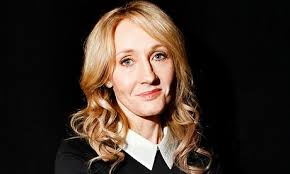
Certainly J K Rowling is a brilliant author to have created the seven Harry Potter books which are so popular, worldwide.  Yesterday, I ran across her top five writing tips on the Now Novel blog.  I thought I would republish and comment on them.

download

J K Rowling

1.    Write in whatever time you have

One of J.K. Rowling’s most famous quotes is: “Sometimes you have to get your writing done in spare moments here and there.” This is crucial advice on writing a book. It’s easy for us to imagine successful writers spending all day penning beautiful paragraphs, but everybody had to start somewhere. For Rowling, that somewhere included full-time work and finding stolen pockets of time to write. Much as it might be a dream to take six months out to write your book, odds are you’re going to have to fit it into your everyday life.

I agree that it is unwise – even couterproductive – to establish an overall deadline (unless you publisher insists on it).  For me, the minimum size of a ‘stolen pocket’ is an hour.  In less than an hour, I can’t get into a fully creative mode.

2.    Planning is essential

Instead of diving right into line 1, J.K. Rowling advises taking the time to plan out the world your books will live in. She took five years to create and develop every last detail of the Harry Potter world. Every part of Rowling’s books was planned and worked out, right down to how the Wizards and Muggles interacted (and the word Muggles, to begin with!) what the education was like, how magic helped in every day life and how the wizarding world of government worked. She also plotted out all the events of the seven books before she started writing the first.

Great if you can do it!  I write a two page outline of a novel before I start it, but for me, this is just a framework.  I find that characters want to behave differently and therefor events change, or I get an ‘inspiration’ that causes me to deviate from the original plan.  I depend a lot on these inspirations!

3.    Rewriting is just as essential

You would think after five years, J.K. Rowling would just be able to dive right in and write the whole of the first Harry Potter book, Harry Potter and the Philosopher’s Stone, without much rewriting. She rewrote the opening chapter of her first book a total of fifteen times, however. It’s easy to imagine published authors writing with the greatest of ease, but actually the process is just as difficult for them.

I agree!  I don’t think I’ve ever reached fifteen re-writes, but four of five is not uncommon.  For me, the scope of a rewrite tends to decrease over time: after a major rewrite, what follows tends to be less and less radical.

4.    Be aware of plot and pacing

Even when you’ve plotted out all seven of the books you want to write in a series, you can trip yourself up. In fact, that’s one of the big things to be aware of when you’ve done the necessary planning: even though you know what’s going to happen next, your readers shouldn’t. They need to have a sense of excitement and uncertainty as the plot and pacing unfolds because this is where magic lies. After J.K. Rowling finished the first book in the Harry Potter series, she realised she’d given away the whole plot of the series. So she had to rewrite it, and hold back a number of integral plot points.

I tend to make changes to the plot once I’ve started writing a novel.  These changes make the novel more interesting, more exciting, or better convey the overall message of the work.  But I agree that one has to be careful that the revised plot flows seamlessly with no inconsistencies.

5.    Write your passion

Perhaps a favourite J.K. Rowling quote is: “What you write becomes who you are… So make sure you love what you write!” One of the reasons the Harry Potter books are so infectious is because you can tell she really loves the world she created – and all the characters in them. If you’re going to approach your book in a half-hearted manner, there’s no point even beginning it. Make sure you’re passionate about what you write and you’ll draw your readers along with you.

This is very true!  Occasionally, I find that the work is starting to lose interest for me.  Then I know that something is wrong and significant changes are required.  For example, I gave a literary friend a draft of Sable Shadow & The Presence before it was finished.  His comment: “It’s boring.”  I agreed, and I put it aside while I wrote Hidden Battlefields.  When I came back to the manuscript it was with new ideas and new enthusiasm.  When I finished, my friend (like many others) gave it a very good review.

Manuscript Editing

editor

Yesterday, I received the edited copy of my seventh novel back from the editor.  For me, the way it works is that I – as the author – am responsible for professional editing of my books.  The publisher will arrange for editing, but the author has to pay for it as a part of the co-operative publishing  deal.  On one occasion, I used the publisher’s editor, but never again.  It was a less expensive fee than my usual editor, but a lot more costly in my time and aggravation.  That editor didn’t understand that her job was just to check the grammar, spelling, punctuation and syntax of the manuscript.  She did that (sloppily), and many of the changes she made were incorrect, and had to be reversed.  This made me wonder how competent she was at finding the real errors I made.  But what really irritated me was that she made changes to the text so that the meaning I had intended was lost.  Clearly, she didn’t like the characters or my plot.

Vonda works for a large editing company and she has edited the other six of my novels, including my latest, which is 108,000 words.  (That will work out to be about 250 pages, and her company’s fees were just under $1000.)

To give you a sense of what she wanted me to change:

  • too many commas
  • too many colons
  • English English to American English spellings (my publisher is American)
  • removing the hyphens from compound noun; for example hang-dog becomes hangdog
  • catching instances where two-letter words were wrong; for example: ‘in’ appeared in place of ‘it’ or ‘is’

The above changes were made after I had read through the manuscript at least three times and my wife had read it once!  Sometimes we see only what we think should be there!

And then there were her really useful comments:

  • there were two cases where I misspelt the name of the Egyptian president as ‘Al-Sisi’ when I had previously spelt it correctly as ‘el-Sisi’.
  • Similarly, in later paragraphs, I had misspelt the Anglicized version of an Arabic surname.
  • In one case she questioned the identity of the speaker (it could have been either of two characters).
  • And one case where she questioned my translation of an Arabic word.  (She was right.)

She made the following general comment: “This is somewhat of a departure from your previous works — more philosophical and thought-provoking.  The characters are, as usual, well-drawn, believable and sympathetic, and your descriptions of all the places Kareem visits made me feel as if I were right there with him.”

There is another step of editing: when the manuscript is laid out for printing, there are inevitably new errors – particularly in format – which creep in, and I will have to read it again carefully.

I haven’t told you much about this latest novel, because it hasn’t been formally copyrighted yet, but please ‘stay tuned’!